Article · 28 August 2026
Adalimumab Biosimilar Switches in Pediatric IBD: What the Trough Level Drop Means for Your Monitoring Protocol
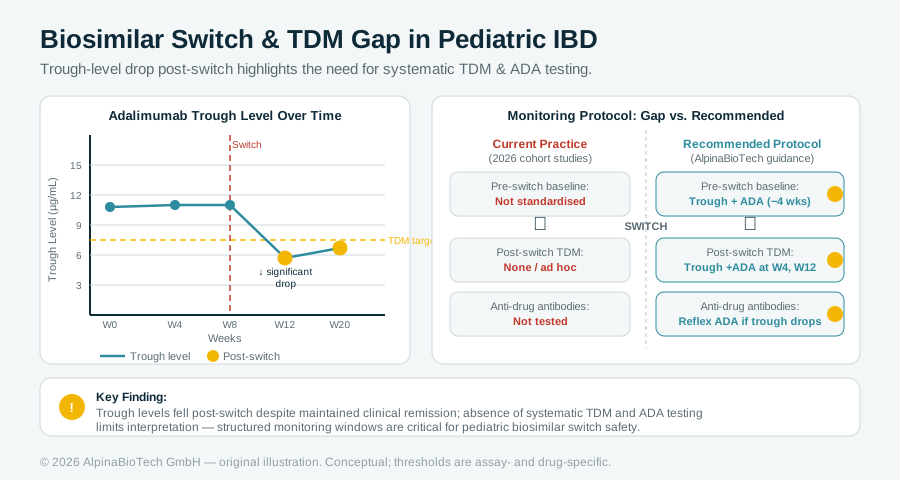
Two 2026 multicenter studies confirm that nonmedical adalimumab biosimilar switches in children with IBD generally maintain disease control, but trough levels fell significantly post-switch in one cohort, and neither study included systematic TDM or ADA testing. This article examines what that measurement gap means for laboratory monitoring protocols around pediatric biosimilar switches.
AlpinaBioTech
Research Use Only. For research and laboratory use. Not for diagnostic or therapeutic procedures.
Adalimumab Biosimilar Switches in Pediatric IBD: What the Trough Level Drop Means for Your Monitoring Protocol
Children and young adults with IBD generally maintained stable disease control after an insurance-mandated, nonmedical switch from the adalimumab originator to a biosimilar, according to findings published in JPGN Reports [1]. That headline is the reassuring finding. A second finding in the same study is the one that matters for assay scientists: within the available pediatric data, trough levels fell significantly after the switch even as most patients remained clinically stable. Understanding what that measurement gap means, and where current monitoring frameworks leave individual patients exposed, is the concrete problem this article addresses.
The New Evidence: Two Cohorts, One Gap
The Himelstein et al. JPGN Reports Study
Himelstein D, McNicol M, Abdel-Rasoul M, et al. published "Outcomes of adalimumab biosimilar nonmedical switches in children and young adults with inflammatory bowel disease" in JPGN Rep. 2026; doi:10.1002/jpr3.70212 [1].
The headline finding is reassuring: most patients maintained stable disease activity and laboratory markers. The complicating finding is pharmacokinetic. Adalimumab trough levels declined significantly after the switch, from a mean of 18.1 µg/mL to 15.0 µg/mL (P = .007). Although levels remained above the 10 µg/mL threshold used by the authors to define a therapeutic concentration, the decrease is clinically relevant for at least some patients [1].
That threshold deserves scrutiny. Evidence-based target trough concentrations for pediatric patients critical for achieving mucosal healing include greater than 13 to 14 µg/mL post-induction for adalimumab [5]. For histologic remission specifically, data from an adult IBD cohort add further context: in 36 patients (26 Crohn's disease, 9 ulcerative colitis, 1 indeterminate colitis), median adalimumab concentrations were higher at 17.3 µg/mL in patients with histologic remission compared to 10.3 µg/mL in those without (P = 0.008) [11]. The optimal concentration identified using the Youden threshold was at or above 16.3 µg/mL (sensitivity 70%, specificity 90%), and patients at or above that level had mucosal healing rates of 86% compared to 12% in those below it (P = 0.001) [11]. This study was conducted in an adult population and should not be applied directly to children, but it establishes that the 15.0 µg/mL post-switch average in Himelstein et al. sits meaningfully closer to critical thresholds than the 18.1 µg/mL pre-switch average. The aggregate average obscures individuals who may have crossed below whichever benchmark a given laboratory and clinical team uses.
The SIGENP Multicenter Cohort
A complementary dataset arrives from Italy. Dipasquale V, Pochesci S, Morello R, et al. published "Long-term safety and durability of multiple anti-TNF-alpha switches in pediatric inflammatory bowel disease: A SIGENP multicenter study" in the Journal of Pediatric Gastroenterology and Nutrition, published online April 20, 2026; doi:10.1002/jpn3.70443 [2].
The study was a multicenter, retrospective cohort conducted across seven Italian pediatric IBD centers covering 2011 to 2024. Patients diagnosed with IBD before 18 years who had undergone at least one anti-TNF-alpha switch with at least 18 months of follow-up were included. Switches were classified as originator-to-biosimilar, biosimilar-to-originator, or biosimilar-to-biosimilar, and as medically or nonmedically motivated [2].
Multiple intramolecular switches among anti-TNF agents in children with IBD showed no clinically meaningful decline in treatment durability or increase in adverse events [2]. But the SIGENP investigators also noted a specific limitation with direct relevance to assay scientists: therapeutic drug monitoring and anti-drug antibody testing were not systematic, and few children underwent two or three switches, reducing the power to detect uncommon events [2]. That sentence is a direct call to action for laboratories. The absence of systematic TDM and ADA testing in a long-term, multicenter, 185-patient cohort is not an oversight unique to this group; it reflects a real gap in clinical practice that coordinated assay-supported monitoring is positioned to close.
Why Pediatric IBD Is a High-Stakes Population for TDM
Inflammatory bowel disease with onset in childhood is characterized by a more extensive phenotype, a more aggressive clinical course, and a higher risk of long-term complications including growth retardation, compared to adult-onset disease [6]. While TNF-alpha inhibitors are the cornerstone of therapy, achieving sustained remission in children is often hindered by unique pharmacokinetic challenges, such as accelerated drug clearance and a higher propensity for immunogenicity [8].
The limited menu of approved pediatric therapies makes this population especially dependent on getting the most out of existing agents. On April 15, 2026, the FDA approved ustekinumab (Stelara) for the treatment of patients two years and older with moderately to severely active Crohn's disease; Stelara is the only FDA-approved IL-12/23 antagonist and the first non-TNF biologic to treat adults and children with moderately to severely active Crohn's disease [4]. This regulatory milestone expanded the pediatric toolkit, but TNF inhibitors adalimumab and infliximab remain the predominant biologic options in pediatric practice [8].
Infliximab and adalimumab, as monoclonal antibodies against TNF used to manage IBD, have been the subject of TDM programs shown to prevent immunogenicity, achieve better long-term clinical results, and save costs in IBD treatment [5]. Proactive TDM during induction decreases the likelihood of suboptimal medication levels, which in turn reduces the risk of anti-drug antibody (ADA) development [8]. Studies have shown an association between higher drug concentrations during induction TDM and favorable therapeutic outcomes later in treatment; suboptimal drug concentrations, particularly at week 14, have been linked to a higher risk of ADA development, lower drug levels, and poorer response [8].
The switch context intensifies these stakes. Treatment of pediatric IBD with anti-TNF agents can result in immunogenicity and the formation of anti-drug antibodies, which are associated with loss of clinical response and worsening disease [5]. When a child undergoes a nonmedical switch, any immunogenicity event that develops post-switch will likely be invisible without a coordinated TDM and ADA assay strategy in place.
The Measurement Problem: What Assay Laboratories Are Working With
The Trough Level Drop in Context
The 18.1 to 15.0 µg/mL decline observed by Himelstein et al. is statistically significant (P = .007) and probably real [1]. Before attributing it entirely to biosimilar-specific pharmacokinetics, laboratories should consider several sources of variance: formulation differences between the biosimilar and originator (particularly citrate content and its effect on tolerability and dose compliance); changes in administration technique or dosing schedule at the point of switch; and the assay platform used to measure trough concentrations before and after. If a laboratory changed its adalimumab drug-level assay between the two timepoints, platform-specific calibration differences can introduce artificial signal that mimics a true pharmacokinetic change.
A 2022 systematic review of 13 studies examining the health economics of TDM of anti-TNF agents in IBD from 2013 to 2021 demonstrated that a TDM strategy is cost-effective or cost-saving in IBD overall [7]. This review covered adult IBD populations, and the magnitude of savings varies substantially across health systems, drug pricing environments, and the specific TDM algorithm applied; laboratories should not cite a single percentage figure as universally applicable.
The ADA Testing Gap
Evidence-based target trough concentrations for pediatric patients critical for achieving mucosal healing are 8 to 13 µg/mL at week 6 and greater than 5 to 7 µg/mL during maintenance for infliximab, and greater than 13 to 14 µg/mL post-induction for adalimumab [5]. Higher serum drug concentrations are generally considered an objective outcome of treatment; lower concentrations suggest the need to shorten dosing intervals or revise the treatment approach. Anti-drug antibodies are a key factor in lower drug concentrations, making it necessary in some cases to add immunosuppressants or convert therapy [5].
In a nonmedical switch, patients have not failed the originator product. They arrive at the biosimilar with a pre-existing immunological history. The clinical risk is not de novo immunization as a starting point; it is whether pre-formed low-titer antibodies against the originator sequence cross-react with the biosimilar, or whether the introduction of a new molecular entity triggers a discrete new immunogenic response. Neither scenario is detectable without an assay designed to identify it at the appropriate post-switch timepoint.
The Proactive vs. Reactive Question
This clinical context is driving a shift from reactive to proactive TDM strategies. While proactive TDM remains a subject of debate in adult IBD, emerging pediatric data strongly support its routine use to optimize treatment durability and prevent secondary loss of response [8].
A nonmedical switch is precisely the moment when a proactive measurement is most justified. The drug, the formulation, and sometimes the delivery device have changed. Taking a trough level and an ADA measurement at 4 and 12 weeks post-switch provides the data needed to act before a loss of response becomes irreversible [6].
What the Data Do Not Yet Resolve
Adult patients with IBD who switched to a biosimilar have comparable outcomes, but pediatric data are limited [1]. The two 2026 studies narrow that gap but do not close it. Both carry the limitations inherent to retrospective, non-randomized designs. The SIGENP study was also limited by its single-country design, the predominantly nonmedical, supply-driven nature of the switches, and the absence of a non-switching comparator group [2].
The bigger concern remains the lack of data for pediatric patients required to undergo multiple sequential nonmedical biosimilar switches while on a biologic product, and the long-term impact on disease control and safety [1]. Multiple sequential switches, from originator to biosimilar A, then to biosimilar B, then potentially back, are now a clinical reality. Multiple intramolecular switches in children with IBD showed no clinically meaningful decline in treatment durability in the SIGENP data, but few children in that cohort underwent two or three switches, reducing statistical power to detect uncommon events [2]. The immunogenicity signal across a longer chain of switches remains poorly characterized in pediatric populations.
Practical Implications for TDM and ADA Assay Scientists
The Himelstein et al. and SIGENP data converge on a practical question for laboratory scientists: is the current monitoring schedule around a nonmedical biosimilar switch adequate? Based on the evidence reviewed here, the answer is: not always.
At minimum, a switch event in a pediatric IBD patient on adalimumab warrants:
- A pre-switch trough level on the platform that will be used post-switch, to eliminate calibration drift as a confound.
- A post-switch trough level at 4 to 12 weeks, using the same assay platform and the same reference cut-offs as the pre-switch measurement.
- An ADA test at the same post-switch timepoint, using an assay validated to detect both low-titer and high-titer antibodies. Where possible, the ADA assay should be validated against the biosimilar sequence, not only against the originator, as sequence-level differences may affect epitope recognition.
- Documentation of which biosimilar, which lot number, and which administration device was used, as these variables affect inter-assay comparability over time.
The trough level drop documented by Himelstein et al. was statistically significant but did not, on average, pull patients below 10 µg/mL [1]. The word "on average" is the problem. Evidence-based target trough concentrations for pediatric patients critical for achieving mucosal healing include greater than 13 to 14 µg/mL post-induction for adalimumab [5]. Individual patients sitting at 11 or 12 µg/mL before the switch may have crossed below that threshold afterward, and without a measurement, no one will know until the clinical signal arrives in the form of worsening disease activity.
This article describes Research Use Only assay applications. The assays referenced are not FDA-cleared diagnostic devices. The measurement discipline they enforce, specifically pre- and post-switch trough levels on a consistent platform with paired ADA testing, is the infrastructure on which clinical decisions will increasingly depend.
Sources
- [1] centerforbiosimilars.com
- [2] onlinelibrary.wiley.com
- [3] medscape.com
- [4] jnj.com
- [5] doi.org
- [6] crohnscolitisfoundation.org
- [7] ncbi.nlm.nih.gov
- [8] consultqd.clevelandclinic.org
- [9] pearceip.law
- [10] drugs.com
- [11] ncbi.nlm.nih.gov
More articles
When ADA Incidence Misleads: Interpreting Highly Sensitive Immunogenicity Assays in Biosimilar Programs
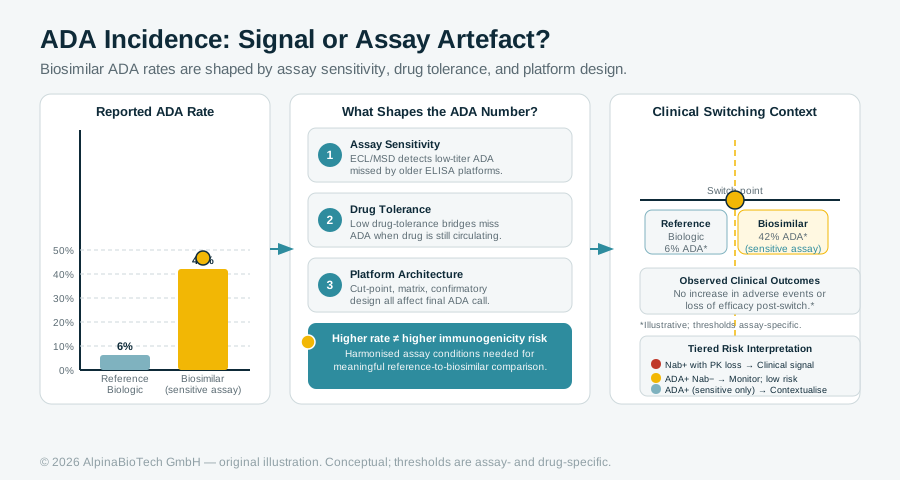
A biosimilar immunogenicity report showing a 42 percent ADA rate against a reference biologic's labeled 6 percent is not automatically a safety signal. The number is shaped as much by assay sensitivity, drug tolerance, and platform architecture as by the patient's immune response. This article explains how to interpret highly sensitive ADA data in biosimilar programs and what clinical switching data reveal about the stakes of getting it wrong.
Read more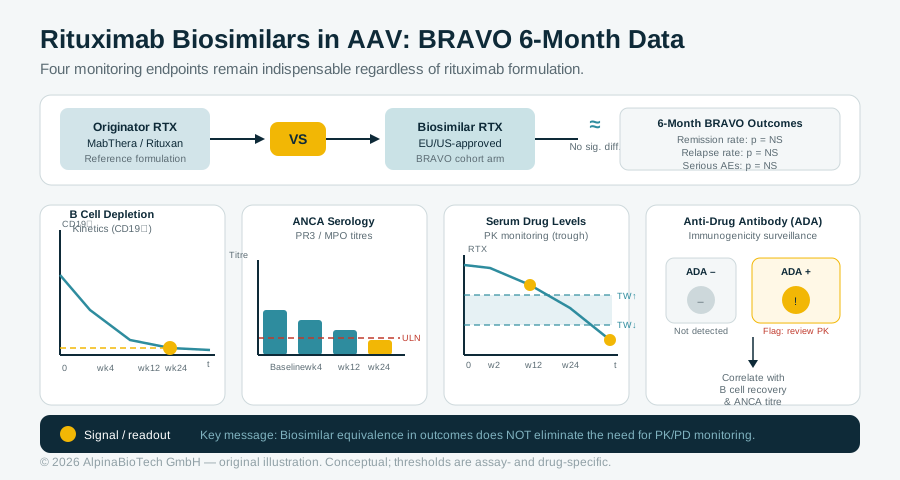
Rituximab Biosimilars in AAV: What Six-Month Real-World Data Tell Monitoring Scientists
The BRAVO multicenter cohort study found no statistically significant differences in remission rates, relapse rates, or serious adverse events between biosimilar and originator rituximab at six months in granulomatosis with polyangiitis and microscopic polyangiitis. For laboratories supporting drug-level and immunogenicity testing in biosimilar-treated AAV populations, the findings reinforce rather than reduce the case for structured pharmacokinetic and pharmacodynamic monitoring. B cell depletion kinetics, ANCA serology, serum drug levels, and anti-drug antibody assays each remain indispensable endpoints regardless of which rituximab formulation the patient receives.
Read more