Article · 21 August 2026
Rituximab Biosimilars in AAV: What Six-Month Real-World Data Tell Monitoring Scientists
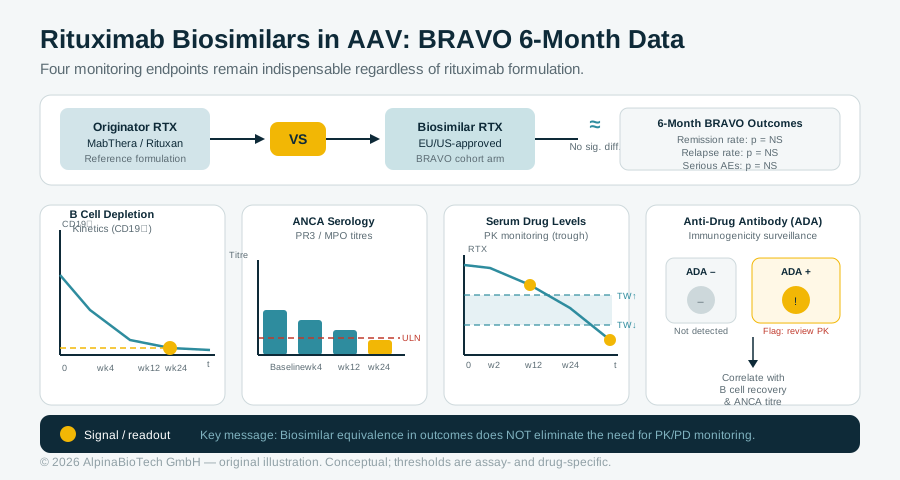
The BRAVO multicenter cohort study found no statistically significant differences in remission rates, relapse rates, or serious adverse events between biosimilar and originator rituximab at six months in granulomatosis with polyangiitis and microscopic polyangiitis. For laboratories supporting drug-level and immunogenicity testing in biosimilar-treated AAV populations, the findings reinforce rather than reduce the case for structured pharmacokinetic and pharmacodynamic monitoring. B cell depletion kinetics, ANCA serology, serum drug levels, and anti-drug antibody assays each remain indispensable endpoints regardless of which rituximab formulation the patient receives.
AlpinaBioTech
All assays and analytes discussed in this article are for Research Use Only and are not intended for diagnostic or therapeutic decision-making without appropriate clinical validation.
Most pivotal rituximab biosimilar trials enrolled lymphoma or rheumatoid arthritis populations, not patients with ANCA-associated vasculitis (AAV). That population gap has persisted since the first biosimilars reached clinical practice. A multicenter Canadian cohort study now provides the most detailed real-world answer yet for this indication. Published in ACR Open Rheumatology (2026;8(8):e90119, doi:10.1002/acr2.90119) [1][2][3], the BRAVO study found no statistically significant differences in remission rates, relapse rates, or serious adverse events between biosimilar and originator rituximab at six months in granulomatosis with polyangiitis (GPA) and microscopic polyangiitis (MPA). For laboratories supporting drug-level and immunogenicity testing in biosimilar-treated AAV populations, the findings reinforce rather than reduce the case for structured pharmacokinetic (PK) and pharmacodynamic (PD) monitoring.
The BRAVO Study at Six Months
In 2021, a Canadian research group launched the BRAVO study (Biosimilar Rituximab in ANCA-associated Vasculitis compared to the Originator), hosted at the McGill University Health Centre and supported by the Canadian Initiative for Outcomes in Rheumatology cAre (CIORA) [1][4]. The observational study enrolled 207 adults with GPA or MPA from nine Canadian centers between July 2021 and September 2023; participants had started rituximab treatment as early as 2018 [3].
Mean age at cohort entry was 56.7 years, 52% were women, 80% were White, and 70% had GPA; median disease duration was 1.6 years [2]. Participants included 132 starting rituximab induction (58 originator and 74 biosimilar), 59 starting maintenance (23 originator and 36 biosimilar), and 16 switching from originator to biosimilar maintenance [3].
The primary endpoint was remission at six months, defined using the Birmingham Vasculitis Activity Score version 3 (BVAS v3). Secondary six-month outcomes included relapse, change in Vasculitis Damage Index (VDI), and serious adverse events (SAEs) [2].
What the Six-Month Data Show
Among the 132 participants starting induction, 96% of originator recipients and 90% of biosimilar recipients achieved remission at six months, a 6-percentage-point difference (95% CI, -4% to 15%) that did not reach statistical significance [1]. No relapses occurred in patients who switched from originator to biosimilar maintenance therapy [2][3].
The study authors noted that these real-world data support continued biosimilar rituximab use in AAV and should reassure patients, providers, and policymakers [2].
AAV is a group of rare autoimmune necrotizing small-vessel vasculitides that cause potentially life-threatening ischemic and inflammatory organ damage [5]. The three AAV subsets are GPA, MPA, and eosinophilic granulomatosis with polyangiitis (EGPA). Patients with GPA predominantly have ANCA directed against proteinase 3 (PR3), whereas in MPA, 60% to 80% of patients have ANCA specific for myeloperoxidase (MPO) [5].
Why AAV-Specific Evidence Was Needed
The core tension driving the BRAVO study is structural: it arises from how biosimilar regulation handles indication diversity. Rituximab is the only FDA- and Health Canada-approved biologic for severe AAV, and neither agency requires biosimilar manufacturers to demonstrate clinical equivalence across every approved indication before approval, only comparable structure and function to the reference product.
The biosimilar regulatory framework includes a provision termed "extrapolation," by which a biosimilar may receive approval for multiple indications of the originator without being evaluated in clinical trials for each condition. Under both Health Canada and FDA frameworks, once studies show that the biosimilar is highly similar to the reference biologic drug with no clinically meaningful differences, the biosimilar can be authorized for the same indications as the reference biologic, based on the previously established efficacy and safety of the reference biologic in each indication [11]. In practice, a rituximab biosimilar may demonstrate equivalence in a lymphoma or RA population, and that approval can then extend to AAV on the basis of established mechanism of action and molecular similarity [11].
That structural gap has fueled clinician hesitancy about nonmedical switching. Because no randomized trials of rituximab biosimilars have been conducted in patients with AAV, real-world evidence is likely to remain the primary basis for comparative effectiveness assessment in this indication [3]. The BRAVO investigators therefore argued that dedicated AAV-specific data were needed, given the distinct disease mechanisms and adverse event patterns in this population compared with the RA and lymphoma cohorts in which most pivotal biosimilar trials were conducted [2].
Study Limitations Scientists Should Note
The BRAVO team is transparent about methodological constraints. Differences in participant selection between originator and biosimilar groups could introduce bias, and the small sample sizes of maintenance subgroups limited statistical power for meaningful comparisons [2]. The relatively short six-month follow-up period and rarity of early relapses restricted the ability to detect differences in relapse rates [2].
Six months is a constrained window for a disease defined by its relapsing nature. In the pre-rituximab era, the likelihood of relapse within the first five years was 40% to 55%; while rituximab as maintenance therapy has significantly reduced this risk, relapse rates are not negligible and tend to increase after maintenance treatment is withdrawn [3]. The BRAVO protocol called for 24-month follow-up [4], and the trial has since completed data collection (ClinicalTrials.gov status: completed, primary completion September 2025) [4]. Full analysis of maintenance durability and longer-run immunogenicity data at 24 months has not yet been published at the time of this article.
The Monitoring Layer: Drug Levels, ADA, and B Cell Status
Equivalent six-month remission rates do not eliminate inter-patient variability in drug exposure, B cell kinetics, or immunogenicity. Each of these dimensions requires laboratory measurement.
B Cell Depletion Kinetics in AAV
B cell depletion duration is a pharmacodynamic endpoint with direct relapse implications in AAV, and the kinetics differ markedly from other rituximab indications. Beginning B cell repopulation within the first year after rituximab treatment was observed in 93% of RA and 88% of connective tissue disease patients, but only 10% of patients with GPA and MPA showed B cell repopulation within this time; median time of B cell depletion was 26 months in GPA/MPA, compared with 9 months in RA [7].
This extended depletion in AAV has clear relapse-risk implications. Patients who achieved and maintained PR3-ANCA negativity (n = 29) had few relapses (3%), while persistent PR3-ANCA positivity (n = 49) and reappearance of PR3-ANCAs (n = 10) associated significantly with more relapses (37%, p = 0.002 and 50%, p = 0.002, respectively) [9]. Additionally, patients with incomplete B cell depletion (n = 11) had significantly more relapses (54%) compared with patients with complete B cell depletion (26%, p = 0.02), and patients with B cell repopulation (n = 58) had significantly more relapses (41%) compared with patients without B cell repopulation [9]. The combined signal from ANCA serology and CD19+ B cell status makes both readouts assay-relevant endpoints, not merely clinical observations.
Serum Drug Levels and PK Monitoring
Serum rituximab concentration is an actionable PK parameter, particularly for predicting the timing of B cell repopulation. Studies in pediatric inflammatory disease populations have demonstrated that children are more likely to experience early B cell repopulation (less than 6 months) following rituximab treatment, necessitating redosing as early as 3 months post-infusion, and that rituximab serum concentration measurements can predict the risk of early B cell repopulation [8]. This work was conducted in a pediatric inflammatory disease cohort, not an adult AAV population, and the extrapolation to adults should be treated as hypothesis-generating rather than directly validated. The underlying principle, that measured drug concentration can be used to model future repopulation timing and guide redosing decisions, has been evaluated using sandwich ELISA for drug-concentration determination [8].
In adult AAV, where B cell depletion commonly extends well beyond six months, the clinically relevant PK question shifts toward identifying patients at the tail of the depletion curve, those approaching B cell repopulation, before clinical relapse occurs [7]. The extended depletion kinetics seen in this population, documented in both the literature and newly confirmed by real-world evidence such as BRAVO, underscore the value of serial concentration monitoring [1][7].
Anti-Drug Antibodies
Anti-rituximab antibodies (ARA) are a known, if uncommon, complication of treatment. Phase 3 rituximab biosimilar trials, including studies of CT-P10 in follicular lymphoma and RA, have found that pharmacodynamics, immunogenicity, and safety profiles are similar between biosimilar and originator, with low overall ADA rates reported across treatment groups [10]. A randomized phase 3 RA switching study found no remarkable changes in immunogenicity profile following a switch from originator to biosimilar rituximab, and confirmed ADA development in only isolated individual cases after the switch [10].
The BRAVO publication does not appear to include ADA data for the AAV cohort at six months. The MONIRITUX study (NCT07037732, Centre Hospitalier Universitaire de Nice) is designed to address this gap directly: MONIRITUX aims to evaluate circulating B cell reconstitution, serum drug levels, and anti-drug antibodies in patients treated with rituximab for autoimmune disorders [6]. The trial started June 1, 2025 and, as of its last verified status update (May 2025), is actively recruiting, with a primary completion date estimated at January 1, 2030 [6].
For assay scientists, a practical question follows from the biosimilar context: does an ADA assay validated against the originator perform equivalently when the patient has been dosed with a biosimilar? Because biosimilars share the same primary amino acid sequence as the reference product and have demonstrated equivalent pharmacokinetics and pharmacodynamics in phase 3 comparator trials [10], the same bridging ELISA or electrochemiluminescence (ECL) format used to detect anti-rituximab antibodies against the originator should in principle capture ADAs generated in response to a biosimilar. However, any inter-product differences in post-translational modifications, including glycoform profiles, are evaluated during the regulatory comparability exercise [10][11], and assay-level confirmation with both originator and biosimilar used as critical reagents is preferable to assumption.
Assay Design Considerations for Biosimilar-Treated AAV Populations
Several practical points follow from the BRAVO findings and the broader monitoring literature:
- B cell depletion assays measuring CD19+ or CD20+ counts by flow cytometry remain the standard pharmacodynamic readout. Absence of B cell repopulation strongly predicted a relapse-free status in both PR3- and MPO-ANCA-positive patients [9]. Monitoring intervals in AAV may need to extend well beyond the six-month window typical in other indications, given the extended depletion kinetics in GPA and MPA [7].
- ANCA serology (PR3-ANCA and MPO-ANCA) functions as a disease-activity biomarker. In PR3-ANCA-positive patients, 96% of relapses occurred with persistent or reappearing PR3-ANCAs and 81% with B cell repopulation [9]. Serial ANCA measurement alongside B cell count provides complementary information on relapse risk.
- Drug-level ELISAs quantifying serum rituximab concentration are relevant for modeling B cell repopulation timing, particularly in patients with atypical PK profiles, including those with significant renal impairment or prior heavy immunosuppression [8]. The minimal rituximab concentration associated with maintained B cell depletion has been estimated at approximately 0.55 micrograms per mL in pediatric inflammatory disease cohorts [8].
- ADA assays should be validated using both originator and biosimilar preparations as critical reagents, since drug-coating concentration, binding affinity, and drug-tolerance characteristics may differ between preparations. Phase 3 switching data provide reassurance that ADA incidence does not increase dramatically on switching [10], but laboratory confirmation of assay performance with the specific biosimilar formulation used in the patient population remains best practice.
What the 24-Month Analysis Should Resolve
The BRAVO study's primary value at six months is safety and early remission equivalence. Although the trial has completed data collection, the monitoring science community needs the 24-month published analysis for three specific reasons: relapse frequency during maintenance (the clinically decisive endpoint in a relapsing disease), longer-run immunogenicity data (ADA emergence typically peaks after repeated exposures), and cumulative SAE data sufficient for subgroup analysis [4].
For laboratories supporting AAV patient care, the immediate takeaway is that biosimilar rituximab produces the same early pharmacological outcome as the originator: remission rates within the confidence interval of equivalence, no additional safety signals, and no relapses in the switching cohort [1][2][3]. That finding does not reduce the rationale for measuring what the drug is doing in individual patients. In a disease where B cell repopulation timing and ANCA serostatus are among the best available predictors of relapse [9], structured laboratory monitoring remains indispensable regardless of which rituximab formulation the patient receives.
All assays and analytes discussed in this article are for Research Use Only and are not intended for diagnostic or therapeutic decision-making without appropriate clinical validation.
Sources
- [1] centerforbiosimilars.com
- [2] medscape.com
- [3] ancavasculitisnews.com
- [4] clinicaltrials.gov
- [5] pmc.ncbi.nlm.nih.gov
- [6] clinicaltrials.gov
- [7] pmc.ncbi.nlm.nih.gov
- [8] pubmed.ncbi.nlm.nih.gov
- [9] pubmed.ncbi.nlm.nih.gov
- [10] pubmed.ncbi.nlm.nih.gov
- [11] canada.ca
More articles
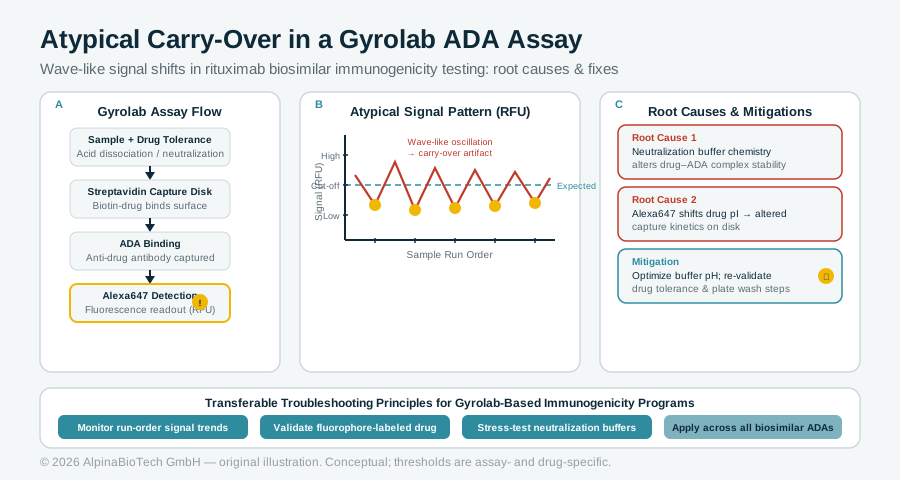
Atypical Carry-Over in a Gyrolab ADA Assay: Lessons from a Rituximab Biosimilar Case Study
A published case study targeting MabionCD20, a rituximab biosimilar, identified wave-like signal fluctuations in Gyrolab-based ADA assays caused by neutralization buffer chemistry and fluorophore-induced isoelectric point shifts. The investigation offers transferable troubleshooting principles for any laboratory running Gyrolab-based immunogenicity programs, particularly around drug tolerance and repeatability.
Read more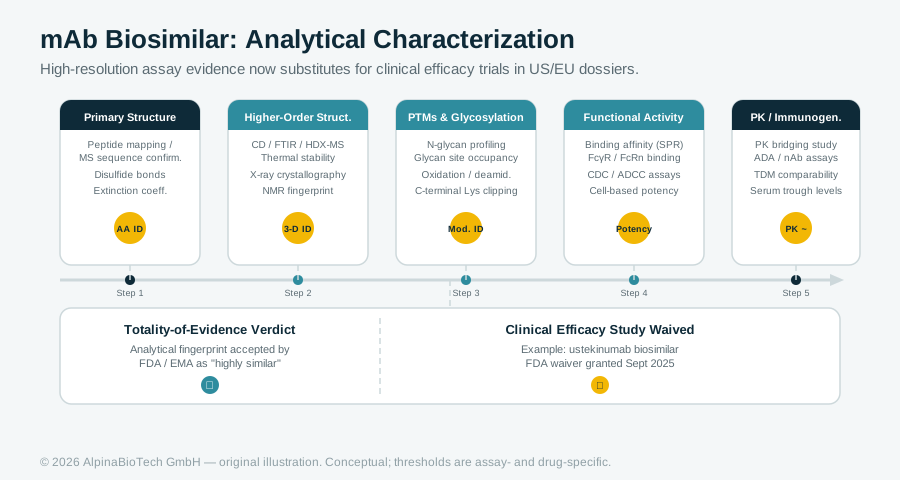
What "Highly Similar" Actually Requires: Analytical Methods for mAb Biosimilar Characterization
Regulatory approval of mAb biosimilars now depends less on replicating clinical trial results and more on high-resolution analytical characterization. A 2026 BioDrugs review of successful US and EU dossiers maps the assay strategies that matter, while the FDA's September 2025 waiver of a clinical efficacy study for a ustekinumab biosimilar makes the principle concrete for immunoassay and TDM scientists.
Read more