Article · 19 August 2026
Atypical Carry-Over in a Gyrolab ADA Assay: Lessons from a Rituximab Biosimilar Case Study
A published case study targeting MabionCD20, a rituximab biosimilar, identified wave-like signal fluctuations in Gyrolab-based ADA assays caused by neutralization buffer chemistry and fluorophore-induced isoelectric point shifts. The investigation offers transferable troubleshooting principles for any laboratory running Gyrolab-based immunogenicity programs, particularly around drug tolerance and repeatability.
AlpinaBioTech
For Research Use Only. Not for use in diagnostic procedures.
Atypical Carry-Over in a Gyrolab ADA Assay: What a Rituximab Biosimilar Case Study Teaches About Neutralization Buffer Chemistry
Anti-drug antibodies can compromise both drug efficacy and patient safety, and the assays used to detect them carry a correspondingly high methodological burden. That burden became concrete in a published case study targeting MabionCD20, a rituximab biosimilar, in the serum of rheumatoid arthritis patients [1][2]. What the investigators encountered was not a conventional source of noise, and the resolution they identified offers transferable lessons for any laboratory running Gyrolab-based immunogenicity programs.
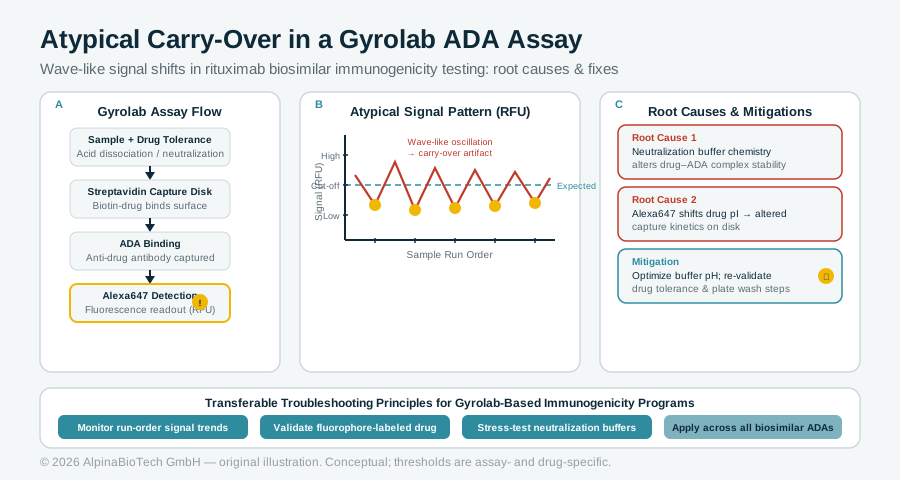
During screening of disease-state, treatment-naive serum samples, the team observed wave-like signal fluctuations that compromised method repeatability. They termed the observed phenomenon "atypical carry-over," since this nonspecific interaction was not analyte-related.
The paper was received September 2, 2025, accepted December 5, 2025, and published online December 16, 2025 in Bioanalysis, and was spotlighted by Bioanalysis Zone in April 2026 [1][2]. MabionCD20 is a rituximab biosimilar chimeric monoclonal antibody used in the treatment of rheumatoid arthritis and various types of non-Hodgkin lymphoma, including chronic lymphocytic leukemia, diffuse large B-cell lymphoma, and follicular lymphoma [2]. Despite rituximab's long clinical history across both oncology and autoimmune indications, there remains a lack of published literature on immunogenicity assay validation for this molecule outside of brief reports in biosimilar registration documents [2]. That gap makes this case study practically useful well beyond MabionCD20.
The Gyrolab Platform and Why It Creates Distinct Troubleshooting Challenges
Gyrolab is a fully automated, nanoliter-scale immunoassay platform that utilizes flow-through affinity columns to minimize matrix effects and reduce assay background, providing excellent sensitivity and reproducibility without manual pipetting [5].
The reaction is performed on a compact disc (Bioaffy CD), divided into 12 to 14 segments and 96 to 112 microstructures coated with streptavidin beads. The biotinylated capture antibody is immobilized on the beads to bind the analytes, and the detection antibody is conjugated with a fluorochrome. The CD is automatically transferred to a laser-induced fluorescence detector to determine the amount of fluorescence per microstructure [4]. Compared to a conventional sandwich ELISA, the Gyrolab technology demonstrates an approximately 100-fold broader dynamic range [4]. The flow-through technology results in minimal contact times and high tolerance to matrix interference, which can be critical in preclinical and clinical trials involving analysis of a range of matrices of varying complexity [5].
Those advantages come with a corresponding trade-off: the platform's automated, enclosed microfluidic workflow means reagent interactions inside the CD are not directly visible, and interference from one step to the next can behave differently than on open-plate formats.
A major advantage for ADA testing is the Mixing CD format, which automates acid dissociation, reagent addition, mixing, and incubation, making it especially useful for drug-tolerant bridging assays [7]. The development of the assay in this case study aimed to meet regulatory expectations for the immunogenicity assessment of biotherapeutics, with particular emphasis on sensitivity, reproducibility, and sufficient drug tolerance [2]. When something goes wrong inside that enclosed workflow, attributing a signal artifact to a specific step requires systematic deconstruction.
What "Atypical Carry-Over" Means in Practice
The assay employed a three-step homogeneous bridging format, utilizing biotinylated MabionCD20 as the capture reagent and Alexa Fluor 647-labeled MabionCD20 as the detection reagent to form measurable ADA-drug complexes. Samples were automatically mixed with an acidic buffer to dissociate preexisting ADA-drug complexes, followed by neutralization and incubation, allowing fluorescence-based quantification of ADA binding within the instrument [2]. Neutralization of the acid in this pre-incubation workflow is precisely where the problem originated.
The team performed meticulous method troubleshooting, including verification of the potential impact of polyreactive autoantibodies in serum, investigation of instrument carry-over, and assessment of ionic strength effects. The cause was traced to interactions driven by the composition of the neutralization buffer and a fluorophore-induced shift in the isoelectric point of the detection antibody, specifically the Alexa Fluor 647-labeled MabionCD20 [1][2].
This is a specific and reproducible failure mode. A technical comparison of fluorescent dyes notes that Alexa Fluor 647 "bears multiple negative charges, which improve the brightness of the dye but also significantly alter the isoelectric point of antibody conjugates, resulting in lowered specificity of the conjugates" [14]. When the neutralization buffer has the wrong ionic composition or pH, the resulting isoelectric point change causes the detection antibody to interact nonspecifically with assay components at a rate that varies from sample to sample, producing the wave-like repeatability failures the team described [1][2]. Because the interaction was not driven by the ADA analyte itself, the authors were careful to distinguish it from conventional carry-over [2].
The Troubleshooting Protocol: Isolate Before You Change
The investigative sequence matters as much as the final fix. Instrument carry-over was ruled out first, polyreactive autoantibodies in the disease-state serum were evaluated next, and ionic strength effects were characterized across buffer conditions before the neutralization buffer was identified as the decisive variable [1][2]. This approach mirrors fit-for-purpose validation practice, where sample matrix effects and reagent interactions must be evaluated independently to avoid misattributing a complex interference problem to a single cause [10].
Reducing molarity and increasing pH of the neutralization buffer resulted in elimination of unwanted interactions between assay components and effectively improved assay performance in repeatability and drug tolerance parameters, supporting the assay's suitability for validation [2].
Drug Tolerance: Why It Is Inseparable from Repeatability
Drug tolerance (DT) is a critical attribute of anti-drug antibody assays for assessing clinical immunogenicity [9]. The desirable feature of ADA assays is the state where drug tolerance level exceeds trough drug concentration, meaning no drug interference occurs [10][11].
FDA guidance recommends at least 100 ng/mL sensitivity for ADA assays [10][15]. The 100 ng/mL threshold represents a formal downward revision from an earlier standard. The FDA recommends that screening and confirmatory IgG and IgM ADA assays achieve a sensitivity of at least 100 ng/mL, although a limit of sensitivity greater than 100 ng/mL may be acceptable depending on risk and prior knowledge [10][15]. Previously, the agency recommended sensitivity of at least 250 to 500 ng/mL, but data suggest that concentrations as low as 100 ng/mL may be associated with clinical events [11]. More recent regulatory guidelines and white papers have increased the ADA assay sensitivity expectations from 250 to 500 ng/mL to 100 ng/mL, which in turn places greater demand on drug tolerance requirements [12].
In the MabionCD20 study, the nonspecific interactions observed during the initial method were not just a repeatability problem: they also obscured the drug tolerance assessment. When the neutralization buffer was corrected, both parameters improved together [2]. This coupling is mechanistically logical: an assay producing variable blank-signal readings cannot reliably determine whether a positive signal in a high-drug sample reflects genuine ADA or noise.
A survey found that drug tolerance of ADA assays for approved products spanned the range between 1 ng/mL and 50 micrograms/mL, whereas the steady-state trough drug concentrations of 22 products ranged from 0.3 ng/mL to nearly 400 micrograms/mL, with ADA assays of more than half of approved products failing to cover the relevant trough concentration range [11]. If ADA assay drug tolerance falls below the drug concentration in the testing samples, the ADA assay cannot reliably detect ADA, and incidence would be underestimated [11].
For a rituximab biosimilar program, where the chimeric structure of the molecule carries inherent immunogenic potential, an assay with an unstable baseline is not a minor inconvenience: it renders incidence data unreliable at exactly the concentrations that matter most clinically.
Transferable Principles for ADA Assay Scientists
Four principles emerge from this case that apply across Gyrolab ADA programs:
- Screen disease-state, treatment-naive samples early. Treatment-naive serum samples from rheumatoid arthritis patients, as well as pooled normal human serum, were used as matrices [2]. The wave-like fluctuation appeared specifically in the disease-state matrix. Pooled normal sera alone would not have triggered it, and the problem would have surfaced only during clinical sample analysis [1][2].
- Treat fluorophore labeling as an assay variable, not a neutral step. Alexa Fluor 647 carries multiple negative charges that significantly alter the isoelectric point of antibody conjugates, reducing conjugate specificity [14]. That shift generates charge-dependent nonspecific binding that is sensitive to buffer ionic environment [1][2].
- Evaluate ionic strength and pH jointly, not serially. Additional washing steps and increasing buffer ionic strength alone did not resolve the interaction. Step-by-step modification of the assay protocol was required to isolate the responsible step [2].
- Validate drug tolerance only after repeatability is confirmed. Assay performance parameters are interdependent. Drug tolerance figures generated on a non-repeatable platform version will not predict clinical performance [2][9].
The Gyrolab ADA platform is designed for 21 CFR Part 11 compliance, and vendor documentation describes high drug tolerance and sensitivity as target performance characteristics [7]. Those attributes, however, are realized only when the underlying assay chemistry has been correctly configured, as this case study demonstrates [1][2]. The MabionCD20 work provides a documented protocol for recognizing and resolving a label-induced isoelectric point shift before it compromises a validation package.
Why This Matters for Biosimilar Immunogenicity Programs
Rituximab biosimilar immunogenicity assessment sits at an intersection of two regulatory pressures. First, biosimilar approval packages require immunogenicity data to demonstrate that the biosimilar does not trigger a materially different immune response than the originator. Second, real-world evidence for rituximab biosimilars is actively being generated and scrutinized across specific disease settings [8].
A situation recently described in the AAPS Journal involved a previously approved commercial product, atezolizumab, that required re-assessment of assay drug tolerance to meet an increased drug exposure demand arising from a new route of administration and to align with updated health authority regulations [9]. That example illustrates a broader principle: even approved products can be caught out by tightened sensitivity expectations, and biosimilar programs launching today must design to those updated thresholds from the start.
The validation of anti-drug antibody assays is vital in biologics development, with regulatory bodies including EMA and FDA emphasizing drug tolerance [10][15]. If the immunogenicity assay used to generate ADA data in a biosimilar program has an unresolved repeatability problem, the resulting incidence rates are unreliable regardless of what clinical outcomes show.
The MabionCD20 case demonstrates that careful, step-by-step optimization of assay conditions, particularly neutralization buffer composition and pH, can resolve issues arising from reagent-level physicochemical interactions, and that this optimization directly supports both repeatability and drug tolerance [2]. It is therefore not simply a platform-specific methods note: it is an argument for rigorous, matrix-specific assay optimization before any biosimilar immunogenicity dataset is presented to regulators.
This article describes Research Use Only assay methods and published data. AlpinaBioTech products intended for Research Use Only are not for use in diagnostic procedures.
Sources
- [1] bioanalysis-zone.com
- [2] tandfonline.com
- [3] researchgate.net
- [4] mabion.eu
- [5] bioanalysis-zone.com
- [6] ibr-inc.com
- [7] gyrosproteintechnologies.com
- [8] centerforbiosimilars.com
- [9] link.springer.com
- [10] fda.gov
- [11] pmc.ncbi.nlm.nih.gov
- [12] tandfonline.com
- [13] gyrosproteintechnologies.com
- [14] biotium.com
- [15] centerforbiosimilars.com
More articles
When ADA Positivity Is Not the Answer: Rethinking the Three-Tier Immunogenicity Paradigm
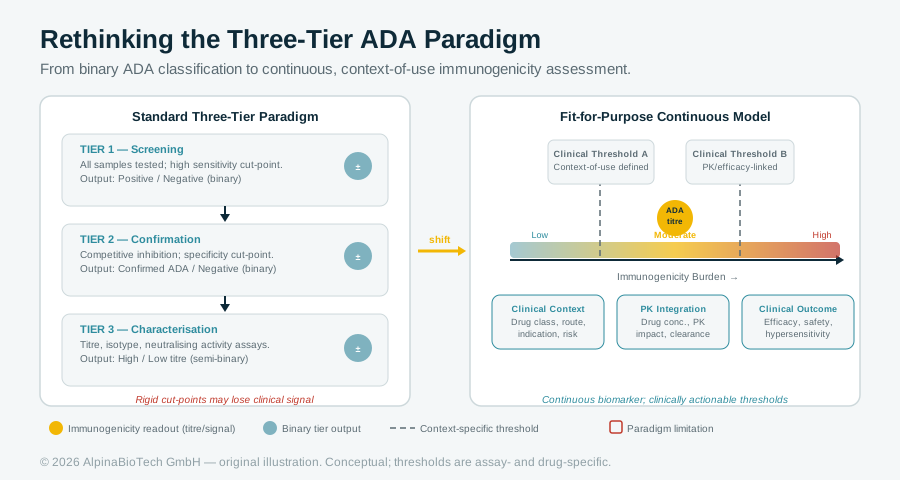
The standard three-tier ADA testing paradigm has governed biologic immunogenicity assessment for more than two decades, but a growing body of evidence questions whether it consistently delivers clinically meaningful data. New publications from Immunologix Laboratories, the European Bioanalysis Forum, and IQVIA Laboratories converge on a fit-for-purpose, context-of-use-driven alternative that treats immunogenicity as a continuous biomarker endpoint rather than a binary classification.
Read more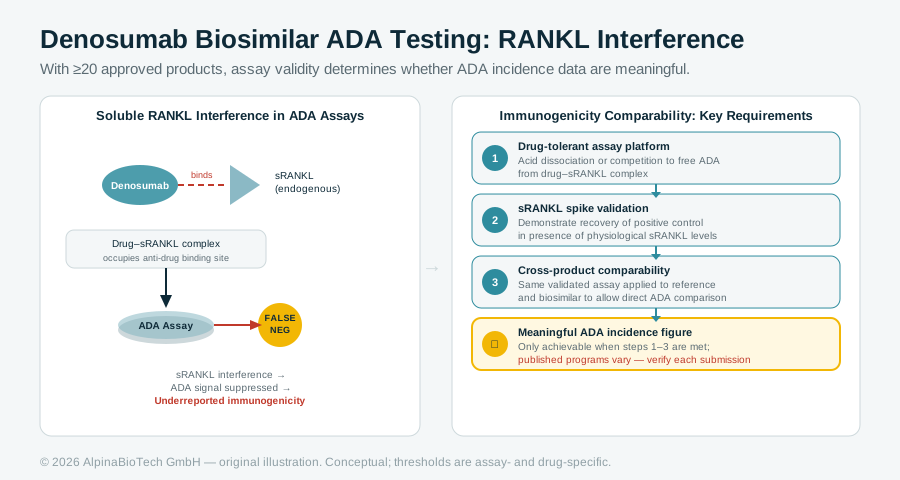
Degevma's FDA Approval and a Market with More Than 20 Denosumab Biosimilars: What Immunogenicity Comparability Testing Actually Requires
The FDA's approval of denosumab-adet (Degevma) on September 28, 2026 brings the cumulative total of approved denosumab products to at least 20, raising a concrete methodological question: in a market this saturated, with interchangeability-driven pharmacy substitutions, what does a reported ADA incidence figure actually tell you? The answer depends entirely on whether the assay has solved the soluble RANKL interference problem, and the published literature shows that not every program has.
Read more