Articles
Notes on immunoassays and drug monitoring
Background on ELISA methods, therapeutic drug monitoring, anti-drug antibodies, biosimilars, and assay validation.
26 articles
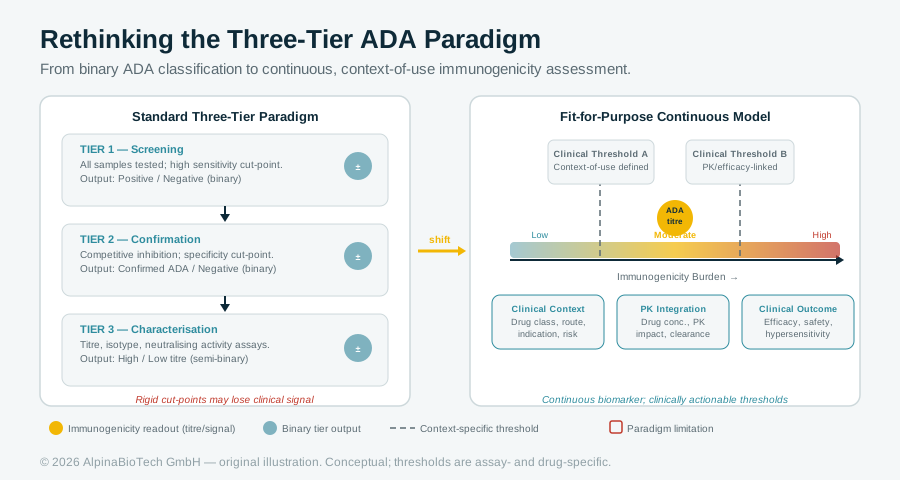
When ADA Positivity Is Not the Answer: Rethinking the Three-Tier Immunogenicity Paradigm
The standard three-tier ADA testing paradigm has governed biologic immunogenicity assessment for more than two decades, but a growing body of evidence questions whether it consistently delivers clinically meaningful data. New publications from Immunologix Laboratories, the European Bioanalysis Forum, and IQVIA Laboratories converge on a fit-for-purpose, context-of-use-driven alternative that treats immunogenicity as a continuous biomarker endpoint rather than a binary classification.
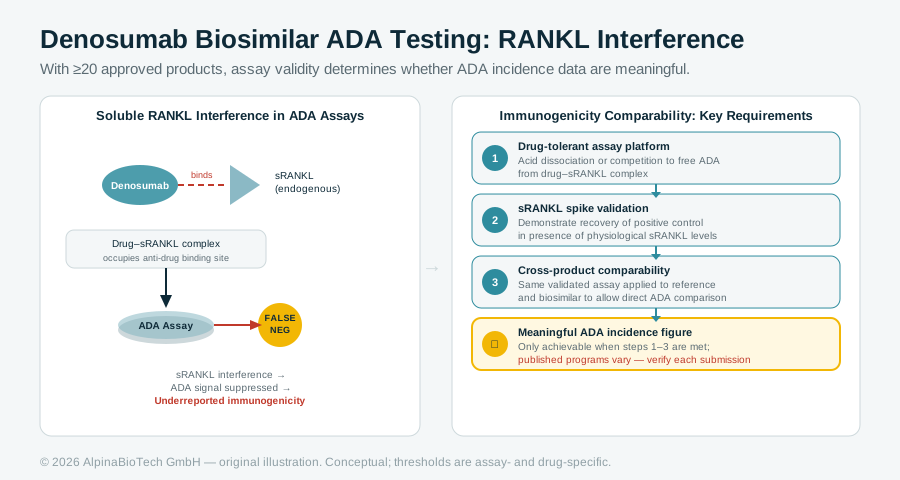
Degevma's FDA Approval and a Market with More Than 20 Denosumab Biosimilars: What Immunogenicity Comparability Testing Actually Requires
The FDA's approval of denosumab-adet (Degevma) on September 28, 2026 brings the cumulative total of approved denosumab products to at least 20, raising a concrete methodological question: in a market this saturated, with interchangeability-driven pharmacy substitutions, what does a reported ADA incidence figure actually tell you? The answer depends entirely on whether the assay has solved the soluble RANKL interference problem, and the published literature shows that not every program has.
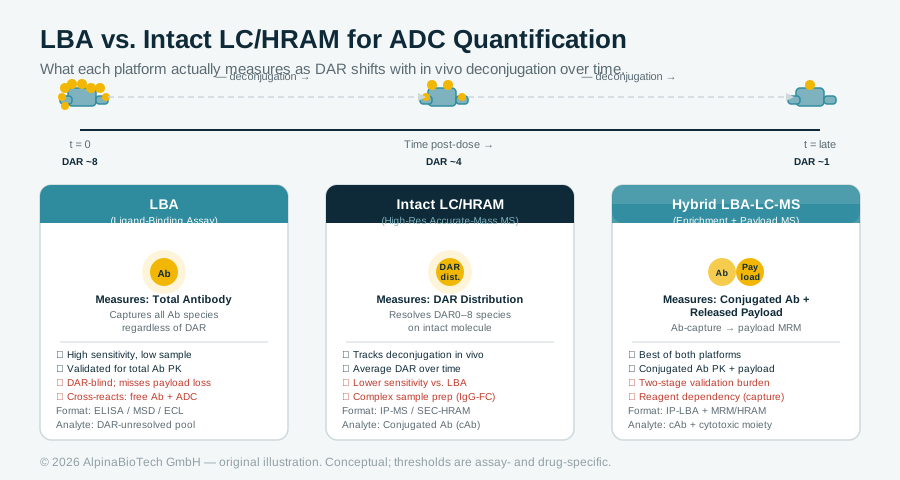
LBA vs. Intact LC/HRAM for ADC Quantification: What Each Method Actually Measures
Selecting a bioanalytical platform for antibody-drug conjugates is a structural decision: deconjugation and DAR shift mean the circulating analyte changes continuously after dosing. Two 2026 publications, an AAPS ADC Working Group white paper and a peer-reviewed PPD hybrid assay validation, sharpen the practical framework for LBA, intact LC/HRAM, and hybrid LBA-LC-MS approaches in regulated ADC studies.
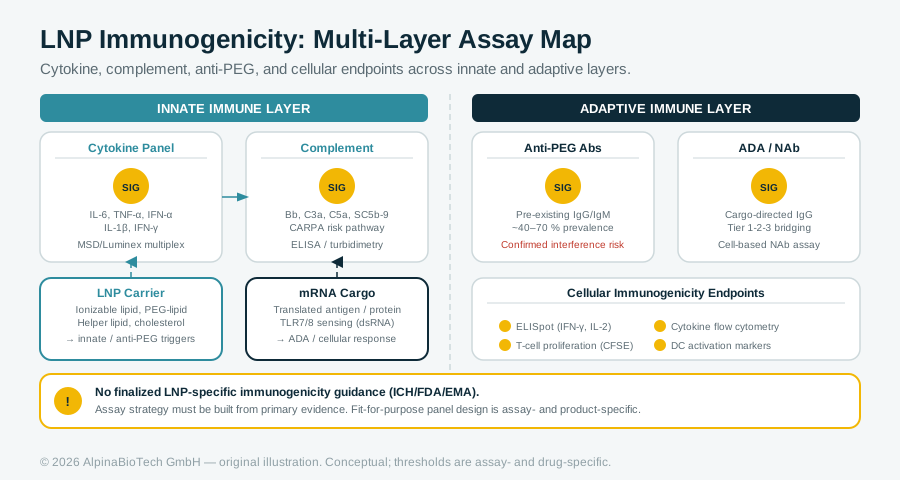
Immunogenicity Assessment for LNP-Based Therapeutics: Mapping the Assay Demands Across Innate and Adaptive Endpoints
LNP-based therapeutics generate immunogenicity signals across at least two immune layers, involving carrier and cargo independently, against a background of pre-existing anti-PEG antibodies in a substantial fraction of patients. No finalized LNP-specific immunogenicity guidance exists, leaving bioanalytical scientists to build assay strategies from the LNP-specific evidence base up. This article maps the cytokine, complement, anti-PEG, and cellular endpoints that a fit-for-purpose panel must address.