Article · 26 June 2026
Biosimilar Ustekinumab, Treatment Sequencing, and What It Means for Drug-Level Monitoring
As cost-effectiveness models and clinical guidelines position biosimilar ustekinumab earlier in the Crohn's disease treatment algorithm, the demand for validated therapeutic drug monitoring assays grows more urgent. This article examines the pharmacokinetic, immunogenicity, and regulatory evidence that labs need to keep pace with a rapidly expanding biosimilar class.
AlpinaBioTech
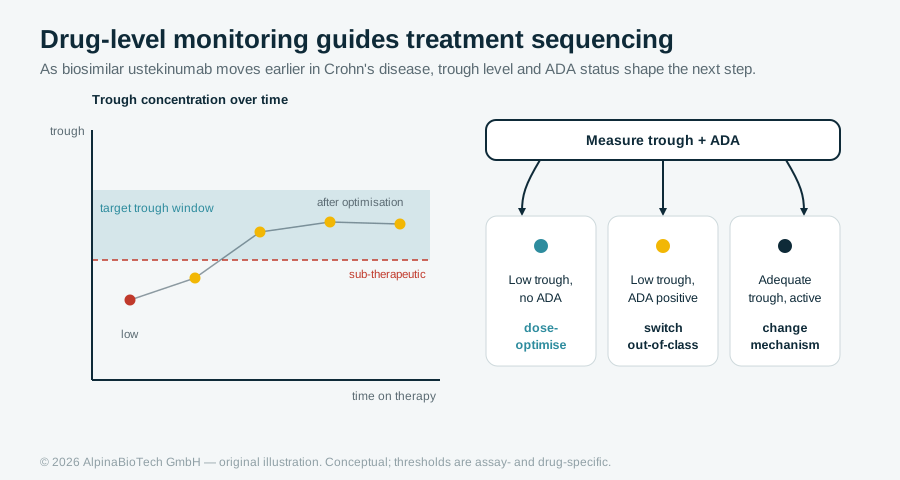
A cost-effectiveness analysis published in PharmacoEconomics Open in 2026 and a simultaneous scoping review in JAMA Health Forum examining biosimilar regulatory rules across all six WHO regions converge on a single practical problem for laboratories: as biosimilar ustekinumab moves earlier in the treatment algorithm for inflammatory bowel disease, the case for routine therapeutic drug monitoring grows sharper, and the assay landscape has not yet fully caught up.
The Clinical Trigger: Moving Biosimilar Ustekinumab to First Line
The evidence base for ustekinumab in biologic-naive Crohn's disease rests on the SEAVUE trial. Sands et al. evaluated the efficacy and safety of monotherapy with either ustekinumab or adalimumab in biologic-naive patients with moderately to severely active Crohn's disease in a randomised, double-blind, parallel-group, active-comparator, phase 3b trial at 121 hospitals or private practices in 18 countries. The study enrolled 386 eligible patients, randomly assigned to either ustekinumab (191 patients) or adalimumab (195 patients) [11]. There was no significant difference in the primary outcome between the two groups, with 65% one-year clinical remission rates in the ustekinumab group versus 61% in the adalimumab group [11]. SEAVUE was the first randomised controlled trial to directly compare two biologic agents for the treatment of Crohn's disease [11].
That clinical equivalence, combined with ustekinumab's favorable tolerability profile, laid the evidence base for the sequencing question that cost-effectiveness modelers have now revisited in light of biosimilar pricing. Crohn's disease is associated with a high economic burden for the Spanish National Healthcare System, driven by pharmacological expenses. Following the recent incorporation of ustekinumab biosimilars into the market, Rodríguez-Lago et al. evaluated the cost-effectiveness of different treatment sequences, including biosimilar ustekinumab (bsUST), for moderate-to-severe Crohn's disease from the National Health System perspective in Spain, with results published in PharmacoEconomics Open volume 10, pages 557 to 566, 2026 [1].
The investigators built a Markov model with 2-week cycles and a lifetime horizon, incorporating health states covering active disease, response, remission, surgery, and death, with funnel states to simulate induction and treatment changes after loss of response [1]. The comparator regimens spanned biosimilar adalimumab (bsADA), biosimilar intravenous infliximab (bsIFX), biosimilar ustekinumab (bsUST), risankizumab, upadacitinib, and vedolizumab [1]. Results showed that sequences positioning drugs with a good efficacy and safety profile such as bsUST in first lines of treatment not only contribute to better clinical results but also reduce costs for the healthcare system [1].
Reviewers writing in United European Gastroenterology Journal (D'Amico et al., 2025;13(2):186-200) reached the same conclusion: ustekinumab biosimilars "could be considered as first-line therapy for patients with IBD requiring advanced treatment," increasing access and changing the drug's positioning in the Crohn's disease treatment algorithm [5]. A companion editorial in the same issue (Bezzio et al., 2025;13(2):177-178) observed that the advent of ustekinumab biosimilars marks a significant turning point in the treatment of Crohn's disease, as making advanced treatments more accessible could enable a shift toward earlier intervention, potentially improving long-term outcomes and supporting sustainable healthcare strategies [9]. The positive outcomes demonstrated in studies like SEAVUE reinforce the potential of ustekinumab as first-line therapy to effectively induce and maintain remission [11].
The Assay Demand That Follows
Earlier use of any biologic immediately raises a monitoring question: once a patient is on the drug, how do you confirm therapeutic exposure and detect immunogenicity before failure becomes clinically apparent?
For ustekinumab in the subcutaneous (SC) maintenance phase, the target window is well-established. During maintenance stages in inflammatory bowel diseases, trough ustekinumab concentrations between 3 and 7 mcg/mL are associated with clinical response and remission [6]. This threshold applies specifically to the SC maintenance setting; the induction phase uses weight-based intravenous dosing under different pharmacokinetic conditions, as reflected in the HMSA cohort discussed below, which studied 90 mg SC maintenance dosing. Subtherapeutic trough concentrations are most often due to increased drug clearance related to inflammatory burden or body weight and are commonly managed by dose interval shortening rather than addition of immunomodulator therapy [6].
The number of reports on therapeutic drug monitoring (TDM) of ustekinumab in IBD patients is increasing, but an optimal concentration predicting endoscopic remission has not been fully elucidated [6]. That gap matters because the clinical endpoints are not equivalent: achievement of endoscopic remission requires higher ustekinumab trough levels than required for normalization of CRP and serum albumin levels [6]. A laboratory that only confirms biochemical response may miss patients who remain in endoscopic active disease.
A 2024 cohort study in Journal of Digestive Diseases put numbers to this gap. Among 177 IBD patients on ustekinumab, the mean trough level was 4.742 mcg/mL [3]. Injection schedule correlated significantly with ustekinumab levels (p less than 0.001), naivety to anti-TNF therapy correlated with higher ustekinumab levels (p = 0.048), and higher inflammatory biomarkers correlated significantly with lower ustekinumab levels [3]. A lower Simple Endoscopic Score for Crohn's disease correlated with adequate ustekinumab levels (p = 0.018) [3].
Newer pharmacokinetic work suggests that trough levels alone may not tell the full story. One prospective cohort of 83 IBD patients receiving 90 mg subcutaneous ustekinumab compared drug clearance and trough drug concentrations with disease activity, using a drug-tolerant homogeneous mobility shift assay (HMSA) to measure ustekinumab concentrations and antibodies to ustekinumab at trough [4]. Drug clearance, derived via Bayesian pharmacokinetic modeling, was better associated with disease control than the static trough value [4]. That has direct implications for how labs design and deploy ustekinumab assays: the field is moving toward assay formats that can feed population PK models rather than simply producing a single concentration output.
Ustekinumab quantitation is performed in conjunction with immunogenicity assessment for antibodies to ustekinumab (ATU). The current standard measures free ustekinumab and free ATU; it does not measure ustekinumab bound to ATU as immunocomplexes [6]. That is a known limitation for drug-sensitive ELISA formats, and it is one reason drug-tolerant platforms including HMSA have drawn interest in the IBD monitoring field [4].
The Pharmacokinetic Biosimilarity Question
When a patient switches from originator Stelara to a biosimilar, the assay must still return a valid result. The pharmacokinetic bridging data for ABP 654 (Wezlana), the first FDA-approved ustekinumab biosimilar, support this. In a randomised, double-blind, single-dose, 3-arm, parallel-group study, a total of 238 healthy subjects were randomised 1:1:1 and stratified by gender and ethnicity to receive a single 90 mg subcutaneous injection of ABP 654 or ustekinumab sourced from the US or from the EU [12]. PK similarity was established based on 90% confidence intervals for the primary endpoints of AUCinf and Cmax being contained within the prespecified margin of 0.80 to 1.25 [12]. No clinically meaningful differences in immunogenicity were found among the three products [12].
PK equivalence established in a healthy-volunteer bridging study is a necessary but not a sufficient reassurance for the monitoring lab. The assay must also demonstrate that the epitope on the biosimilar's p40 subunit is recognized with equivalent affinity by the capture and detection antibodies used in the immunoassay, a validation step that requires the actual biosimilar material in-hand.
The FDA-approved ustekinumab biosimilar class has grown rapidly. Starjemza (ustekinumab-hmny), developed by Bio-Thera Solutions, Ltd., received its FDA approval on May 22, 2025, making it the eighth FDA-approved biosimilar to Stelara [13][14]. On November 6, 2025, Hikma Pharmaceuticals PLC announced the commercial launch of Starjemza in the United States [16]. Because approvals and launches in this class remain active, the FDA Purple Book should be consulted for the current approved count at the time of patient care [15]. Products in this class are approved for treatment of plaque psoriasis, psoriatic arthritis, Crohn's disease, and ulcerative colitis [13]. Labs running ustekinumab assays are therefore likely to encounter multiple different biosimilar products in their patient populations simultaneously.
In Europe, the rollout is also well advanced. On January 23, 2025, Celltrion confirmed that it had completed the launch of Steqeyma (ustekinumab-stba) across five major markets, with launches in France on January 20, 2025; Italy and Spain in mid-January 2025; the UK on December 2, 2024; and Germany in November 2024 [8].
The Regulatory Backdrop: Why Assay Comparability Is Not Globally Uniform
The drug-level and immunogenicity data that inform monitoring thresholds are often generated in clinical trials conducted under a specific national regulatory framework. Whether those data transfer reliably across borders depends on whether the underlying biosimilar approval followed comparable standards, and this is precisely where global inconsistency creates practical risk for any laboratory applying published TDM thresholds to a patient treated with a biosimilar approved under a different regulatory system.
A 2026 scoping review in JAMA Health Forum by Watanabe et al. found that regulatory harmonization is needed to ensure consistent biosimilar policies, and that currently global regulatory policies and requirements remain inconsistent [2]. The scoping review followed PRISMA-ScR methodology and searched CINAHL, PubMed, and Scopus from inception through March 2026 for regulatory guidance on biosimilar medications in the most populous countries in each WHO region [2]. The regulatory guidelines of 19 countries (12 with emerging and developing economies and 7 with advanced economies) were included; the term "biosimilar" was common, with most countries defining biosimilarity as the absence of differences in the medicine's quality, safety, and efficacy compared with the reference product; and 11 countries required pharmacovigilance plans for inclusion in biosimilar applications [2].
The scoping review provides a detailed comparison of biosimilar regulatory guidelines across all WHO regions and identified similarities and differences that may limit the transferability of data between and among countries [2]. The granular differences in what was studied and under which evidentiary standards matter directly when a laboratory attempts to apply published TDM thresholds, derived from one regulatory context, to patients treated with a biosimilar approved under another.
A 2025 descriptive review published in Therapeutic Innovation and Regulatory Science by Kirchlechner and Cohen examined individual national regulatory requirements and guidelines for biosimilars in more than 70 countries as of July 2024, including both emerging countries and those with extensive biosimilar experience, and similarly identified key differences that complicate global development efforts [7]. Together, the two analyses confirm that a biosimilar product circulating in a Latin American or Southeast Asian market may have been approved under rules with different interchangeability requirements and pharmacovigilance obligations than the product studied in the clinical trials that established published monitoring thresholds.
At times, there is a requirement for use of locally sourced reference product, forcing biosimilar developers to repeat analytical or clinical comparability studies against reference product batches sourced from within a given country [7]. While most health authorities no longer require comparative animal toxicology studies of the proposed biosimilar and reference product, these are still required in several countries, forcing biosimilar companies to conduct such studies or risk non-approval [7]. These structural differences in what was studied and under which standards matter directly when a laboratory attempts to apply published TDM thresholds, derived from one regulatory context, to patients treated with a biosimilar approved under another.
What This Means for the TDM Laboratory
Three implications are directly actionable.
Assay cross-reactivity with all approved biosimilars. As biosimilar ustekinumab moves to first line in multiple health systems, the same assay must quantify any version of the drug a patient may be taking. Labs should confirm that their ustekinumab quantitation assay has been validated against the biosimilar products available in their patient population. This is not a trivial exercise: the p40 capture epitope is well-conserved, but post-translational modifications and formulation differences across biosimilars can affect antibody binding in a solid-phase format.
ADA assay drug tolerance. Immunoassays for serum ustekinumab and anti-ustekinumab antibody concentrations have been described in the literature as low-cost assays requiring no special materials such as radioisotopes or anti-idiotype antibodies and no expensive measurement devices [6]. However, standard ELISA-based ADA assays remain drug-sensitive. Drug-tolerant formats matter particularly for patients on maintenance dosing whose trough levels sit in the middle of the therapeutic window and who may nonetheless be developing low-titer ADA. Missing those early ADA signals is precisely where proactive TDM adds value over reactive testing.
Proactive versus reactive monitoring. Reactive monitoring is employed when response is suboptimal [6]. But early positioning of biosimilar ustekinumab in biologic-naive patients means clinicians may not have a prior biologic failure as a sentinel event. The argument for proactive monitoring, pulling trough levels at SC maintenance even in apparently responding patients, becomes stronger when the drug is used earlier and the long-term cost-effectiveness model assumes maintained drug persistence [1].
Forward
Available data demonstrate that ustekinumab biosimilars exhibit comparable efficacy, pharmacokinetics, safety, and immunogenicity to the reference product, but real-world data for the IBD indication specifically are not yet available, as ustekinumab biosimilars have been approved for Crohn's disease based on extrapolation [5]. Those real-world studies will also generate the drug-level and immunogenicity datasets needed to refine monitoring thresholds for the biosimilar era. Until that data matures, the laboratory's role is clear: validate your ustekinumab and ATU assays against the biosimilar products in clinical use, use drug-tolerant ADA formats where feasible, and document which product version was being monitored so real-world pharmacovigilance data remain interpretable as the biosimilar mix in your patient population evolves.
All AlpinaBioTech ustekinumab and anti-ustekinumab antibody assays are intended for Research Use Only (RUO) and are not approved or cleared for diagnostic or therapeutic use.
Sources
- [1] link.springer.com
- [2] jamanetwork.com
- [3] onlinelibrary.wiley.com
- [4] sciencedirect.com
- [5] onlinelibrary.wiley.com
- [6] sciencedirect.com
- [7] link.springer.com
- [8] pearceip.law
- [9] onlinelibrary.wiley.com
- [10] purplebooksearch.fda.gov
- [11] thelancet.com
- [12] accp1.onlinelibrary.wiley.com
- [13] drugs.com
- [14] accessdata.fda.gov
- [15] purplebooksearch.fda.gov
- [16] bigmoleculewatch.com
- [17] pmc.ncbi.nlm.nih.gov
More articles
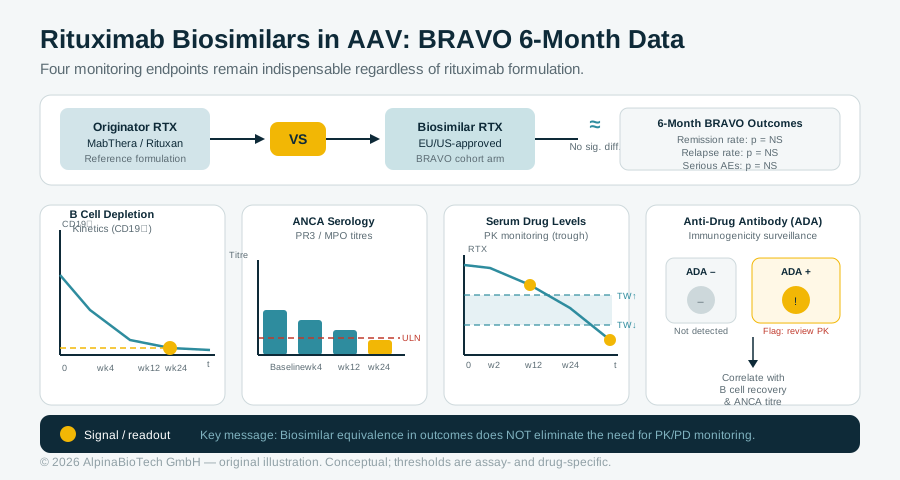
Rituximab Biosimilars in AAV: What Six-Month Real-World Data Tell Monitoring Scientists
The BRAVO multicenter cohort study found no statistically significant differences in remission rates, relapse rates, or serious adverse events between biosimilar and originator rituximab at six months in granulomatosis with polyangiitis and microscopic polyangiitis. For laboratories supporting drug-level and immunogenicity testing in biosimilar-treated AAV populations, the findings reinforce rather than reduce the case for structured pharmacokinetic and pharmacodynamic monitoring. B cell depletion kinetics, ANCA serology, serum drug levels, and anti-drug antibody assays each remain indispensable endpoints regardless of which rituximab formulation the patient receives.
Read more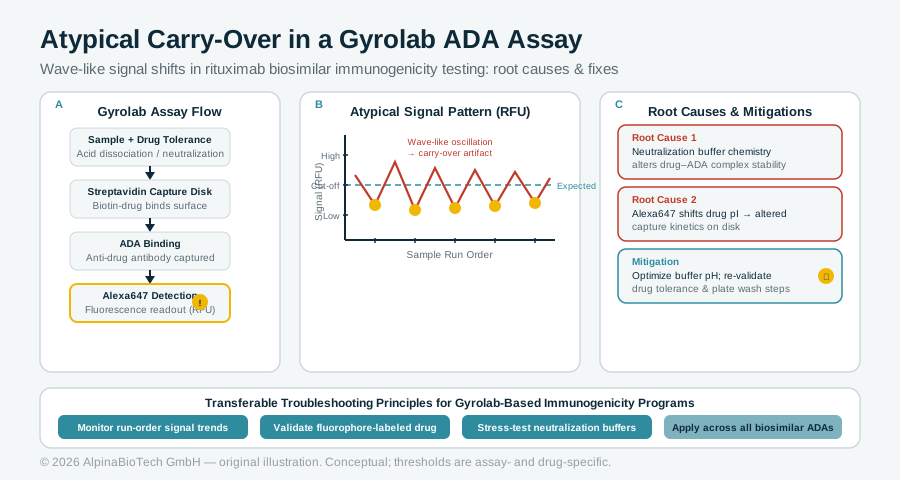
Atypical Carry-Over in a Gyrolab ADA Assay: Lessons from a Rituximab Biosimilar Case Study
A published case study targeting MabionCD20, a rituximab biosimilar, identified wave-like signal fluctuations in Gyrolab-based ADA assays caused by neutralization buffer chemistry and fluorophore-induced isoelectric point shifts. The investigation offers transferable troubleshooting principles for any laboratory running Gyrolab-based immunogenicity programs, particularly around drug tolerance and repeatability.
Read more