Article · 14 September 2026
CPS1 Serum Immunoassay: What a Mitochondrial Enzyme Biomarker Tells You That ALT Cannot
Carbamoyl phosphate synthetase 1 (CPS1) is a hepatocyte-selective mitochondrial enzyme with a serum half-life of roughly 126 minutes, making it a near-real-time indicator of injury trajectory rather than injury presence. A 2026 Gut review synthesizes a decade of mechanistic and clinical work, including ELISA data from 764 serial samples across 270 acute liver failure patients, establishing CPS1 as a prognostically informative complement to standard aminotransferase panels. All AlpinaBioTech CPS1 immunoassay products are for Research Use Only.
AlpinaBioTech
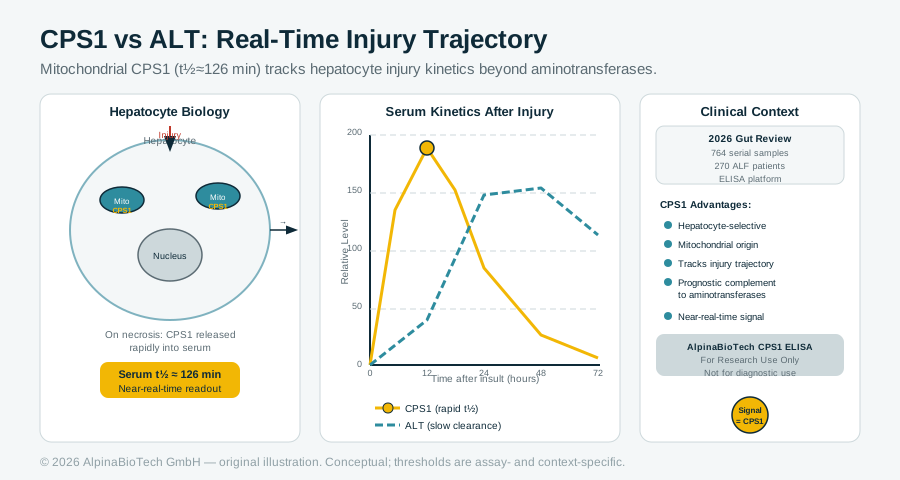
Alanine transaminase has anchored hepatotoxicity assessment for decades, but it carries a fundamental limitation that clinicians and drug development scientists know well: once ALT rises, it stays elevated long after the injury has peaked, resolved, or progressed. It cannot reliably tell you which direction a patient is heading. A 2026 review in Gut by Chen, Li, Park, Chen, and Omary (Rutgers University) revisits a candidate biomarker that addresses exactly that gap: carbamoyl phosphate synthetase 1 (CPS1), a mitochondrial enzyme with a serum half-life of 1 to 2 hours, a measurable ELISA signal across 764 serial serum samples from a 270-patient human cohort, and a non-enzymatic immune-modulatory role whose mechanism was established in a 2019 PNAS paper and is now comprehensively synthesized in the 2026 review [1, 4].
The biochemistry is unusual enough to matter to scientists designing detection assays. CPS1 is not just a leakage marker: it has a dual life, one inside hepatocytes and one, characterized since 2019, in the bloodstream itself.
What CPS1 Is and Why It Shows Up in Blood
CPS1 is primarily expressed in hepatocytes as a highly abundant mitochondrial matrix enzyme that catalyses the first step of the urea cycle, leading to renal nitrogen disposal [1]. CPS1 is physiologically secreted, apically, into bile likely via mitochondria-derived vesicles. Normally absent from serum, it is released by basolateral mistargeting and cellular injury and becomes readily detectable in serum during acute liver failure (ALF) [4].
The selectivity of that release is a key assay-relevant feature. Proteomic analysis of hepatocyte culture medium identified CPS1 among the most readily detected proteins released by apoptotic hepatocytes, following a test in which isolated mouse hepatocytes were subjected to Fas-ligand-mediated apoptosis [3]. Immune staining showed that CPS1 localized to mouse hepatocytes but not ductal cells [3]. That selectivity, combined with its hepatocyte-predominant expression pattern, gives CPS1 a tissue specificity that generic liver enzyme panels lack.
The serum half-life is the defining bioanalytical feature. Mouse CPS1 detectability was similar in serum and plasma, and its half-life was 126 +/- 9 minutes [3]. Injury-triggered CPS1 release into blood, or into media in cultured hepatocytes, is selective compared with other mitochondrial proteins. This, coupled with its abundance and short 1 to 2 hour serum half-life, renders it a prognostic serum biomarker, particularly in human acetaminophen-related ALF [1]. That ordering of half-lives means that a falling serum CPS1 reading actively signals cessation of hepatocyte death, something that a persistently elevated ALT cannot do.
CPS1 is the most abundant mitochondrial matrix protein in hepatocytes [4], a fact that has two practical consequences: it is detectable at measurable concentrations after even limited hepatocyte injury, and it makes up a substantial fraction of what is released into blood when hepatocytes die. Specifically, CPS1 makes up 15 to 20% of total hepatic mitochondrial protein [6].
The ELISA Evidence Base
The primary human dataset grounding CPS1 as a serum biomarker is Kwan et al., published in Clinical Gastroenterology and Hepatology, Volume 21, Issue 12, November 2023 [2]. CPS1 levels were determined using enzyme-linked immunosorbent assay and immunoblotting of sera collected by the ALF Study Group (ALFSG) from patients with ALI and ALF, including 103 patients with acetaminophen and 167 with non-acetaminophen ALF etiologies, across a total of 764 serum samples [2]. The 764 samples reflect serial longitudinal draws from 270 unique patients, not 764 separate individuals.
The outcomes stratification was clinically meaningful. The first reading of CPS1 and its increase from day 1 to day 3, but not alanine transaminase or aspartate transaminase, were significantly higher in acetaminophen (APAP)-related than non-APAP patients, particularly in those who were liver-transplanted or died [2]. CPS1 also improved the ALF Predictive Index accuracy of transplant-free survival in APAP patients [2].
The MELD comparison requires careful framing. The ALFSG Prognostic Index itself already outperforms MELD as an independent tool for acetaminophen-related ALF. What the CPS1 ELISA data added was an incremental improvement to that index. The augmented ALFSG PI incorporating CPS1 data outperformed MELD in the acetaminophen-specific cohort; this finding did not extend to non-acetaminophen etiologies [2].
The recovery signal is equally important for assay design. CPS1 rapidly decreased to undetectable levels in sera of patients with acetaminophen-related ALF who ultimately recovered, while ALT levels remained elevated [2]. For research assay scientists, this means that the lower limit of detection of a CPS1 ELISA is not a mere technical specification: it is what enables discrimination between patients who will recover spontaneously and those on a trajectory toward transplant or death.
From Leakage Marker to Functional Cytokine: Establishing the Mechanism
CPS1's non-enzymatic role in immune modulation was established in a 2019 PNAS paper by Park and colleagues [4], a body of work that the 2026 Gut review synthesizes and contextualizes [1]. Understanding that sequence matters for how assay scientists interpret a declining CPS1 curve.
The short half-life of CPS1 is due to its rapid uptake by monocytes, which then become anti-inflammatory, independent of CPS1 enzyme activity, and home to the liver [1]. Recombinant CPS1 blocks liver injury in two experimental mouse models and accelerates recovery even when administered after the injury [4].
The protective mechanism bypasses the liver's own resident macrophages. Recombinant CPS1 does not activate hepatic macrophages directly; rather, it activates bone marrow and circulating monocytes that then home to the liver. Administration of recombinant CPS1 prevents mouse liver damage induced by Fas ligand or acetaminophen, but this protection is absent in macrophage-deficient mice. Moreover, recombinant CPS1 protects from acetaminophen-induced liver injury even when given therapeutically after injury induction [4].
Its rapid turnover is explained by its non-enzymatic role as an immune modulator via its uptake by circulating monocytes, leading to differentiation of anti-inflammatory cells that home to, and protect, the injured liver [1]. A CPS1 ELISA measuring the free, serum-accessible pool therefore captures a snapshot of the balance between ongoing hepatocyte injury and monocyte-mediated clearance: a more nuanced readout than the signal value alone might suggest.
Biophysical behavior relevant to sample handling: Serum, bile, and purified CPS1 manifest sedimentation properties that overlap with extracellular vesicles, due to the propensity of CPS1 to aggregate despite being released primarily as a soluble protein [1]. This has direct practical consequences for sample processing, addressed in the assay design section below.
Where the Assay Fits in a DILI Research Workflow
Drug-induced liver injury (DILI) drives both preclinical attrition and acute clinical liver failure. DILI is a leading cause of candidate drug attrition and withdrawal, and in the clinic it is the primary cause of acute liver failure. Traditional diagnostic markers for DILI include alanine aminotransferase, aspartate aminotransferase, and alkaline phosphatase, yet these routinely used markers have several noteworthy limitations, restricting their sensitivity, specificity, and accuracy in diagnosing DILI [5].
CPS1 addresses specific gaps in the standard aminotransferase panel:
- Etiological discrimination: The ALFSG dataset showed CPS1 differentiated acetaminophen-driven ALF from non-acetaminophen etiologies. The day 1 to day 3 increase in CPS1, but not ALT or AST, was significantly higher in APAP-related than non-APAP patients, particularly in those who were transplanted or died [2].
- Temporal resolution: CPS1's abundance and short 1 to 2 hour serum half-life render it a prognostic biomarker in human acetaminophen-related ALF [1], allowing near-real-time monitoring of injury trajectory and recovery rather than injury magnitude alone.
- Prognostic layering: CPS1 improved the ALF Predictive Index accuracy of transplant-free survival in APAP patients [2], in a cohort where that index was already the stronger tool against MELD.
Assay Design Considerations
Several technical points are relevant when configuring a serum CPS1 ELISA for research use.
Matrix. Mouse CPS1 detectability was similar in serum and plasma [3]. Cross-matrix validation remains advisable in any new human study design, particularly where anticoagulant type may affect signal.
Timing of sampling. The short serum half-life of 126 +/- 9 minutes in mice [3], and 1 to 2 hours as observed in human contexts [1, 2], means that sampling intervals matter more for CPS1 than for ALT. A sample drawn several hours post-peak injury may show a substantially lower CPS1 reading than one drawn at peak, even if the underlying injury burden was identical. Research protocols should specify collection windows relative to a defined clinical event or challenge.
Species cross-reactivity. CPS1 has 10- to 20-fold less expression and approximately 3% relative activity in the small intestinal mucosa and even lower levels in other tissues [3]. Given that much of the mechanistic work was done in mouse models [3, 4], investigators moving from murine preclinical work to human clinical sample testing should confirm species-specific antibody pairs in their ELISA configuration. Human and mouse CPS1 share structural features but are not identical, and reagent cross-reactivity should not be assumed.
Biophysical behavior and aggregation. As noted above, serum, bile, and purified CPS1 manifest sedimentation properties that overlap with extracellular vesicles, due to the propensity of CPS1 to aggregate despite being released primarily as a soluble protein [1]. This aggregation tendency is a practical concern for sample handling: freeze-thaw cycles and extended room-temperature incubations could alter the measurable free CPS1 fraction and introduce variability. Sample handling SOPs should be piloted during assay development.
Immunoblot as orthogonal confirmation. A monoclonal antibody to CPS1 was generated to carry out immunoblotting of CPS1, with a standard curve using five full-length recombinant CPS1 protein amounts selected to span the quantitative range [2]. Researchers building a fit-for-purpose panel may find immunoblotting a useful orthogonal confirmation step, particularly at low analyte concentrations near the detection limit.
Open Questions and Emerging Contexts
CPS1, normally undetectable in serum, serves as a prognostic serum biomarker of liver injury particularly in cases of acetaminophen toxicity leading to ALF. Preliminary studies suggest its potential utility in metabolic dysfunction-associated steatotic liver disease (MASLD) and other settings, though these require validation given small cohort sizes and limited assay sensitivity in chronic, lower-grade injury environments [1].
MASLD is of particular interest given its rising global prevalence and the ongoing need for non-invasive injury stratification tools. Downregulation of CPS1 mRNA and protein expression is found in hepatocellular cancer cell lines and in patients with steatosis and nonalcoholic fatty liver disease [1], a finding that complicates simple leakage-based interpretation and may require normalization strategies or complementary markers in that clinical context.
Whether the ELISA performance characteristics that distinguish acetaminophen-related ALF patients from survivors will translate to a chronic, lower-grade hepatocellular injury environment remains an open question. The kinetics of a slower, sustained CPS1 release pattern in MASLD may require a different assay format or sampling strategy than the acute injury protocols used in the ALFSG cohort.
What This Means for Assay Scientists
The 2026 Gut review by Chen et al. consolidates a decade of mechanistic and clinical work on CPS1 into a coherent case for investing in validated serum immunoassay tools for this analyte [1]. The core arguments are: hepatocyte-selective expression; a serum half-life short enough to track injury kinetics in near-real-time; ELISA-measurable concentrations across 764 serial samples from 270 human acute liver failure patients; and a non-enzymatic role, established by Park et al. in 2019 [4] and now comprehensively synthesized in [1], in which rapid clearance from serum reflects active monocyte uptake and M2 polarization rather than passive dilution.
For scientists in drug development and safety biomarker work, the practical implication is that a fit-for-purpose CPS1 ELISA, rigorously validated for sensitivity, matrix equivalence, and sample stability, could supplement or in certain research contexts replace serial ALT measurements when the question is about injury trajectory rather than injury presence. The current evidence is most clearly demonstrated for acetaminophen-related ALF; extension to idiosyncratic DILI, MASLD, and viral liver disease requires prospective validation in adequately powered cohorts.
All AlpinaBioTech CPS1 immunoassay products are for Research Use Only and are not intended for clinical diagnostic use.
Sources
- [1] pubmed.ncbi.nlm.nih.gov
- [2] cghjournal.org
- [3] journals.physiology.org
- [4] pnas.org
- [5] pmc.ncbi.nlm.nih.gov
- [6] escholarship.org
More articles
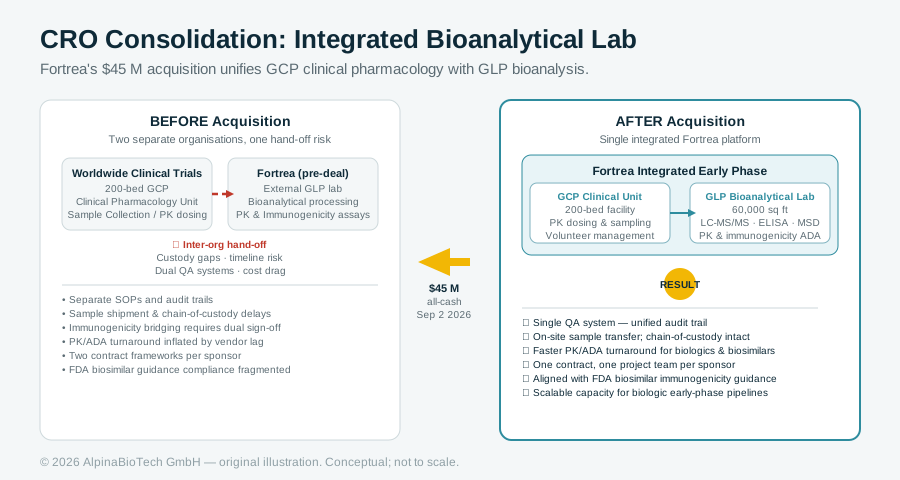
Fortrea Acquires Worldwide Clinical Trials' Bioanalytical Lab: What the $45 Million CRO Deal Means for Assay Scientists
On September 2, 2026, Fortrea announced a $45 million all-cash acquisition of Worldwide Clinical Trials' Early Phase Services division, bringing a 60,000-square-foot GLP bioanalytical laboratory and a 200-bed GCP clinical pharmacology unit under one operational roof. For assay scientists running PK and immunogenicity programs, the deal changes the vendor map by eliminating inter-organization hand-offs between sample collection and bioanalytical processing. Broader CRO consolidation and pending FDA biosimilar guidance shifts make integrated bioanalytical infrastructure increasingly valuable for early-phase biologic programs.
Read more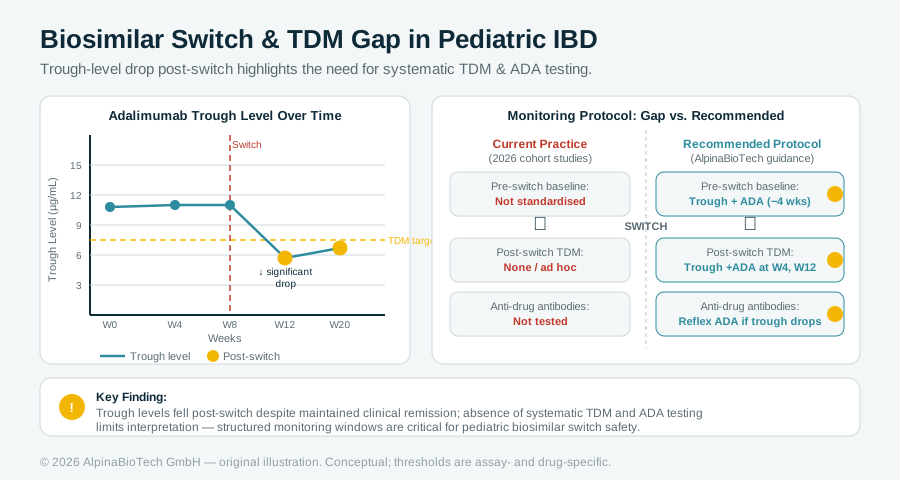
Adalimumab Biosimilar Switches in Pediatric IBD: What the Trough Level Drop Means for Your Monitoring Protocol
Two 2026 multicenter studies confirm that nonmedical adalimumab biosimilar switches in children with IBD generally maintain disease control, but trough levels fell significantly post-switch in one cohort, and neither study included systematic TDM or ADA testing. This article examines what that measurement gap means for laboratory monitoring protocols around pediatric biosimilar switches.
Read more