Article · 11 September 2026
Fortrea Acquires Worldwide Clinical Trials' Bioanalytical Lab: What the $45 Million CRO Deal Means for Assay Scientists
On September 2, 2026, Fortrea announced a $45 million all-cash acquisition of Worldwide Clinical Trials' Early Phase Services division, bringing a 60,000-square-foot GLP bioanalytical laboratory and a 200-bed GCP clinical pharmacology unit under one operational roof. For assay scientists running PK and immunogenicity programs, the deal changes the vendor map by eliminating inter-organization hand-offs between sample collection and bioanalytical processing. Broader CRO consolidation and pending FDA biosimilar guidance shifts make integrated bioanalytical infrastructure increasingly valuable for early-phase biologic programs.
AlpinaBioTech
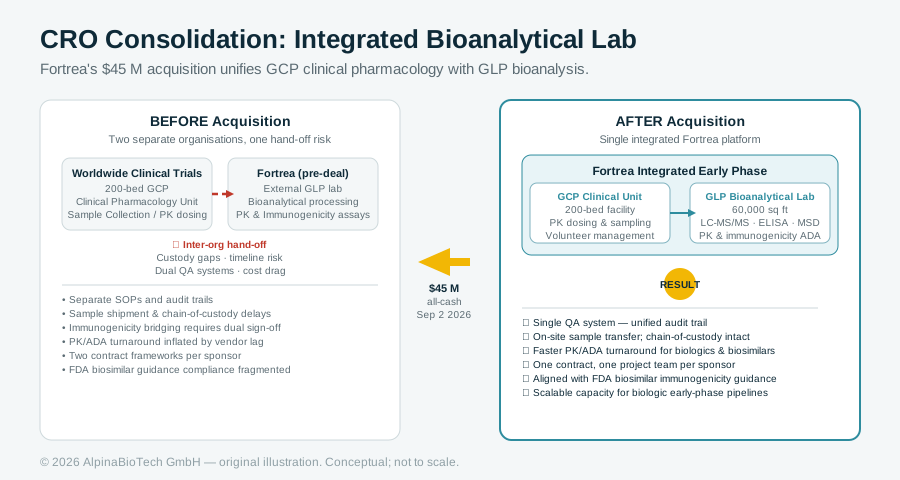
On September 2, 2026, Fortrea (Nasdaq: FTRE) and Worldwide Clinical Trials announced a definitive agreement under which Fortrea will acquire Worldwide's Early Phase Services division in an all-cash transaction valued at approximately $45 million [1]. For scientists who design, validate, and run regulated bioanalytical assays in support of pharmacokinetic (PK) and immunogenicity programs, the consequences extend well beyond a corporate org chart.
The core operational issue this deal addresses is structural. In early-phase clinical development, PK sample collection and bioanalytical processing have historically lived in separate organizations, creating coordination friction that slows data flow and complicates regulatory documentation. By adding in-house large and small molecule bioanalytical capabilities directly adjacent to its existing Clinical Pharmacology Services business, Fortrea eliminates that inter-organization hand-off for first-in-human studies [2].
What Changes Hands
The deal brings three geographically compact Texas facilities into Fortrea's network: a 60,000-square-foot GLP-compliant bioanalytical laboratory in Austin, a 200-bed GCP-compliant clinical pharmacology unit in San Antonio, and a biospecimen storage facility in Pflugerville [1].
The Austin laboratory is the anchor asset from a bioanalytical standpoint. As reported by Worldwide Clinical Trials on its product page, its validated method menu includes 600 LC-MS/MS methods and 1,500 total methods, with sensitivity reaching low pg/mL lower limits of quantification (LLOQs) using stable isotope-labeled internal standards for precise quantitation [9]. The lab's experience extends to validating analytes in plasma, serum, and cerebrospinal fluid (CSF), supporting First-in-Human Single Ascending Dose and Multiple Ascending Dose studies [9].
From a compliance standpoint, the GCP and GLP designations across the two primary sites matter practically. Samples collected under GCP clinical conditions at the San Antonio unit can move directly into GLP-governed bioanalytical processing in Austin within the same operational network, with no change of custody across organizations. That co-location of governed environments is a meaningful operational feature for sponsors preparing regulatory submissions where chain-of-custody continuity across the collection-to-analysis pathway must be documented [7].
Large and Small Molecules: What the Capability Covers
The acquisition adds dedicated in-house large and small molecule bioanalytical capabilities to Fortrea's Clinical Pharmacology Services business unit, enabling integrated execution of early-phase studies under a single CRO [1].
In a regulated bioanalytical context, large molecule bioanalysis typically means ligand binding assays (LBAs), including enzyme-linked immunosorbent assays (ELISAs) and electrochemiluminescence platforms, used to quantify biologic drug concentrations and to detect anti-drug antibodies (ADAs). As reported by Worldwide Clinical Trials, the Austin lab carries capabilities in small molecule and biologics, including PK, immunogenicity, and biomarkers, with a history of developing and validating bioanalytical assays in support of GLP and clinical studies [9].
Folding LBA-capable infrastructure into a clinical pharmacology unit matters directly for programs running first-in-human studies on monoclonal antibodies, bispecific constructs, or antibody-drug conjugates, where immunogenicity data must be generated concurrently with PK data, often using the same blood draws. These assets expand Fortrea's North American clinical research unit footprint, enabling more integrated, faster early-phase studies from first-in-human through proof-of-concept [3].
What Worldwide Clinical Trials Retains
The deal is a divestiture, not a dissolution. For Worldwide Clinical Trials, the divestiture of its Early Phase division is framed as a strategic concentration decision, supporting Worldwide's existing rapid global growth across oncology, neuroscience, internal medicine, and rare disease [3].
Worldwide retains the ability to support healthy volunteer studies globally through its external site network under a strategic alliance agreement with Fortrea intended to maintain continuity of operations, study delivery, and customer support throughout the transition [3].
Scientists managing active early-phase programs should confirm with their study teams exactly how sample processing continuity is handled under that alliance structure before their next sample submission window. The deal closes subject to regulatory and licensing approvals, which means there is a window, likely weeks to a few months, during which sponsors have active Worldwide contracts, Worldwide SOPs, and Worldwide site staff managing their Phase I participants while the entity they are actually contracting with is in legal transition [5].
Why Consolidation Is Accelerating in Bioanalytical Services
The Fortrea-Worldwide transaction sits inside a broader pattern of CRO market reshaping. Two other 2026 deals illustrate the trend.
On February 25, 2026, Charles River Laboratories (NYSE: CRL) signed a definitive agreement to sell certain European Discovery Services businesses to IQVIA Inc. for approximately $145 million in cash, subject to customary closing adjustments, plus potential contingent payments of up to $10 million tied to future performance [12]. The divested assets totaled $144 million in 2025 annual revenue within Charles River's Discovery and Safety Assessment segment and included five European sites in the UK, Germany, Finland, and the Netherlands, providing in vitro drug discovery, medicinal chemistry, structural biology, and pharmacology services [12]. The deal closed on May 22, 2026, at a preliminary purchase price of $125.2 million in cash, net of costs to sell and subject to certain customary closing adjustments [11]; the difference between the announced $145 million figure and the $125.2 million closing figure reflects standard net-of-costs-to-sell and working capital adjustment mechanics disclosed in the closing-quarter SEC filing [11].
Separately, Thermo Fisher Scientific completed the acquisition of Clario Holdings, a provider of endpoint data solutions for clinical trials, in an $8.875 billion cash deal announced in October 2025 [13, 14]. Clario provides regulatory-grade data capture and interpretation technology and services to biopharma companies globally, a service footprint that underpins the scale of the transaction [15]. Upon close, Clario became part of Thermo Fisher's laboratory products and biopharma services segment [13].
The Fortrea acquisition is a smaller, more targeted move than either of those transactions, but it follows the same logic: concentrate regulated capabilities, reduce hand-offs between contracted parties, and compress early-phase timelines.
Regulatory Tailwinds for Integrated PK and Immunogenicity Infrastructure
Regulatory shifts are amplifying the strategic value of integrated bioanalytical infrastructure, and two legislative and guidance developments are directly relevant to scientists running early-phase biologic programs.
First, on December 29, 2022, Congress enacted the FDA Modernization Act 2.0 (S.5002) as part of the Consolidated Appropriations Act, 2023 (Public Law 117-328) [20]. The law amends the Federal Food, Drug, and Cosmetic Act by authorizing sponsors to use alternatives to animal testing, including cell-based assays and computer models, to support an investigational new drug application, and removes a requirement to use animal studies for biosimilar biologics license applications [19]. The Act made non-animal alternatives permissible; it did not prohibit animal studies [19].
A successor bill, FDA Modernization Act 3.0, has advanced in stages. In the 118th Congress, S.5046 passed the Senate on December 12, 2024, but was never taken up by the House, and lapsed when that Congress ended [22]. The bill was reintroduced in the 119th Congress as S.355 (introduced February 3, 2025), which passed the Senate on December 16, 2025 [21]. A companion House bill, H.R.2821 (introduced April 10, 2025), remained in committee as of this writing [23]. As currently drafted, the legislation would require the FDA to publish an interim final rule replacing references to animal tests throughout its IND regulations with references to nonclinical tests, formally codifying the regulatory framework the 2022 law opened [21]. The bill has not been enacted into law as of September 2026, and the Senate-passed version still requires House passage and presidential signature.
On the biosimilar side, on June 20, 2024, FDA issued a draft guidance titled "Considerations for Demonstrating Interchangeability with a Reference Product: Update," describing considerations regarding switching studies intended to support a demonstration that a biological product is interchangeable with a reference product [16]. The Federal Register notice for the draft guidance (Docket No. FDA-2017-D-0154) is the authoritative public record of the agency's reasoning and comment period [17]. According to a December 2025 Jones Day analysis of the draft guidance, it "proposes that clinical switching studies between a reference product and a proposed biosimilar are generally no longer needed to demonstrate interchangeability" [18]. Jones Day further notes that if the draft guidance documents are finalized as written, the policy changes would effectively collapse the distinction between biosimilarity and interchangeability, with high-quality analytical comparability paired with PK and immunogenicity assessments generally sufficing, and clinical efficacy and switching studies becoming the exception, at least for therapeutic proteins [18]. These are draft documents; neither has been finalized as of this writing.
That potential shift makes the combination of PK sampling capacity with LBA-capable bioanalytical infrastructure more strategically valuable for early-phase biologic programs than it was under prior evidentiary frameworks. Sponsors planning biosimilar programs who rely more heavily on analytical method validation, PK bridging, and ADA tiered-testing data benefit directly from a CRO that can execute all three functions under a single operational roof.
Practical Implications for Assay and TDM Scientists
For scientists selecting a CRO partner for a biologic early-phase program, this deal changes the vendor map in a specific way. Fortrea now offers, within a single contractual relationship, a 200-bed GCP-compliant clinical pharmacology unit in San Antonio, a 60,000-square-foot GLP bioanalytical laboratory in Austin, and a biospecimen storage facility in Pflugerville, all in an all-cash transaction valued at approximately $45 million [1, 4].
From a regulatory documentation standpoint, the practical benefit is data provenance. When sample collection, interim biospecimen storage, and bioanalytical processing all occur within the same organizational network, chain-of-custody records, sample handling logs, and bioanalytical batch records originate from a single operational structure. For assay scientists preparing regulatory submissions, that coherence reduces the reconciliation burden when aligning clinical sample collection records against bioanalytical data packages, a requirement under both FDA GLP regulations (21 CFR Part 58) and the EMA Guideline on Bioanalytical Method Validation [7].
For programs that previously used the Worldwide Austin lab and are now mid-study, the relevant questions are: Does the strategic alliance agreement preserve access to existing validated methods and current equipment configurations? Are personnel changes anticipated that could affect method expertise continuity? Sponsors who signed master service agreements (MSAs) with Worldwide Clinical Trials should review those agreements with legal counsel to confirm whether assignment clauses require sponsor consent, and if so, whether that consent has been obtained or is being sought. Such a clause is a negotiating moment, not a formality [6]. The deal announcement does not answer method-continuity questions in detail; sponsors with active studies should seek written confirmation from both parties before their next sample submission window [5].
The transaction is expected to close pending approval of necessary regulatory and license requirements, as well as the parties entering into certain services agreements [8]. Until closing is confirmed, GLP site authorization status at the Austin facility remains under Worldwide's operational control, and sponsors should verify with both parties that no changes to the site's regulatory authorizations are anticipated during the ownership transition.
All assay and research tools described in connection with bioanalytical laboratory services are for Research Use Only (RUO) unless otherwise stated under a validated, regulated method accepted by a relevant regulatory authority. Research Use Only: Not for use in diagnostic procedures.
Sources
- [1] ir.fortrea.com
- [2] bioanalysis-zone.com
- [3] worldwide.com
- [4] citybiz.co
- [5] clinicaltrialvanguard.com
- [6] clinicaltrialvanguard.com
- [7] pharmasource.global
- [8] stocktitan.net
- [9] worldwide.com
- [10] worldwide.com
- [11] sec.gov
- [12] ir.criver.com
- [13] clinicaltrialsarena.com
- [14] ir.thermofisher.com
- [15] medtechdive.com
- [16] fda.gov
- [17] federalregister.gov
- [18] jonesday.com
- [19] amjmed.com
- [20] congress.gov
- [21] congress.gov
- [22] govtrack.us
- [23] govtrack.us
More articles
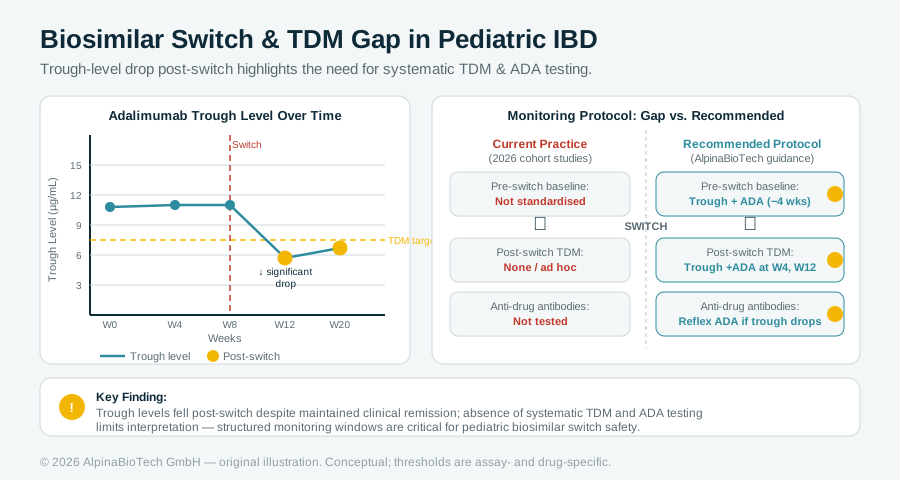
Adalimumab Biosimilar Switches in Pediatric IBD: What the Trough Level Drop Means for Your Monitoring Protocol
Two 2026 multicenter studies confirm that nonmedical adalimumab biosimilar switches in children with IBD generally maintain disease control, but trough levels fell significantly post-switch in one cohort, and neither study included systematic TDM or ADA testing. This article examines what that measurement gap means for laboratory monitoring protocols around pediatric biosimilar switches.
Read more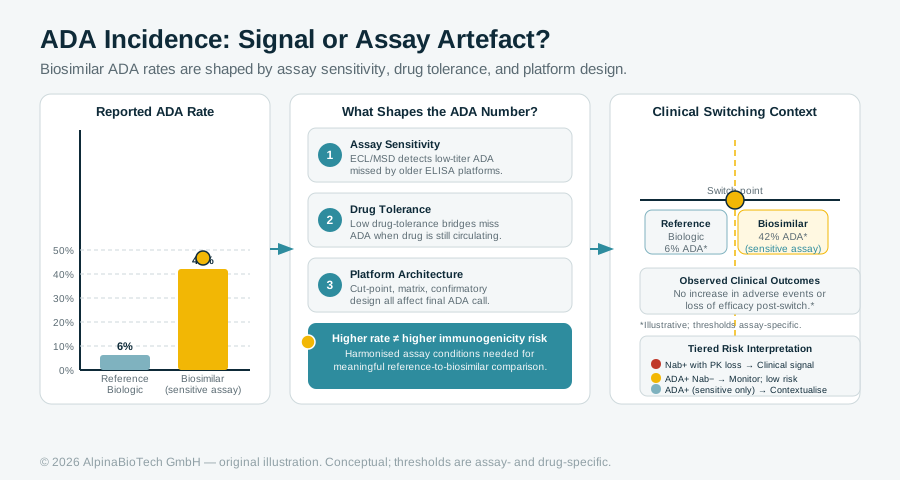
When ADA Incidence Misleads: Interpreting Highly Sensitive Immunogenicity Assays in Biosimilar Programs
A biosimilar immunogenicity report showing a 42 percent ADA rate against a reference biologic's labeled 6 percent is not automatically a safety signal. The number is shaped as much by assay sensitivity, drug tolerance, and platform architecture as by the patient's immune response. This article explains how to interpret highly sensitive ADA data in biosimilar programs and what clinical switching data reveal about the stakes of getting it wrong.
Read more