Article · 29 June 2026
When the Phase III Requirement Falls Away: What EMA's New Biosimilar Guidance Means for PK and Immunogenicity Assay Design
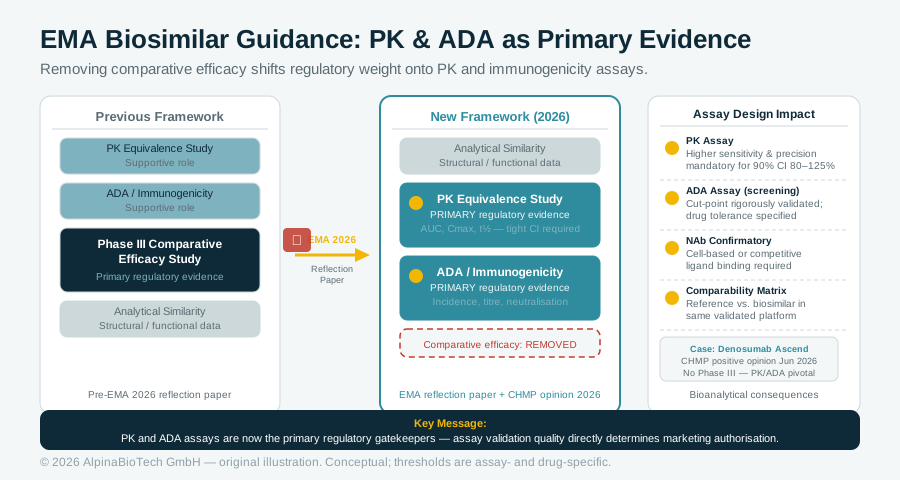
EMA's March 2026 reflection paper on tailored biosimilar development removes the comparative efficacy study requirement for well-characterised biologics, redistributing evidentiary weight onto PK and immunogenicity assays. The CHMP's June 2026 positive opinion for Denosumab Ascend (Ascend GmbH) illustrates the new landscape in practice. For bioanalytical scientists, the consequence is direct: PK and ADA immunoassays are now primary regulatory evidence, not supportive infrastructure.
AlpinaBioTech
At its June 22-25, 2026 meeting, EMA's Committee for Medicinal Products for Human Use (CHMP) adopted a positive opinion for Denosumab Ascend (denosumab), indicated for the prevention of bone complications in adults with advanced cancer involving bone and for the treatment of adults and skeletally mature adolescents with giant cell tumour of bone [1]. The applicant is Ascend GmbH [2]. These approvals arrived three months after a regulatory shift that will shape how every biosimilar behind them reaches the clinic. At its March 23-26, 2026 meeting, the CHMP adopted a reflection paper on a tailored clinical approach in biosimilar development, which aims to reduce the amount of clinical data required for the development and approval of certain biosimilar medicines in the EU [11]. For scientists who design and run PK and immunogenicity assays, understanding what that restructuring demands in practice is now a core regulatory competency.
What the Reflection Paper Actually Changes
The reflection paper concludes that a tailored approach for clinical development of biosimilar candidates is possible, with Comparative Efficacy Studies no longer expected to be required for approval of biosimilars that can be thoroughly characterised using state-of-the-art analytical methods and which have demonstrated similarity in physicochemical and functional properties [3]. The paper expects this tailored clinical approach to be applicable for the majority of biosimilar candidates [6].
That is the headline, but the practical consequence runs deeper. Considering the advances in the analytical sciences and the extensive regulatory experience gained, the importance of dedicated comparative clinical efficacy and safety data has been re-evaluated. As a result, Comparative Efficacy Studies may not be required for well-characterised biological substances where the analytical comparability exercise provides a more sensitive determination of biosimilarity, in conjunction with PK and appropriate safety studies [4].
One important framing point for regulatory scientists: the reflection paper is not a binding legal instrument. It sets regulatory expectations and describes the agency's current thinking, but it does not codify hard legal obligations in the way that a formal guideline or regulation does. Sophisticated applicants will treat it as a strong signal of what the CHMP will expect in dossiers, not as a rule that eliminates the need for scientific justification in individual cases [5].
In plain terms: when the Phase III comparative efficacy trial is removed from the package, the evidentiary weight formerly carried by large patient outcome studies is redistributed to two places: analytical characterisation and the comparative pharmacokinetic study. The PK study therefore becomes, in the framework of the reflection paper, the primary human clinical requirement.
PK Studies Are Now the Pivotal Endpoint, Not a Bridging Exercise
Comparative PK studies remain an essential part of a biosimilar development programme under the new framework. That statement reads differently today than it did before March 2026. Traditionally, PK studies served as a bridge: they confirmed exposure equivalence before the main clinical work, the Phase III efficacy trial, could proceed. The tailored approach inverts that logic. The agency concluded that for biosimilar candidates that can be thoroughly characterised using state-of-the-art analytical methods, demonstrated structural and functional comparability combined with pharmacokinetic (PK) data may now be sufficient to establish similarity to a reference medicine [4].
That shift places new pressure on assay quality. A PK study that was previously sized to provide supportive exposure data must now be sized, designed, and validated to stand alone as the clinical argument for biosimilarity.
Immunogenicity: From Secondary Endpoint to Structural Requirement
The guidance is explicit about where immunogenicity fits into the trimmed clinical package. Comparative Efficacy Studies may not be required for well-characterised biological substances where the analytical comparability exercise provides a more sensitive determination of biosimilarity, in conjunction with PK and appropriate safety studies [4]. Immunogenicity assessment is part of those safety studies, embedded as a designed endpoint within the PK study itself. That demands anti-drug antibody (ADA) assays with high sensitivity, a low drug-tolerance threshold, and well-defined cut-points validated before the study begins, not after.
EMA identified expectations for robustness of the analytical similarity assessment when pharmacokinetic and immunogenicity studies are sufficient, and alignment with international efforts, as areas needing improvement [7]. The agency's own review of stakeholder feedback flagged the robustness of immunogenicity measurement as requiring explicit attention: a signal that regulators understand PK-only packages are only as strong as the ADA assays embedded within them.
What Robust Means in Practice
The EMA reflection paper addresses the stability of analytical methods across the development lifecycle in the context of physicochemical characterisation. The same principle applies by analogy to bioanalytical methods, including ADA immunoassays: it is acknowledged that during the period of development of the biosimilar medicinal product, analytical methods can change. The adequacy of the results from former methods needs to be confirmed in the marketing authorisation dossier and, if needed, re-analyses of batches with the new method must be provided [4].
The accuracy and precision of the analytical methods need to be high enough so that the differences seen during the characterisation studies mainly reflect real batch-to-batch variability as opposed to variability of the analytical method itself [4].
Applied to ADA immunoassays: if an ADA assay used in a pivotal PK study generates variability that cannot be distinguished from a real immunogenicity signal, the entire clinical argument for biosimilarity is undermined. Validated cut-point calculations, drug interference assessments, and confirmatory neutralising antibody assays are not quality-system formalities: they are the scaffolding of the approval case.
The Denosumab Ascend Approval as a Case Study
On 25 June 2026, the CHMP adopted a positive opinion for Denosumab Ascend, indicated for the prevention of bone complications in adults with advanced cancer involving bone and for the treatment of adults and skeletally mature adolescents with giant cell tumour of bone [1]. The applicant is Ascend GmbH [2]. Denosumab Ascend is distinct from other denosumab biosimilars in concurrent development, including AVT03 (Advanz/Terumo), which received a separate marketing authorisation application accepted by EMA in 2024 [10].
Denosumab is a human monoclonal IgG2 antibody that targets the protein RANKL, which is essential for the formation, function and survival of osteoclasts, the cell type responsible for bone resorption. Increased osteoclast activity stimulated by RANKL plays a key role in bone destruction in patients with advanced cancer of bones [2].
Denosumab illustrates the assay challenges that the tailored approach concentrates. The drug is administered subcutaneously and cleared via target-mediated mechanisms, making serum concentration-time profiles nonlinear and assay precision across the full concentration range especially important. The published denosumab biosimilar literature provides a concrete illustration of what complete PK-embedded immunogenicity characterisation looks like in practice, drawn from the Sandoz programme for GP2411, a separate denosumab biosimilar candidate whose clinical development pre-dates the EMA reflection paper and whose data is illustrative of the class, not specific to Denosumab Ascend's own regulatory dossier.
The similarity of GP2411 to the reference product was confirmed on an analytical level and, in a phase I PK and PD study in healthy male subjects, GP2411 demonstrated similarity to both US-licensed and EU-authorised Xgeva [18]. The ROSALIA study was a multicenter, double-blind, randomized, integrated phase I/phase III study comparing the efficacy, pharmacokinetics (PK), pharmacodynamics (PD), immunogenicity, and safety of proposed biosimilar denosumab GP2411 with reference denosumab (Prolia; Amgen) [18]. Primary PK and PD endpoints were the area under the serum concentration-time curve extrapolated to infinity and maximum drug serum concentration [18]. At week 52, the reference denosumab group was re-randomized 1:1 to a third dose of reference denosumab or switch to GP2411 [18], generating a prospective switch-study immunogenicity dataset within the same programme.
The broader denosumab biosimilar evidence base reinforces the immunogenicity picture. A systematic search identified randomised controlled trials comparing denosumab biosimilars with either the originator (Prolia) or placebo; data on bone mineral density, bone turnover markers, adverse events, and immunogenicity were synthesised descriptively [12]. Eleven RCTs met the inclusion criteria. Biosimilars showed therapeutic equivalence to the reference product, with no new immunogenicity signals identified across the evidence base [12].
The FDA and Health Canada Are Moving in the Same Direction
The EMA is not acting alone. On March 9, 2026, the US Food and Drug Administration (FDA) issued new draft guidance aimed at further streamlining the development of biosimilar and interchangeable biosimilar products by reducing certain clinical pharmacokinetic (PK) study requirements when scientifically justified [13]. The two cost figures associated with FDA's biosimilar reform programme refer to two distinct initiatives and must not be conflated.
The March 9, 2026 Revision 4 guidance addresses PK study requirements directly: this change could save biosimilar developers up to 50% of their PK study costs, or approximately $20 million, and help lower drug costs [15]. A separate FDA initiative, announced in October 2025, targeted comparative efficacy studies rather than PK studies: that earlier guidance addressed reducing certain unnecessary comparative efficacy studies, which can require 1 to 3 years and cost $24 million [19]. According to FDA, streamlining comparative efficacy studies could save biosimilar manufacturers up to $150 million in development costs and approximately 2 to 4 years of time [15]. The $20 million PK saving and the $150 million comparative efficacy saving therefore describe two separate components of the FDA's broader biosimilar reform programme, not competing estimates for the same change.
The most significant changes in Revision 4 appear in Q&A I.8 [14]: the FDA's Revision 4 draft guidance signals a clear intent to align more closely with the international direction of travel established by EMA's position that structural and functional comparability, combined with PK data, may be sufficient to demonstrate biosimilarity without the need for large-scale clinical efficacy trials.
Health Canada has gone further. The final, updated guidance on information and submission requirements for biosimilar biologic drugs was published on 19 May 2026, following a consultation period that began with a draft release on 10 June 2025 [16]. The new guidance represents a fundamental change in how biosimilar drugs are evaluated for safety and efficacy in Canada [17]. The guidance was amended to indicate that comparative clinical efficacy studies are not typically required for a biosimilar candidate when the biosimilar can be compared and extensively characterised through appropriate analytical studies [16]. Rather than comparative clinical efficacy trials, the guidance specifies that the clinical programme should primarily include a comparative pharmacokinetic study, and if feasible, a comparative evaluation of pharmacodynamics, and only in exceptional circumstances would an additional clinical trial be required [17].
The convergence is deliberate. The EMA received 400 comments on its draft reflection paper, with feedback broadly supportive, with many respondents recognising the need to update the rules to reflect the agency's biosimilar experience, advances in analytical technologies, and international convergence toward more efficient pathways [3].
Assay Design Implications: A Summary for the Laboratory
The shift from Phase III-anchored to PK-anchored biosimilar approval packages changes the calculus for bioanalytical scientists in several concrete ways.
Drug concentration assays: PK studies, now carrying full evidentiary weight, require ELISA or ligand-binding assay methods validated to meet the sensitivity, selectivity, precision, and accuracy expected of a pivotal study. Fit-for-purpose validation acceptable for a supportive PK study sitting behind a Phase III trial is not the same standard as fit-for-purpose for a stand-alone pivotal PK study [9].
ADA screening assays: When immunogenicity is no longer captured across a large Phase III population, it must be captured with appropriate rigour within the PK study itself. Cut-point determination, drug tolerance characterisation, and positive control selection must be specified prospectively, not adjusted post-hoc. EMA's identification of expectations for robustness of the analytical similarity assessment when pharmacokinetic and immunogenicity studies are sufficient as an area needing improvement [7] signals that regulators are already scrutinising this gap in programmes that rely on PK and immunogenicity data alone.
Analytical batch requirements: In the adopted reflection paper, EMA added that in most cases, six or more batches originating from independent drug substance batches are sufficient [6]. Assay platforms used to characterise those batches must be stable and comparably validated across all time points.
Switch-study immunogenicity: The ROSALIA programme illustrates what the expected switch-study evidence base looks like: a prospective re-randomisation to biosimilar at mid-study, with immunogenicity endpoints measured in patients who were previously exposed to the reference product. At week 52, the reference denosumab group was re-randomized 1:1 to a third dose of reference denosumab or switch to GP2411 [18], capturing any incremental immunogenic risk from transition. ADA assays must be validated for use in both drug-naive and previously treated patients, who may carry pre-existing sensitisation that affects cut-point performance.
Analytical precision as regulatory evidence: The accuracy and precision of the analytical methods need to be high enough so that the differences seen during the characterisation studies mainly reflect real batch-to-batch variability as opposed to variability of the analytical method itself [4]. This principle, stated in the primary EMA document, means that method variability is now a direct regulatory liability, not merely a laboratory quality concern.
Conclusion
The CHMP adopted a reflection paper on a tailored clinical approach in biosimilar development at its March 23-26, 2026 meeting, aimed at reducing the amount of clinical data required for the development and approval of certain biosimilar medicines in the EU [11]. The parallel FDA Revision 4 guidance published on 9 March 2026 [14] and Health Canada's finalised guidance published on 19 May 2026 [16] mark a durable regulatory reorientation across three major jurisdictions. The CHMP's positive opinion for Denosumab Ascend on 25 June 2026 [1] is among the first denosumab biosimilar approvals to navigate the new landscape as it solidifies.
For the scientists who build and validate the assays these programmes depend on, the consequence is precise: PK and ADA immunoassays are no longer supportive infrastructure. They are the primary evidence. The immediate practical priority is prospective cut-point validation: ADA assay cut-points for pivotal PK-embedded immunogenicity studies must be set, documented, and locked before first patient dosing, because there is no Phase III population behind them to absorb the signal. Every decision about sensitivity thresholds, drug interference tolerance, confirmatory neutralising antibody testing, and analytical batch coverage now carries direct regulatory weight.
AlpinaBioTech ELISA kits and ligand-binding assay reagents for drug concentration measurement and anti-drug antibody detection are intended for Research Use Only (RUO) and are not approved for diagnostic or clinical decision-making purposes.
Sources
- [1] ema.europa.eu
- [2] ema.europa.eu
- [3] ema.europa.eu
- [4] ema.europa.eu
- [5] pearceip.law
- [6] gabionline.net
- [7] raps.org
- [8] europeanpharmaceuticalreview.com
- [9] iconplc.com
- [10] stada.com
- [11] ema.europa.eu
- [12] pubmed.ncbi.nlm.nih.gov
- [13] fda.gov
- [14] federalregister.gov
- [15] pearceip.law
- [16] canada.ca
- [17] gabionline.net
- [18] ncbi.nlm.nih.gov
- [19] thefdalawblog.com
More articles
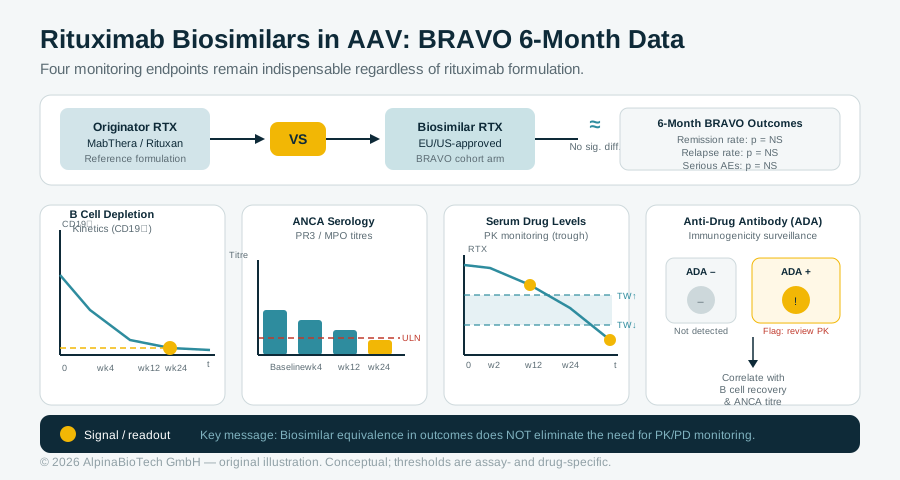
Rituximab Biosimilars in AAV: What Six-Month Real-World Data Tell Monitoring Scientists
The BRAVO multicenter cohort study found no statistically significant differences in remission rates, relapse rates, or serious adverse events between biosimilar and originator rituximab at six months in granulomatosis with polyangiitis and microscopic polyangiitis. For laboratories supporting drug-level and immunogenicity testing in biosimilar-treated AAV populations, the findings reinforce rather than reduce the case for structured pharmacokinetic and pharmacodynamic monitoring. B cell depletion kinetics, ANCA serology, serum drug levels, and anti-drug antibody assays each remain indispensable endpoints regardless of which rituximab formulation the patient receives.
Read more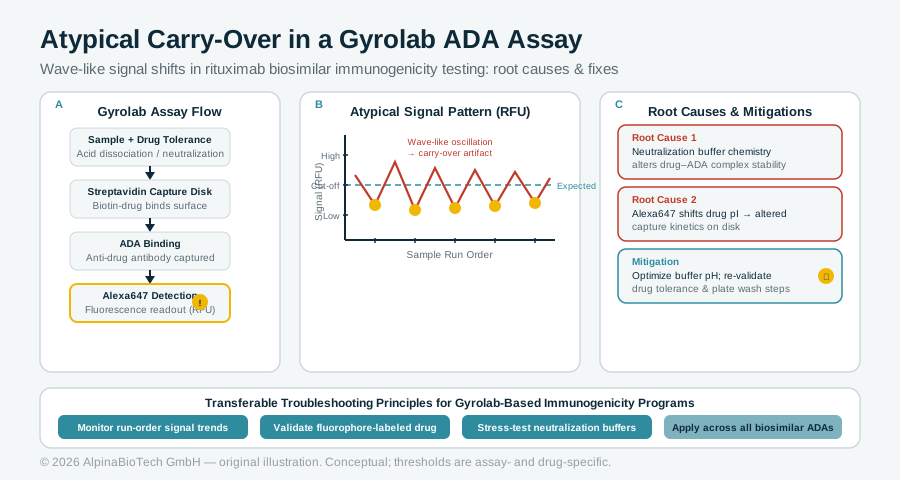
Atypical Carry-Over in a Gyrolab ADA Assay: Lessons from a Rituximab Biosimilar Case Study
A published case study targeting MabionCD20, a rituximab biosimilar, identified wave-like signal fluctuations in Gyrolab-based ADA assays caused by neutralization buffer chemistry and fluorophore-induced isoelectric point shifts. The investigation offers transferable troubleshooting principles for any laboratory running Gyrolab-based immunogenicity programs, particularly around drug tolerance and repeatability.
Read more