Article · 3 August 2026
Measuring the Pathogen, Not the Host: A High-Sensitivity ESAT-6 Blood Assay Distinguishes Active TB Across the Infection Spectrum
A high-sensitivity biosensor for circulating ESAT-6 protein, a direct secretory product of Mycobacterium tuberculosis, produced a stepwise quantitative signal across the full TB infection spectrum in a 217-patient cohort presented at ADLM 2026. Unlike IGRAs, which measure host immune response, this antigen-direct approach distinguished active disease from latent infection and uninfected contacts with an AUC of 0.976, as reported in conference coverage pending peer-reviewed publication. Full analytical validation and prospective clinical data remain outstanding.
AlpinaBioTech
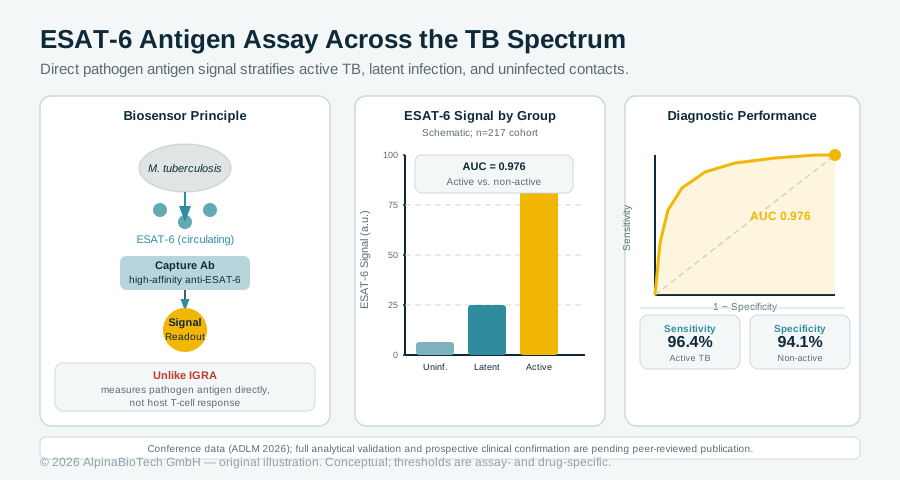
The long-standing engineering challenge in TB blood diagnostics is not identifying the right target protein. ESAT-6, a small secreted protein encoded within the RD1 region of the Mycobacterium tuberculosis genome, has been recognised as a candidate analyte for years. The problem has been assay sensitivity: most existing sensors have lacked the sensitivity required to distinguish active pulmonary tuberculosis from latent infection, exposure, or other lung diseases in a blood matrix [2]. A study presented at the Association for Diagnostics and Laboratory Medicine (ADLM) 2026 meeting (July 26 to 30, Anaheim, CA) suggests that a high-sensitivity biosensor can accurately quantify circulating ESAT-6 in peripheral blood, producing a stepwise concentration gradient across the full infection spectrum, potentially offering a diagnostic route for patients who cannot provide sputum [3].
For Research Use Only. Not for use in diagnostic procedures.
Why Current TB Diagnostics Fall Short
Tuberculosis remains one of the world's deadliest infectious killers, claiming over 1.2 million lives and affecting an estimated 10.7 million people in 2024, according to the WHO Global Tuberculosis Report 2025 [12]. The net reduction in TB incidence from 2015 to 2024 was 12%, and 29% for TB deaths over the same period [12], far short of End TB milestone targets. A quarter of the global population is estimated to have been infected with M. tuberculosis, and 5 to 10% will develop active disease [9]. A 2019 systematic review and meta-analysis in the European Respiratory Journal confirmed this order of magnitude, estimating a global IGRA-based prevalence of 24.8% [15].
Traditional diagnosis relies on sputum samples coughed up from the lungs and airways. When caught early, TB is almost always curable with antibiotics, but sputum is not always obtainable in patients at early disease stages [4]. That gap between gold-standard testing and clinical reality is the opening this blood-based approach aims to fill.
The existing blood-based tools, tuberculin skin tests and interferon-gamma release assays (IGRAs), address part of this gap, but they measure the host's immune response rather than the pathogen directly. Early M. tuberculosis antigens encoded within the RD1 region, especially ESAT-6, CFP-10, and TB7.7, have enabled the development of antigen-specific IGRAs and recombinant skin tests with improved BCG-independent specificity [10]. However, measuring T-cell or IFN-gamma responses to ESAT-6 does not confirm whether bacteria are actively replicating. IFN-gamma release assays using ESAT-6 epitopes to stimulate T cells are part of the diagnostic criteria that define latent TB infection, a state with no detectable bacteria, and unreliable IGRA results in active TB disease prevent its use to confirm the state where M. tuberculosis is detectable, transmissible, and lethal if untreated [2]. That is the fundamental limitation the Pan group set out to circumvent.
The Assay: Direct Antigen Quantification in Peripheral Blood
Dr. Sheng-Wei Pan, a physician in the Department of Chest Medicine at Taipei Veterans General Hospital in Taiwan and the study's lead author, and the research team used the biosensor to achieve highly sensitive quantification of circulating ESAT-6 in blood [9]. Unlike biomarkers measuring immune response, ESAT-6 originates directly from M. tuberculosis. M. tuberculosis-derived CFP-10 and ESAT-6 serum concentrations appear likely to be strong predictors of active TB disease because they are actively secreted by virulent mycobacterial strains [11]. (That mechanistic attribution draws from prior peer-reviewed work describing antibody-conjugated nanodisk MALDI-TOF MS detection of ESAT-6 peptides in serum [11]; the ADLM 2026 biosensor is a separate system.)
The team measured ESAT-6 concentrations in blood samples from 217 patients, divided into those with active pulmonary TB and those without [2]. The control cohort included patients with lung disease from non-TB Mycobacterium species, lung cancer patients, individuals with latent TB following exposure to TB contacts, uninfected individuals exposed to TB contacts, and healthy participants without known TB exposure [5].
That control group design is methodologically important. Many prior studies compared active TB only against healthy controls, which inflates apparent specificity. Including lung cancer patients, non-tuberculous mycobacterial infections, and latently infected individuals creates a realistic clinical comparator set, the kinds of patients who actually present to a pulmonologist or infectious disease clinic [5].
Quantitative Signal: What the Concentrations Show
As reported in media coverage of Abstract A-097 (pending peer-reviewed publication): median plasma concentrations reached 113.6 ng/mL in active TB, compared with 73.0 ng/mL in latent TB infection and 49.8 ng/mL in TB-exposed individuals without latent infection [2]. The researchers observed a clear stepwise increase in ESAT-6 levels across the spectrum of TB infection [1].
Also as reported in conference coverage, receiver operating characteristic analysis yielded an area under the curve (AUC) of 0.976. Using an optimised cutoff of 95 ng/mL, the blood test achieved 95.2% sensitivity and 90.8% specificity for identifying active pulmonary TB [2]. This association remained strong even after accounting for factors such as age, sex, and the presence of diabetes [4]. These figures derive from secondary media reporting of the poster presentation; full statistical detail is pending peer-reviewed publication.
For assay scientists, the stepwise ng/mL gradient matters as much as the binary active-versus-not discrimination. If ESAT-6 concentration tracks quantitatively with bacterial burden across the disease continuum, it opens the possibility of using the assay not only for initial diagnosis but for treatment monitoring, where a falling signal could confirm bacteriological response before sputum conversion occurs. That is a design requirement familiar from therapeutic drug monitoring: the assay must resolve change over time at clinically relevant concentration ranges, not just distinguish positive from negative at a fixed cutpoint.
The biosensor architecture used by Pan's group is described as achieving highly sensitive quantification, but the precise detection limit and full assay format have not been disclosed in the conference abstract [2]. The full analytical characterisation, including lower limit of quantification, intra- and inter-assay precision, and signal recovery across different blood matrices, will need to appear in peer-reviewed publication before the platform can be assessed against established immunoassay validation criteria. A previously published ECL immunoassay for ESAT-6 detection demonstrated detection limits in the pg/mL range [16], supporting the view that the ng/mL concentrations reported at ADLM 2026 sit comfortably above what sensitive immunoassay architectures can resolve.
Comparison With Existing Immune-Based Approaches
Pan's team found that the test was not only highly effective at distinguishing between TB and non-TB patients, but could also differentiate between uninfected people with TB contacts and those with latent TB [7]. (As reported in conference coverage of Abstract A-097.) That last distinction is a genuine clinical need that current IGRAs cannot reliably meet.
IGRAs detect sensitisation, meaning prior antigen exposure and a resulting T-cell response. They cannot easily distinguish whether that sensitisation reflects a controlled latent infection with persistent bacteria or a remote cleared exposure. ESAT-6 exhibited a stepwise increase in blood concentration: at its lowest in uninfected people with TB contacts, with latent infection somewhere in the middle, and at its highest in those with active TB [8]. Although ESAT-6 has been previously studied, existing detection sensors lacked sufficient sensitivity to differentiate active pulmonary TB from latent infection, TB exposure, or other respiratory conditions [17].
A direct antigen assay is theoretically capable of distinguishing active bacterial secretion from immunological memory, provided the assay's sensitivity floor is below the circulating antigen concentrations in early or latent-stage disease. The ADLM 2026 data suggest that threshold is achievable, with the ng/mL concentrations reported for all three infection states lying within the working range of a well-engineered immunoassay platform, and that the stepwise separation between groups is analytically resolvable [2].
Clinical Context and Sputum-Unavailable Patients
"Every week of delay in diagnosing TB matters, so early identification may allow treatment to begin sooner and potentially reduce transmission." - Dr. Sheng-Wei Pan, Taipei Veterans General Hospital [9]
(Quoted in the ADLM press release accompanying Abstract A-097 [9].)
Although sputum cultures remain essential for verifying TB and providing information about drug resistance, ESAT-6 holds promise as a practical tool for triaging patients in instances when sputum-based diagnostics are limited or delayed [6]. That framing positions the blood-based ESAT-6 assay not as a replacement for sputum culture or nucleic acid amplification, but as an additive triage step. This is analogous to how drug-level monitoring works alongside clinical scoring in biologic therapy: the assay does not make the treatment decision independently, but it resolves diagnostic ambiguity faster than waiting for a slow gold-standard readout.
Prospective Validation: The Next Necessary Step
Because patients' disease status was known from the outset, further research is needed to confirm that ESAT-6 can predict TB status in real time [4]. Pan's group stated plans to conduct a prospective study to further evaluate ESAT-6 in a real-world clinical setting [3].
For the ADLM data to translate into a validated clinical or research assay, that prospective cohort will need to enroll patients before disease classification is known, measure ESAT-6 in real-time workflow conditions, and define operating thresholds against pre-specified sensitivity and specificity targets. Pre-analytical variables, including sample type, time to centrifugation, freeze-thaw cycles, and matrix effects from comorbid conditions such as diabetes (already noted as a covariate in the current study), will all require systematic characterisation.
What This Means for Immunoassay Scientists
The ESAT-6 story illustrates a recurring design tension in diagnostic immunoassays: measuring an analyte at low circulating concentrations in a biologically complex matrix, against a background of cross-reactive proteins from structurally similar pathogens, while achieving sufficient specificity to be useful across a disease spectrum rather than only at its extremes.
The 217-patient cohort is small for a definitive clinical validation but is a reasonable proof-of-concept size for an ADLM conference presentation. The reported plasma concentrations, ranging from approximately 49.8 ng/mL in exposed-uninfected individuals to 113.6 ng/mL in active TB (as reported in conference coverage of Abstract A-097 [2, 5]), suggest the assay is operating in a range compatible with well-established immunoassay architectures, and that the stepwise separation between groups is analytically resolvable.
The key outstanding analytical questions are whether the biosensor achieves the sensitivity and precision to track treatment response over time, whether matrix interference from comorbid inflammatory conditions narrows the specificity window, and whether the assay format can be adapted for point-of-care or decentralised laboratory settings where TB burden is highest [6]. What distinguishes this approach, if the prospective data hold, is the combination of direct antigen quantification and a quantitative gradient across the full infection spectrum: from healthy contact through latent infection to active disease [1]. That gradient is what immunoassay developers, clinical laboratorians, and diagnostic assay specialists should be watching for in the peer-reviewed follow-up.
All assays and data described in this article are for Research Use Only. Not for use in clinical diagnosis.
Sources
- [1] bioanalysis-zone.com
- [2] clpmag.com
- [3] news-medical.net
- [4] medicalxpress.com
- [5] insideprecisionmedicine.com
- [6] pharmaphorum.com
- [7] respiratory-therapy.com
- [8] bioengineer.org
- [9] prnewswire.com
- [10] doi.org
- [11] pnas.org
- [12] who.int
- [13] posters.myadlm.org
- [14] who.int
- [15] publications.ersnet.org
- [16] ncbi.nlm.nih.gov
- [17] labmedica.com
More articles
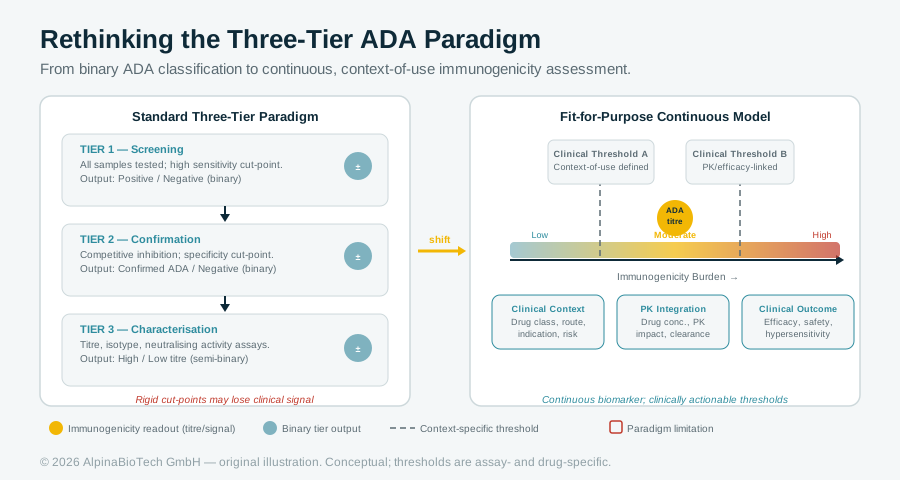
When ADA Positivity Is Not the Answer: Rethinking the Three-Tier Immunogenicity Paradigm
The standard three-tier ADA testing paradigm has governed biologic immunogenicity assessment for more than two decades, but a growing body of evidence questions whether it consistently delivers clinically meaningful data. New publications from Immunologix Laboratories, the European Bioanalysis Forum, and IQVIA Laboratories converge on a fit-for-purpose, context-of-use-driven alternative that treats immunogenicity as a continuous biomarker endpoint rather than a binary classification.
Read more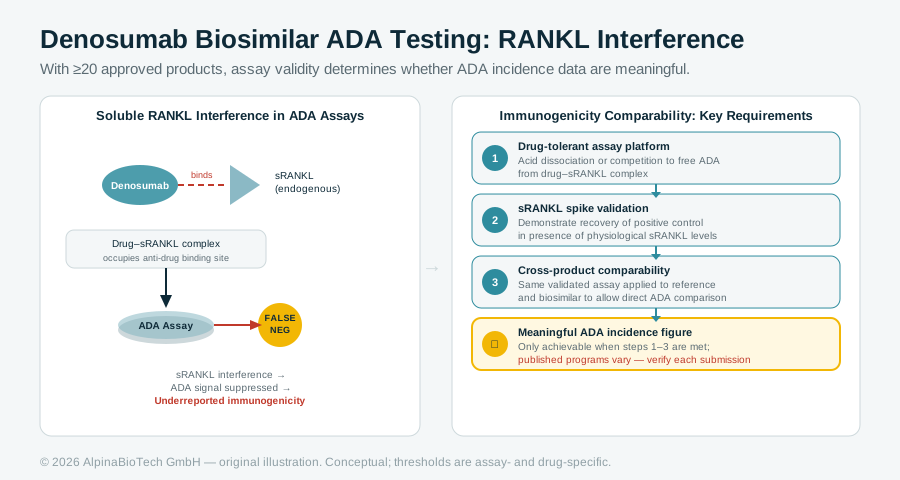
Degevma's FDA Approval and a Market with More Than 20 Denosumab Biosimilars: What Immunogenicity Comparability Testing Actually Requires
The FDA's approval of denosumab-adet (Degevma) on September 28, 2026 brings the cumulative total of approved denosumab products to at least 20, raising a concrete methodological question: in a market this saturated, with interchangeability-driven pharmacy substitutions, what does a reported ADA incidence figure actually tell you? The answer depends entirely on whether the assay has solved the soluble RANKL interference problem, and the published literature shows that not every program has.
Read more