Article · 16 September 2026
Four Analytes, One Plasma Sample: The Assay Science Behind Multi-Biomarker Alzheimer's Testing
Four blood-based Alzheimer's disease biomarker tests were cleared by the FDA within fifteen months, and a five-analyte algorithmic panel is under 510(k) review. For immunoassay scientists deploying these panels, the analytical challenges of femtomolar sensitivity, cross-reactivity between tau isoforms, preanalytical instability of Aβ42, and cross-platform harmonization are the least-settled problems in making multi-biomarker results hold up outside a research cohort.
AlpinaBioTech
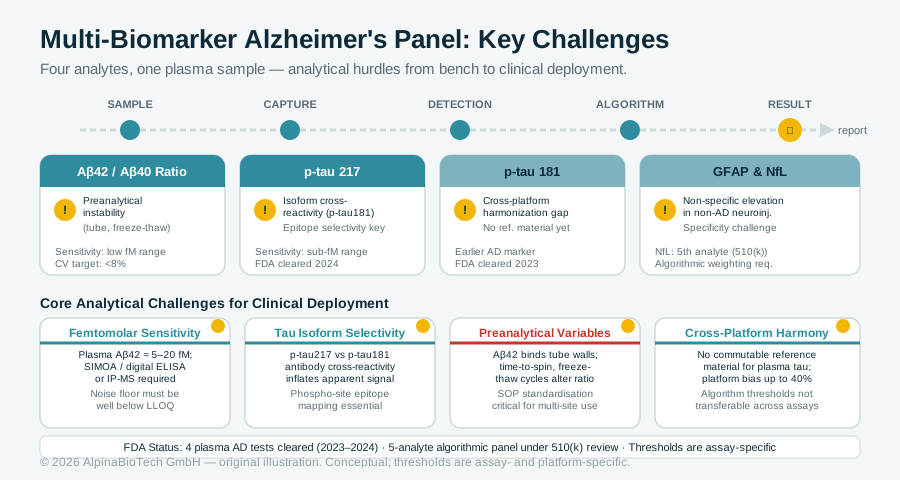
A single blood tube is now expected to quantify four distinct biological processes in Alzheimer's disease (AD): amyloid accumulation, tau phosphorylation, neurodegeneration, and neuroinflammation. These processes advance on partly independent timelines under the ATN biomarker framework first described by Jack et al. in 2018 [1], and a test built on one analyte reports on only one axis of a multi-axis disease [2]. The clinical rationale for measuring all four in a single workflow is largely settled. What remains unsettled, and what every immunoassay scientist deploying these panels needs to understand, is what the analytics must actually deliver for that workflow to hold up outside a research cohort.
The regulatory environment is moving fast. Four blood-based biomarker tests for AD have been cleared by the FDA within fifteen months. On May 16, 2025, Fujirebio received 510(k) clearance for the Lumipulse G pTau 217/beta-Amyloid 1-42 Plasma Ratio IVD test, described as the first FDA-cleared blood-based IVD test in the US to aid in identifying patients with amyloid pathology associated with AD [3]. On October 13, 2025, Roche received clearance for its Elecsys pTau181 plasma test, the first blood-based biomarker test indicated for use in the primary-care setting specifically to rule out amyloid pathology, demonstrating a 97.9% negative predictive value in a 312-participant multicenter study [4]. On August 20, 2026, the FDA cleared C2N Diagnostics' PrecivityAD2, the first cleared Alzheimer's blood test indicated for adults as young as 40; the platform uses high-resolution mass spectrometry to quantify plasma Aβ42/40 and p-tau217/np-tau217 ratios, which are combined into a proprietary amyloid probability score 2 (APS2) ranging from zero to 100 [5]. Four days later, on August 24, 2026, Roche received clearance for its Elecsys Phospho-Tau (217P) Plasma (pTau217) test, developed in collaboration with Eli Lilly and Company and described as the first FDA-cleared, single-biomarker blood test that supports both rule-in and rule-out assessment of amyloid pathology using the same validated clinical cutoffs across primary and specialty care settings [6].
Meanwhile, on February 3, 2026, Quanterix submitted a 510(k) application to the FDA for a blood test integrating five biomarkers, p-tau217, Aβ42, Aβ40, GFAP, and NfL, into a single algorithmic result [7]. The transition from single-analyte tests to algorithmic multi-analyte panels is no longer a research ambition. It is a regulatory and commercial reality arriving at clinical laboratories now.
What Each Analyte Contributes, and Why Multiplexing Matters
The four-biomarker framework maps to four biological axes. In the Quanterix five-analyte submission, p-tau217 anchors the tau axis, the Aβ42/40 ratio directly reflects amyloid plaque development, GFAP indicates astrocytic activation linked to amyloid pathogenesis, and NfL signals neuroaxonal damage in neurodegenerative diseases including AD [2]. The reason the panel contains five analyte measurements rather than four is that Aβ42 and Aβ40 are measured separately and then ratioed to serve the amyloid axis. The "four analytes, one sample" framing in this article refers to the four biological axes, not to a literal count of assay components.
Each analyte carries a specificity problem when measured alone. NfL and GFAP are associated with a range of neurological conditions and are not specific to Alzheimer's disease [8]. That non-specificity is precisely why the multi-analyte algorithm is structured the way it is: the algorithm is applied only to intermediate cases first identified by p-tau217, which maintains assay specificity against non-AD elevations of NfL and GFAP [2]. GFAP and NfL are not first-line classifiers in this architecture. They are resolution tools for the cases p-tau217 alone cannot place.
The clinical payoff is measurable. A multi-analyte algorithmic blood test incorporating plasma p-tau217, the Aβ42/40 ratio, GFAP, and NfL significantly reduces the inconclusive intermediate zone compared to p-tau217 alone, enabling accurate classification of two thirds of intermediate cases that p-tau217 alone could not resolve [2]. Validated against amyloid PET in the Alzheimer's Disease Neuroimaging Initiative (ADNI) cohort, the five-biomarker LucentAD Complete immunoassay amyloid risk score demonstrated a 0.94 AUC and 92% to 93% accuracy, achieving performance parity with IP-MS metrics on shared samples [9]. That validation used both a cross-sectional cohort (n=115) and a longitudinal cohort spanning 12 years (n=179) representing disease progression [9].
The Precision Demand at Clinical Decision Cutoffs
Running multiple immunoassays from a single sample does not simply multiply the analytical challenges. It compounds them. The sensitivity demands for p-tau217 alone are already severe. A peer-reviewed analytical validation study of the Simoa p-Tau217 assay documents that the lowest clinical decision cutoff falls at 0.04 pg/mL (40 femtograms per milliliter), approaching the assay's lower limit of quantification, with percent coefficients of variation at or below 18% reported at concentrations as low as 0.01 pg/mL [10]. This is less a lower-limit-of-quantification problem than a precision-at-the-decision-point problem: the assay must deliver reproducible discrimination in a concentration window where most immunoassay platforms are not designed to work.
Ultrasensitive immunoassay technologies such as single-molecule arrays (Simoa), electrochemiluminescence (MSD), and proximity extension assays (PEA) have lowered detection limits to the femtomolar range for key analytes including phosphorylated tau species, amyloid-beta peptides, NfL, GFAP, and YKL-40 [11]. The Quanterix 510(k) submission uses the company's proprietary Simoa technology to measure the five-analyte panel [7]. A preprint describing the submission's assay architecture reports that four augmentative biomarkers are combined in a single multiplexed Simoa digital immunoassay designated N4PE, combined with the LucentAD p-tau217 immunoassay, to provide accurate amyloid classification for more patients than possible with p-tau217 alone [12]. These architecture details come from a preprint that has not undergone peer review and should be weighted accordingly.
Cross-platform harmonization is not yet solved. High-throughput affinity-based approaches such as Olink and SomaScan provide scalable, reproducible quantification suited to large-scale studies. However, their mutual comparability and alignment with mass-spectrometry data still requires careful evaluation, as cross-platform correlations vary substantially [11]. Numeric cutoffs established on one platform cannot be assumed transferable to another without bridging studies.
Immunoprecipitation Mass Spectrometry as the Reference Standard
Immunoprecipitation mass spectrometry (IP-MS) has set the performance benchmark for AD blood biomarkers. By combining immunoaffinity enrichment with highly specific molecular detection, IP-MS methods offer superior analytical specificity, reduced susceptibility to interference, and strong correlation with central pathology. Their demonstrated diagnostic accuracy for plasma biomarkers suggests that MS-based approaches may serve as reference methods for standardization, even if widespread clinical implementation remains limited by cost and technical complexity [11]. PrecivityAD2 is the first FDA-cleared test built directly on this MS architecture, using high-resolution mass spectrometry to quantify both amyloid and tau ratios simultaneously and combining them into the APS2 algorithm [5].
That cost and complexity ceiling is what makes the immunoassay parity result significant. The LucentAD Complete amyloid risk score achieved a 0.94 AUC and 92% to 93% accuracy with performance parity with IP-MS metrics on shared samples, a two-cutoff design, and an intermediate zone of 10.4% to 12.8% [9].
Although some immunoassay and IP-MS-based platforms provide multiplexing for several proteins, there is not yet a platform that can measure all established and emerging AD biomarkers in a single run. The NULISAseq CNS disease panel is a mid-throughput platform with antibody-based measurements and a sequencing readout that requires only 15 microliters of sample volume to measure more than 100 analytes, including those typically assayed for AD [13]. For research applications where sample volume is the binding constraint, that throughput matters.
Where Multiplexing Breaks Down: Cross-Reactivity and Dynamic Range
The jump from single-analyte to multi-analyte formats introduces a class of failure modes that single-analyte validation packages do not capture. Problems such as reagent cross-activity and the dynamic range of target analyte abundance impede the multiplexing capacity of immunoassays [11]. In a panel that combines p-tau217 at femtomolar concentrations with GFAP, which circulates at substantially higher levels in neuroinflammatory states, maintaining sensitivity at the low end while avoiding saturation or signal quenching at the high end requires deliberate assay engineering, not simply running single-analyte plates in parallel.
Dynamic range compression is a specific risk when high-concentration analytes are multiplexed with femtomolar targets. Antibody cross-reactivity between tau isoforms is a second risk: the assay must distinguish p-tau217 from p-tau181 and unphosphorylated tau with sufficient precision to anchor the algorithm's first-stage classification. Technological approaches including proximity ligation assay, proximity extension assay, microsphere bead capture technology, and slow off-rate modified aptamer assay have enabled simultaneous measurement of hundreds to thousands of plasma proteins [11], but each carries its own specificity tradeoffs that must be characterized for the target analyte set.
Preanalytical Variables: The Threat to Multi-Analyte Panels
Single-analyte Alzheimer's assays are already vulnerable to preanalytical perturbation. Multi-analyte panels face the same vulnerabilities at every position in the panel simultaneously, with the added risk that different analytes carry different stability profiles.
Real-world experience with the first cleared panel has made the Aβ42 vulnerability concrete. Scientists examining the FDA-cleared Fujirebio Lumipulse assay's real-world performance found that concern centered on the denominator of the test ratio, Aβ42, since Fujirebio's test for p-tau217 alone still performed as expected [14]. Aβ42 appeared vulnerable to preanalytic sources of variability such as binding to test tube surfaces, centrifugation time, storage time, and temperature; the FDA-cleared Lumipulse cutoffs are notably lower than those established in prior research publications, even accounting for differences in assay versions, and these lower cutoffs tend to increase the risk of false positives [14]. This real-world performance signal from an already-cleared assay is not a minor calibration issue. It illustrates the consequence of Aβ42 instability at the ratio level.
For p-tau217-containing ratios in plasma more broadly, a study of the real-world ALZAN cohort found that delays in blood sample processing significantly affect the p-tau217/Aβ42 ratio, with variability that may lead to significant overestimation of the ratio and consequently of the underlying cerebral amyloidosis reflected by the plasma biomarker; the authors recommend maintaining processing time below four hours [15]. For p-tau181 and related phospho-tau species studied in earlier Simoa-based preanalytical work, plasma levels notably increased with 24-, 48-, and 72-hour processing delays, while plasma and serum GFAP and NfL levels were only modestly affected by processing delay and freeze-thaw cycles [16]. While that study measured p-tau181 rather than p-tau217, the ALZAN findings confirm that p-tau217-containing ratios share similar vulnerability [15].
In an algorithmic multi-analyte system, preanalytical noise propagates into the risk score. A sample that arrives after a suboptimal processing delay may produce individually plausible biomarker values that collectively produce an incorrect risk-score classification. Despite impressive analytical advances, one of the most pressing challenges in translating blood-based proteomics into routine care is the need for rigorous harmonization of preanalytical and analytical workflows [17]. Standard operating procedures for blood collection, processing time, centrifugation speed, and freeze-thaw management are not optional supplements to the assay package. They are part of the validated test.
Specificity in Diagnostically Complex Populations
A result that performs well in enriched cohorts may not hold in the mixed populations a memory clinic actually sees. Even as blood-based AD testing becomes more widely available, interpretation can become more complicated when results do not align with a patient's clinical presentation, and laboratories may underestimate how much remains to be learned about interferences and comorbidities [8]. The non-AD elevations of NfL and GFAP from traumatic brain injury, multiple sclerosis, amyotrophic lateral sclerosis, or systemic infection are a real interpretive problem in mixed clinical populations.
NfL is not AD-specific and increases in other neurodegenerative disorders. Its diagnostic utility improves when interpreted alongside AD-specific markers, particularly p-tau181 or p-tau217, supporting its integration within a multimodal biomarker framework [18]. For research scientists designing panels, this specificity gap reinforces the case for characterizing each analyte's behavior in the specific patient populations intended to receive the test, not only in the cohorts used for initial clinical validation.
Implications for Assay Scientists
The shift from single-analyte to multi-analyte algorithmic testing in AD puts concrete requirements on every laboratory entering this space.
- Sensitivity validation must be performed at the clinical decision cutoffs, not only at the nominal lower limit of quantification. For p-tau217 on the Simoa platform, that means demonstrating acceptable precision approaching the 0.04 pg/mL lower clinical cutoff [10].
- Cross-reactivity testing between tau phosphoforms and between assay reagents in the multiplexed format must be documented before the algorithm is applied [11].
- Preanalytical SOP development must account for the differential stability profiles of all analytes in the panel. For p-tau217 and the Aβ42 ratio specifically, processing delays beyond four hours are a documented source of quantitative bias, and Aβ42's binding to tube surfaces introduces an additional variable [14, 15].
- Platform harmonization remains an open problem. Cutoffs and risk-score thresholds established on Simoa are not transferable to cobas, MSD, or Lumipulse platforms without bridging studies [11].
- Population-specific validation should address non-AD conditions that elevate GFAP and NfL, particularly in mixed memory clinic populations [18].
A recent review of blood-based biomarker science in clinical AD care offers the following assessment:
Blood-based biomarkers should currently be considered supportive biological endpoints rather than replacements for clinical outcomes or validated surrogate markers [17].
This framing applies specifically to research applications and to uses beyond the scope of each test's cleared indication. Laboratories should document intended use accordingly.
The regulatory signal is clear: multi-analyte algorithmic AD blood tests are moving from laboratory-developed tests to IVD-cleared products at a pace few in the field anticipated two years ago. For immunoassay scientists, the analytical work required to make those panels perform reliably outside a research cohort is the problem that remains least settled, and the most consequential to solve.
For Research Use Only. RUO products are not cleared or approved by the FDA for clinical diagnostic use except where explicitly noted for specific cleared products.
Sources
- [1] alzforum.org
- [2] quanterix.com
- [3] fujirebio.com
- [4] roche.com
- [5] c2ndiagnostics.com
- [6] roche.com
- [7] ir.quanterix.com
- [8] alzheimers.net
- [9] biorxiv.org
- [10] ncbi.nlm.nih.gov
- [11] nature.com
- [12] biorxiv.org
- [13] ncbi.nlm.nih.gov
- [14] alzforum.org
- [15] ncbi.nlm.nih.gov
- [16] ncbi.nlm.nih.gov
- [17] thelancet.com
- [18] ncbi.nlm.nih.gov
More articles
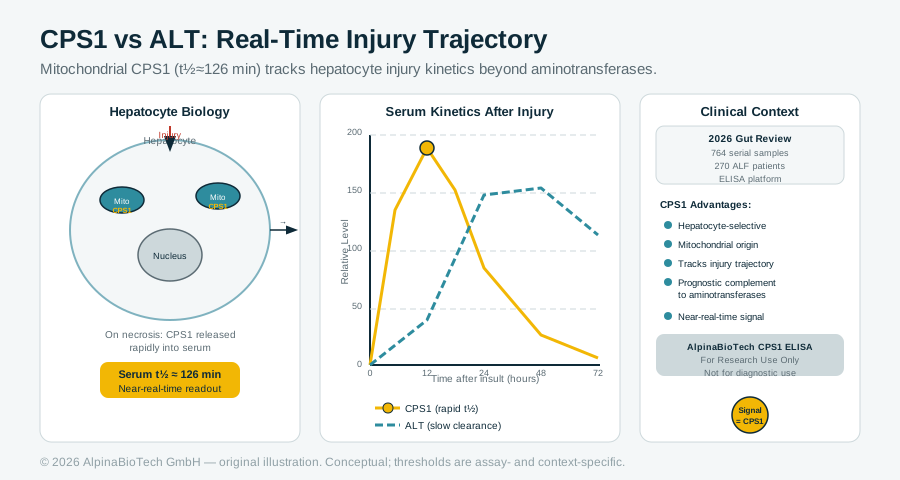
CPS1 Serum Immunoassay: What a Mitochondrial Enzyme Biomarker Tells You That ALT Cannot
Carbamoyl phosphate synthetase 1 (CPS1) is a hepatocyte-selective mitochondrial enzyme with a serum half-life of roughly 126 minutes, making it a near-real-time indicator of injury trajectory rather than injury presence. A 2026 Gut review synthesizes a decade of mechanistic and clinical work, including ELISA data from 764 serial samples across 270 acute liver failure patients, establishing CPS1 as a prognostically informative complement to standard aminotransferase panels. All AlpinaBioTech CPS1 immunoassay products are for Research Use Only.
Read more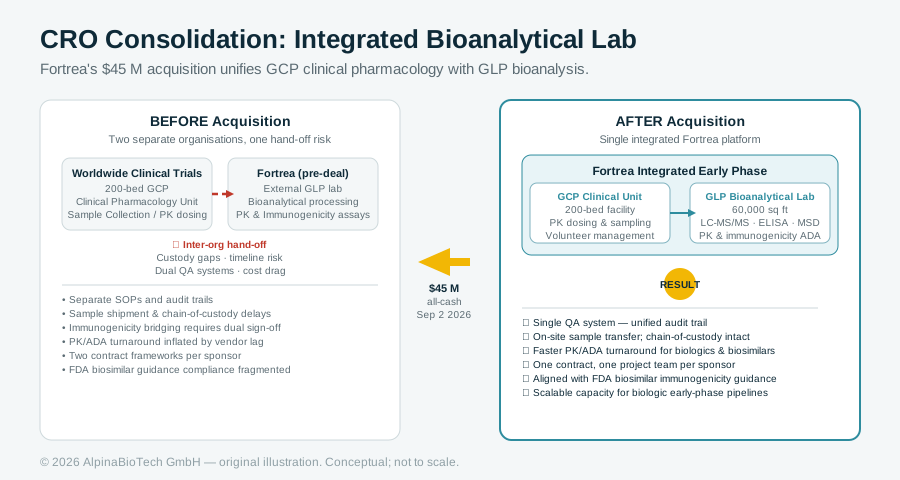
Fortrea Acquires Worldwide Clinical Trials' Bioanalytical Lab: What the $45 Million CRO Deal Means for Assay Scientists
On September 2, 2026, Fortrea announced a $45 million all-cash acquisition of Worldwide Clinical Trials' Early Phase Services division, bringing a 60,000-square-foot GLP bioanalytical laboratory and a 200-bed GCP clinical pharmacology unit under one operational roof. For assay scientists running PK and immunogenicity programs, the deal changes the vendor map by eliminating inter-organization hand-offs between sample collection and bioanalytical processing. Broader CRO consolidation and pending FDA biosimilar guidance shifts make integrated bioanalytical infrastructure increasingly valuable for early-phase biologic programs.
Read more