Newsletter / July 2026
AlpinaBioTech Digest - July 2026
This month's articles cover three areas with direct implications for laboratories running immunogenicity and therapeutic drug monitoring assays. All content is published for Research Use Only.
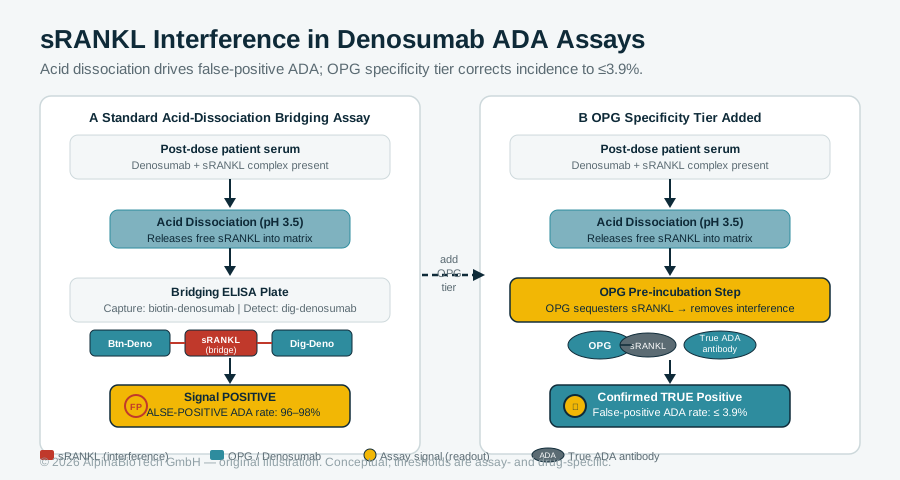
The most technically detailed piece addresses a specific and consequential interference problem in anti-drug antibody bridging assays for denosumab biosimilars. Standard acid dissociation pretreatment, when applied in this context, can drive false-positive ADA rates as high as 96 to 98%, a consequence of soluble RANKL accumulation following dosing. The article describes how adding osteoprotegerin as a specificity tier brings observed false-positive incidence down to 3.9% or below, and reviews supporting immunogenicity data from ten FDA-approved biosimilar programs. Alongside that, a narrative review from Bioanalysis proposes a closed-loop, AI-augmented framework for immunogenicity assessment that connects known assay failure points, including gaps between ADA measurement and clinical prediction, to real-world evidence feedback and emerging deep learning tools for epitope prediction and pharmacovigilance.
The third article covers the business development news with the most near-term operational relevance for assay scientists: Merck KGaA's agreement to acquire Bio-Techne for US$11.3 billion. Because the deal places R&D Systems, Ella/Simple Plex, and a large catalog of immunoassay reagents under new ownership ahead of an anticipated close in late 2026 or early 2027, scientists running validated ELISA, multiplexed, and TDM workflows should review their current lot documentation and monitor catalog changes now rather than after the transition.
ELISA / Immunogenicity / Anti-Drug Antibodies
ADA Assay Design for Denosumab Biosimilars: The sRANKL Interference Problem and How to Solve It
6 July 2026
Standard acid dissociation pretreatment in denosumab anti-drug antibody bridging assays can generate false-positive ADA rates approaching 96 to 98%, driven by soluble RANKL accumulation after dosing. Adding osteoprotegerin as a specificity tier corrects observed false-positive incidence to 3.9% or below. This article reviews the assay mitigation strategy alongside the clinical immunogenicity evidence from ten FDA-approved denosumab biosimilar programs.
Read the article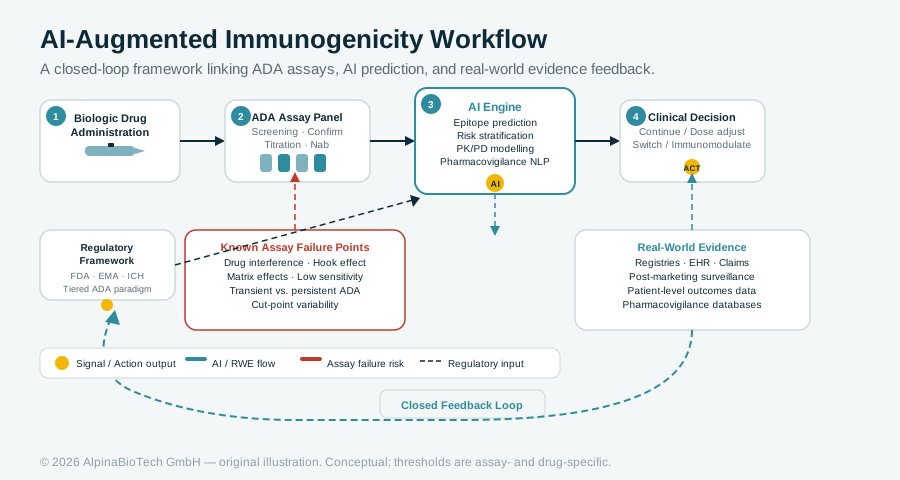
Immunogenicity / Anti-Drug Antibodies / Assay Validation
From Assay Report to Clinical Action: Rethinking Immunogenicity Workflows with AI and Real-World Evidence
3 July 2026
A narrative review published in Bioanalysis Volume 17, No. 24 by Al Meslamani, Jarab, and Mohammed proposes a closed-loop, AI-augmented blueprint for immunogenicity assessment that connects known assay failure points to real-world evidence feedback. The framework addresses the persistent gap between ADA measurement and clinical prediction, drawing on regulatory requirements, validated assay science, and emerging deep learning tools for epitope prediction and pharmacovigilance.
Read the article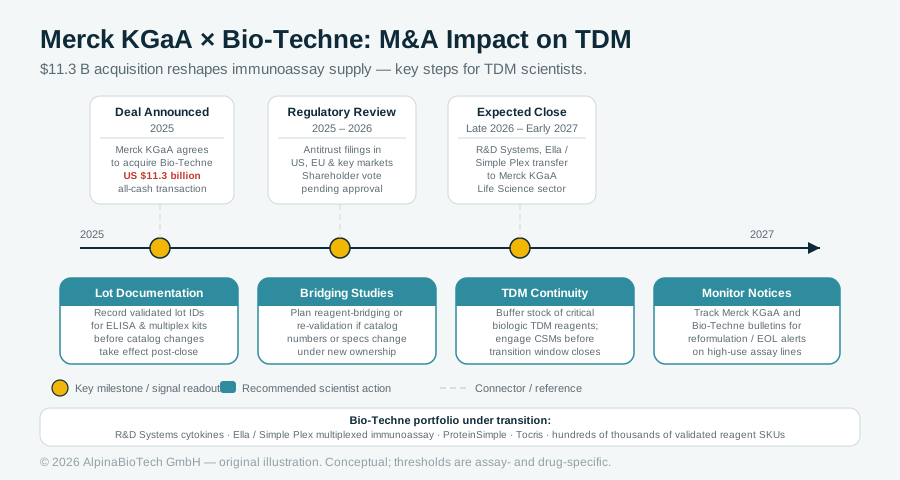
ELISA / Immunogenicity / Assay Validation
Merck KGaA's $11.3 Billion Acquisition of Bio-Techne: What It Means for Immunoassay and TDM Scientists
1 July 2026
Merck KGaA's agreement to acquire Bio-Techne for US$11.3 billion places R&D Systems, Ella/Simple Plex, and hundreds of thousands of immunoassay reagents under new corporate ownership. Scientists running ELISA, multiplexed, and TDM workflows should document validated assay lots and monitor catalog changes before the deal closes in late 2026 or early 2027.
Read the articleEach article is linked in full below.