Newsletter / June 2026
AlpinaBioTech Digest - June 2026
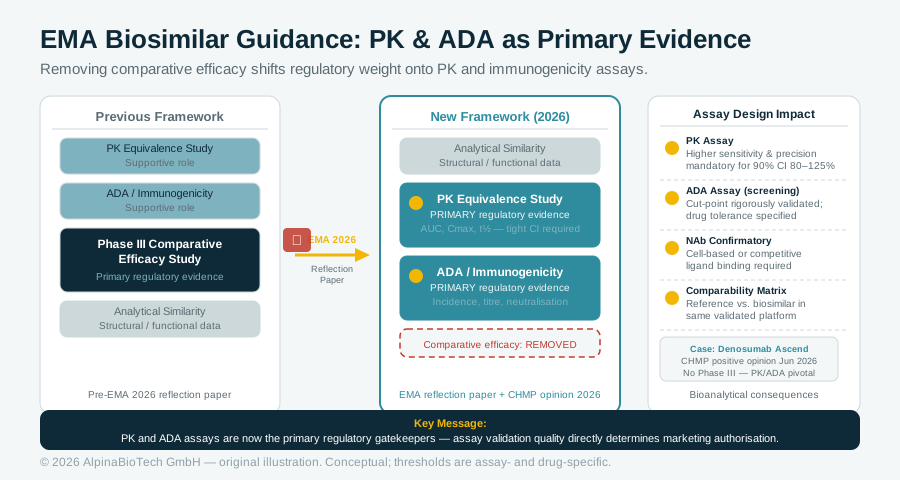
This month's ten articles concentrate on a shift that is already affecting bioanalytical workflows: the redistribution of regulatory evidentiary weight onto PK and anti-drug antibody assays in biosimilar development. EMA's March 2026 reflection paper removes the comparative efficacy study requirement for well-characterised biologics, a change illustrated in practice by the CHMP's June 2026 positive opinion for Denosumab Ascend. A companion piece examines how a May 2026 scoping review in JAMA Health Forum and the FDA's March 2026 Revision 4 draft guidance together expose persistent inconsistencies in immunogenicity requirements across 19 countries, with direct consequences for ADA assay validation scope, cut-point frameworks, and sampling schedules in global programs. All assays and data discussed in these articles are for Research Use Only.
The TDM coverage this month spans biologics broadly and IBD specifically. One article frames why trough concentrations have become central to biologic research, while another examines the reactive-versus-proactive timing debate for anti-TNF monitoring in inflammatory bowel disease. A third looks at what biosimilar switching means in practice for drug-level and ADA assay applicability, and a fourth addresses the expanding demand for validated TDM assays as biosimilar ustekinumab moves earlier in the Crohn's disease treatment algorithm. Each of these is grounded in the pharmacokinetic and immunogenicity evidence that labs need to keep pace with a rapidly evolving biosimilar class.
Rounding out the digest are two foundational pieces on ELISA design and validation, covering assay formats, the principles that link a binding event to a measurable signal, and the specific validation parameters that separate reproducible research data from data that cannot be built upon. A standalone article on anti-drug antibody testing makes the case for embedding ADA assays in every biologic workflow, covering both detection and the interpretation of results in the context of drug levels and loss of response.
Biosimilars / Immunogenicity / Anti-Drug Antibodies
When the Phase III Requirement Falls Away: What EMA's New Biosimilar Guidance Means for PK and Immunogenicity Assay Design
29 June 2026
EMA's March 2026 reflection paper on tailored biosimilar development removes the comparative efficacy study requirement for well-characterised biologics, redistributing evidentiary weight onto PK and immunogenicity assays. The CHMP's June 2026 positive opinion for Denosumab Ascend (Ascend GmbH) illustrates the new landscape in practice. For bioanalytical scientists, the consequence is direct: PK and ADA immunoassays are now primary regulatory evidence, not supportive infrastructure.
Read the article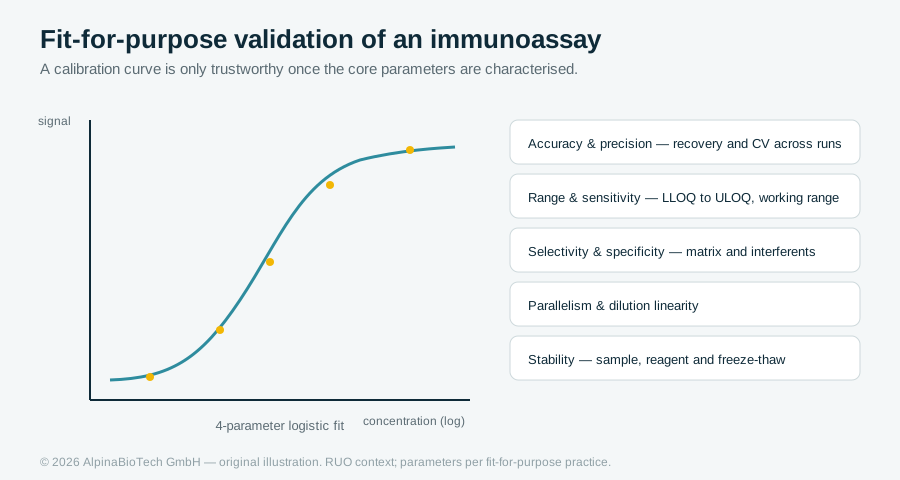
Assay Validation / ELISA
Building Confidence in RUO Immunoassays: Validation, Reproducibility, and Fit-for-Purpose Design
26 June 2026
A research-use ELISA is only as good as the validation behind it. Here are the parameters that separate a number you can build on from one you cannot.
Read the article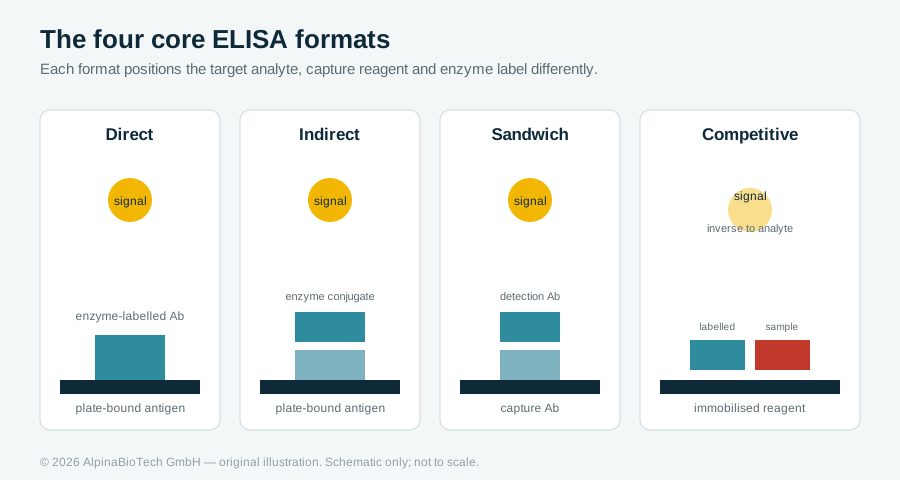
ELISA
Understanding the ELISA: Principles, Formats, and Why They Matter for Reproducible Research
26 June 2026
The enzyme-linked immunosorbent assay turns a binding event into a measurable signal. Knowing which format you are running is the first step toward data you can trust.
Read the article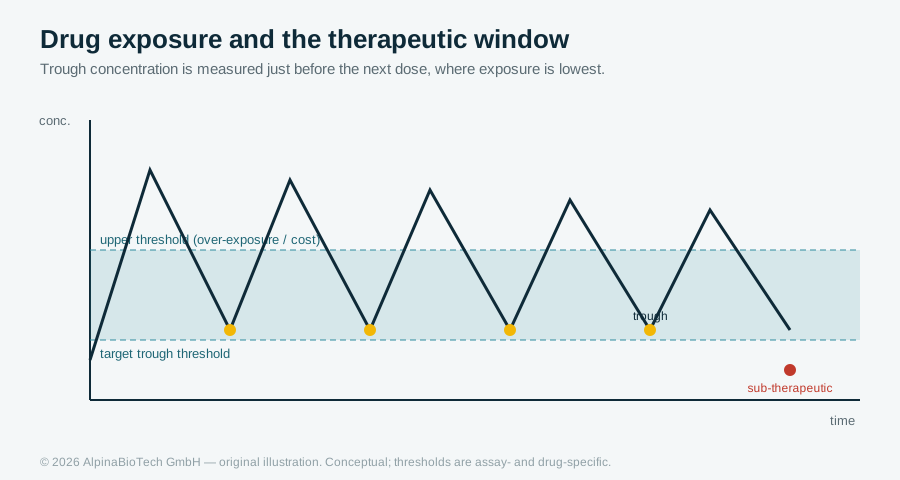
Therapeutic Drug Monitoring
Therapeutic Drug Monitoring of Biologics: From Trough Levels to Treatment Decisions
26 June 2026
Measuring how much drug is actually in circulation turns a fixed-dose biologic into a measurable, adjustable therapy. Here is why trough concentrations have become central to biologic research and care.
Read the article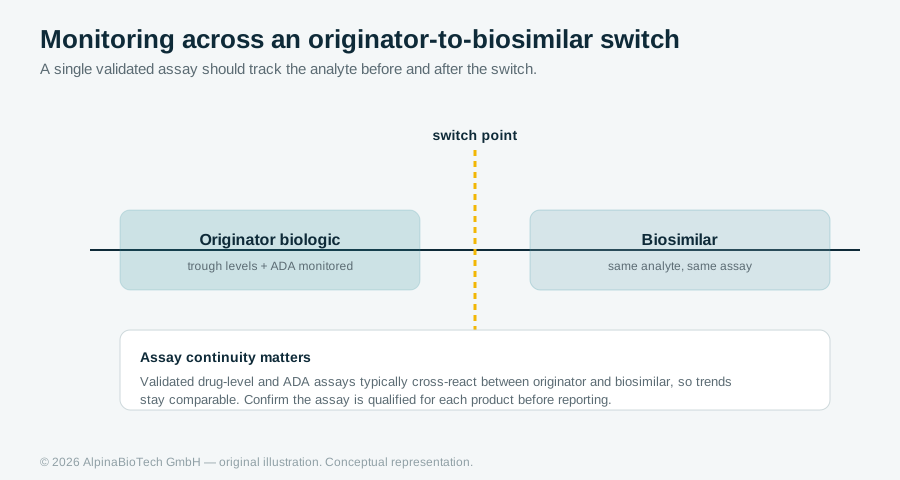
Biosimilars / Therapeutic Drug Monitoring / Immunogenicity
Monitoring Biosimilars: What Switching Means for Drug-Level and ADA Testing
26 June 2026
As biosimilars become routine, laboratories need to know whether their drug-level and anti-drug-antibody assays still apply after a switch. The short answer is usually yes, with caveats worth understanding.
Read the article
Immunogenicity / Anti-Drug Antibodies / Biosimilars
Global Biosimilar Regulatory Divergence and What It Means for Your ADA Assay Design
26 June 2026
A scoping review published in JAMA Health Forum in May 2026 mapped biosimilar regulatory frameworks across 19 countries and found persistent inconsistencies in immunogenicity requirements, clinical study waivers, and pharmacovigilance expectations. For scientists designing anti-drug antibody assays for global biosimilar programs, those inconsistencies translate into concrete decisions about validation scope, sampling schedules, and cut-point frameworks before a single sample is collected.
Read the article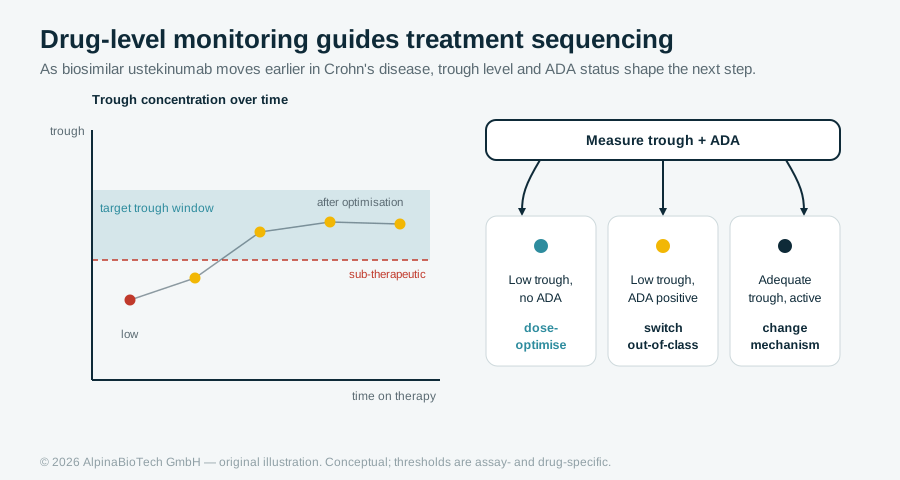
Biosimilars / Therapeutic Drug Monitoring / Immunogenicity
Biosimilar Ustekinumab, Treatment Sequencing, and What It Means for Drug-Level Monitoring
26 June 2026
As cost-effectiveness models and clinical guidelines position biosimilar ustekinumab earlier in the Crohn's disease treatment algorithm, the demand for validated therapeutic drug monitoring assays grows more urgent. This article examines the pharmacokinetic, immunogenicity, and regulatory evidence that labs need to keep pace with a rapidly expanding biosimilar class.
Read the article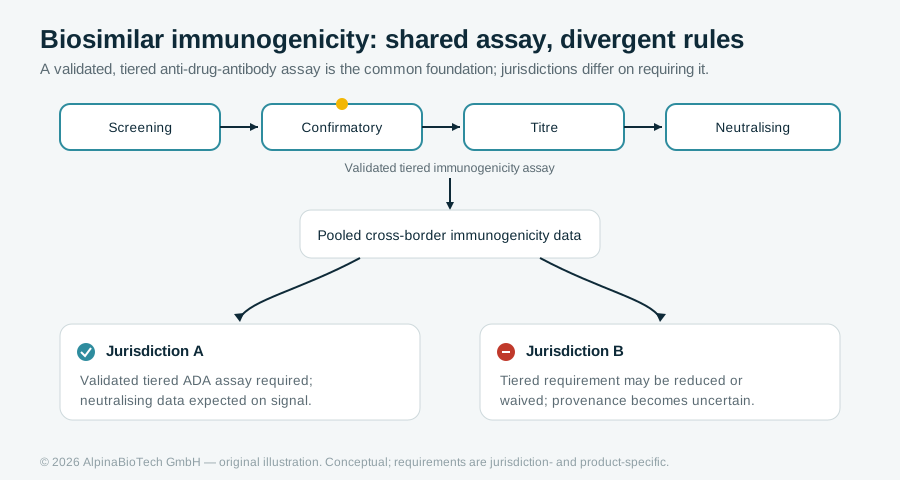
Biosimilars / Anti-Drug Antibodies / Immunogenicity
Biosimilar Immunogenicity Data Cannot Be Read the Same Way Everywhere: What the 2026 Regulatory Shifts Mean for ADA Assay Scientists
26 June 2026
A May 2026 scoping review in JAMA Health Forum and the FDA's March 2026 "Revision 4" draft guidance together expose a widening gap: global biosimilar supply chains are pooling immunogenicity data across jurisdictions while the standards governing that data remain sharply uneven. For scientists running ADA assays and therapeutic drug monitoring panels, this divergence determines whether the immunogenicity profile attached to a biosimilar was generated under a validated, tiered assay strategy or under a framework that may have waived that requirement entirely.
Read the article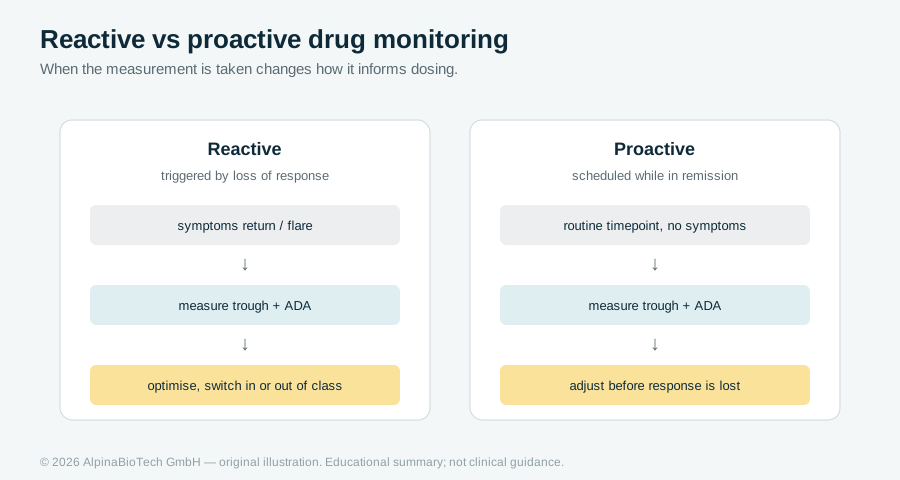
Anti-TNF / Therapeutic Drug Monitoring
Anti-TNF Therapy in IBD: Reactive, Proactive, and the Case for Measuring Early
26 June 2026
Inflammatory bowel disease is where therapeutic drug monitoring of biologics first proved its worth. The live debate now is timing: measure when response is lost, or measure before it is.
Read the article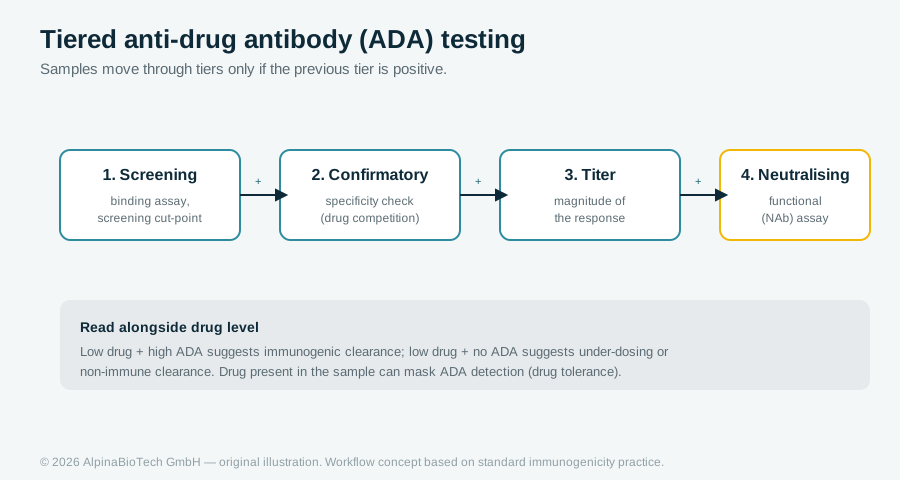
Anti-Drug Antibodies / Immunogenicity
Anti-Drug Antibodies and Immunogenicity: Why ADA Testing Belongs in Every Biologic Workflow
26 June 2026
Biologics can provoke an immune response against themselves. Detecting those anti-drug antibodies, and interpreting them correctly, is essential to making sense of drug levels and loss of response.
Read the articleAll content published this month is for Research Use Only.