Newsletter / August 2026
AlpinaBioTech Digest - August 2026
This month's six articles center heavily on biosimilar monitoring, where the measurement questions are becoming more pressing as real-world switching data accumulate without systematic therapeutic drug monitoring or anti-drug antibody testing built in. Two pieces examine anti-TNF and anti-CD20 biosimilars directly: one reviews what a post-switch trough level drop in pediatric adalimumab cohorts means for laboratory protocols, and another draws on the BRAVO multicenter cohort to argue that equivalent six-month clinical outcomes in rituximab-treated AAV patients reinforce, rather than reduce, the rationale for structured pharmacokinetic and immunogenicity monitoring. All assays and products described are for Research Use Only.
Two further articles address the interpretation and technical integrity of ADA assays themselves. A methodological piece works through why a highly sensitive immunogenicity platform can return an ADA incidence figure several times higher than a reference biologic's labeled rate, and what assay sensitivity, drug tolerance, and platform architecture each contribute to that number. A case study on Gyrolab-based ADA testing with a rituximab biosimilar traces wave-like signal artifacts to neutralization buffer chemistry and fluorophore-induced isoelectric point shifts, offering troubleshooting principles transferable across any laboratory running microfluidic immunogenicity programs. A fifth article maps the analytical characterization strategies that now underpin regulatory approval of mAb biosimilars in the US and EU, grounding the discussion in a recent FDA clinical efficacy study waiver for a ustekinumab biosimilar.
Stepping outside the biosimilar space, we also cover a high-sensitivity biosensor for circulating ESAT-6, a secretory protein of Mycobacterium tuberculosis, that distinguished active disease from latent infection and uninfected contacts with an AUC of 0.976 in a 217-patient cohort presented at ADLM 2026. Because this is an antigen-direct measurement rather than a host immune response readout, it occupies a different analytical position from IGRAs, and that distinction has practical implications for laboratory test design. Full analytical validation and prospective clinical data remain outstanding, and the findings are conference-reported pending peer-reviewed publication.
Anti-Drug Antibodies / Therapeutic Drug Monitoring / Anti-TNF
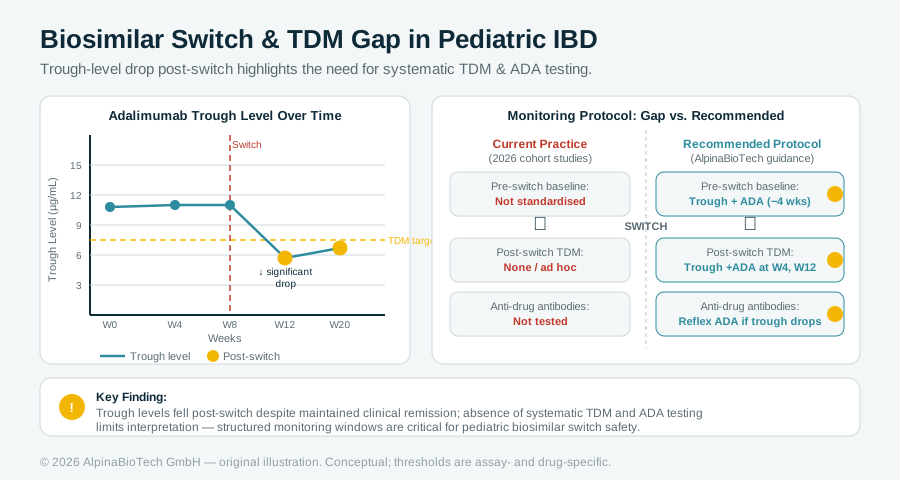
Adalimumab Biosimilar Switches in Pediatric IBD: What the Trough Level Drop Means for Your Monitoring Protocol
28 August 2026
Two 2026 multicenter studies confirm that nonmedical adalimumab biosimilar switches in children with IBD generally maintain disease control, but trough levels fell significantly post-switch in one cohort, and neither study included systematic TDM or ADA testing. This article examines what that measurement gap means for laboratory monitoring protocols around pediatric biosimilar switches.
Read the article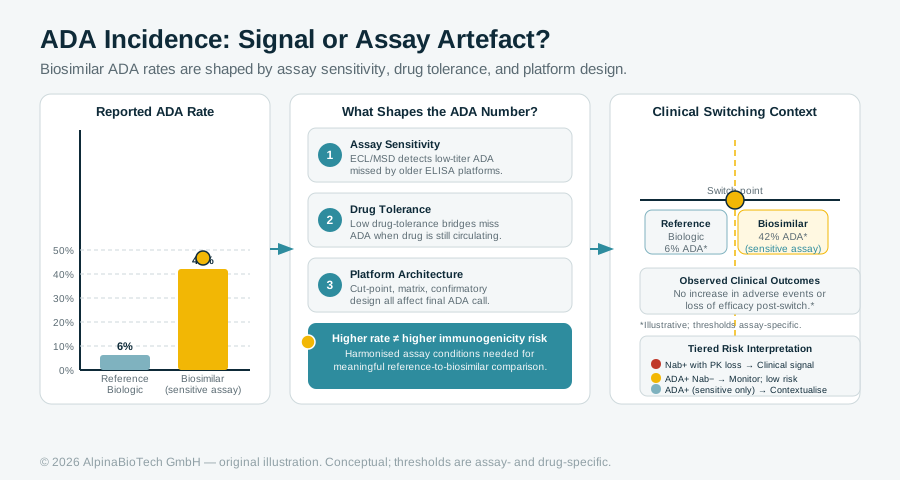
Anti-Drug Antibodies / Biosimilars / Assay Validation
When ADA Incidence Misleads: Interpreting Highly Sensitive Immunogenicity Assays in Biosimilar Programs
26 August 2026
A biosimilar immunogenicity report showing a 42 percent ADA rate against a reference biologic's labeled 6 percent is not automatically a safety signal. The number is shaped as much by assay sensitivity, drug tolerance, and platform architecture as by the patient's immune response. This article explains how to interpret highly sensitive ADA data in biosimilar programs and what clinical switching data reveal about the stakes of getting it wrong.
Read the article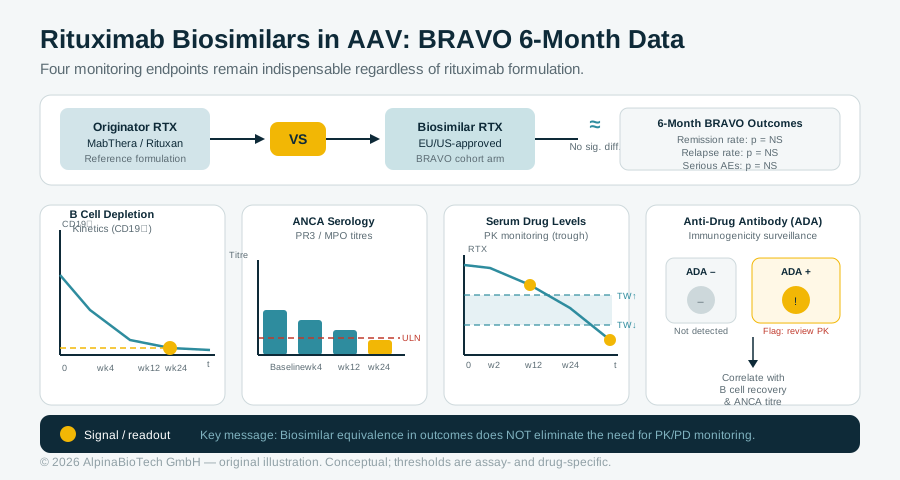
Therapeutic Drug Monitoring / Anti-Drug Antibodies / Biosimilars
Rituximab Biosimilars in AAV: What Six-Month Real-World Data Tell Monitoring Scientists
21 August 2026
The BRAVO multicenter cohort study found no statistically significant differences in remission rates, relapse rates, or serious adverse events between biosimilar and originator rituximab at six months in granulomatosis with polyangiitis and microscopic polyangiitis. For laboratories supporting drug-level and immunogenicity testing in biosimilar-treated AAV populations, the findings reinforce rather than reduce the case for structured pharmacokinetic and pharmacodynamic monitoring. B cell depletion kinetics, ANCA serology, serum drug levels, and anti-drug antibody assays each remain indispensable endpoints regardless of which rituximab formulation the patient receives.
Read the article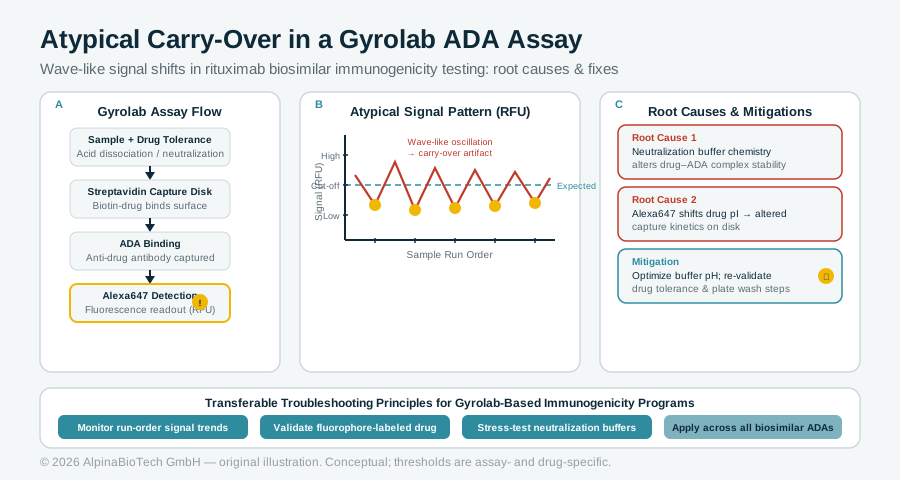
Anti-Drug Antibodies / Immunogenicity / Assay Validation
Atypical Carry-Over in a Gyrolab ADA Assay: Lessons from a Rituximab Biosimilar Case Study
19 August 2026
A published case study targeting MabionCD20, a rituximab biosimilar, identified wave-like signal fluctuations in Gyrolab-based ADA assays caused by neutralization buffer chemistry and fluorophore-induced isoelectric point shifts. The investigation offers transferable troubleshooting principles for any laboratory running Gyrolab-based immunogenicity programs, particularly around drug tolerance and repeatability.
Read the article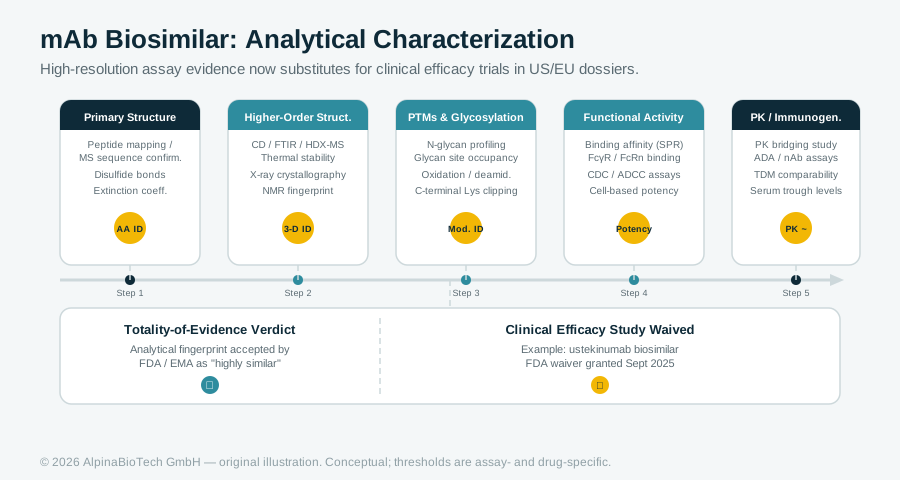
Biosimilars / Anti-Drug Antibodies / Assay Validation
What "Highly Similar" Actually Requires: Analytical Methods for mAb Biosimilar Characterization
7 August 2026
Regulatory approval of mAb biosimilars now depends less on replicating clinical trial results and more on high-resolution analytical characterization. A 2026 BioDrugs review of successful US and EU dossiers maps the assay strategies that matter, while the FDA's September 2025 waiver of a clinical efficacy study for a ustekinumab biosimilar makes the principle concrete for immunoassay and TDM scientists.
Read the article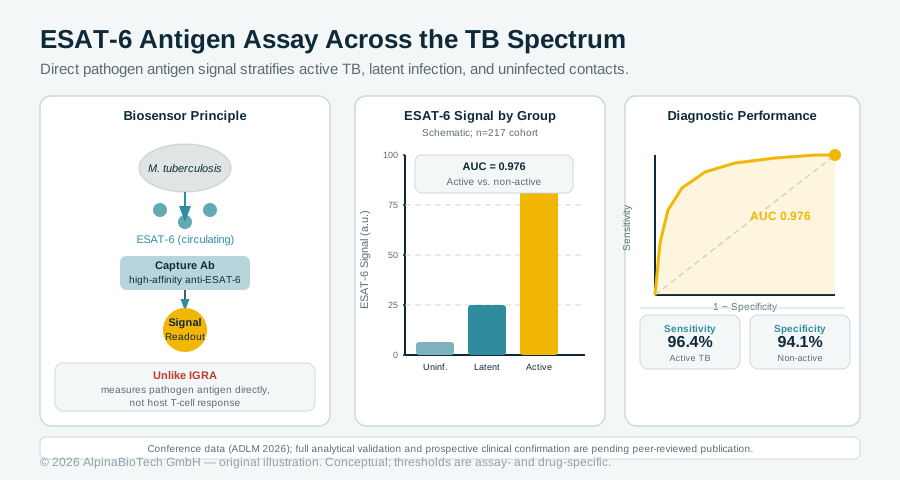
ELISA / Assay Validation
Measuring the Pathogen, Not the Host: A High-Sensitivity ESAT-6 Blood Assay Distinguishes Active TB Across the Infection Spectrum
3 August 2026
A high-sensitivity biosensor for circulating ESAT-6 protein, a direct secretory product of Mycobacterium tuberculosis, produced a stepwise quantitative signal across the full TB infection spectrum in a 217-patient cohort presented at ADLM 2026. Unlike IGRAs, which measure host immune response, this antigen-direct approach distinguished active disease from latent infection and uninfected contacts with an AUC of 0.976, as reported in conference coverage pending peer-reviewed publication. Full analytical validation and prospective clinical data remain outstanding.
Read the articleAs always, all assays and methods discussed across this digest are for Research Use Only and are not approved for diagnostic use.