Newsletter / October 2026
AlpinaBioTech Digest - October 2026
October's articles converge on a single structural shift in bioanalysis: as regulatory agencies in the US, EU, and Canada reduce or eliminate comparative efficacy and pharmacokinetic bridging requirements for biosimilar approval, the evidentiary burden falls almost entirely on PK and anti-drug antibody assays. Two articles this month examine this directly, one working through the three converging guidance documents from 2025 and 2026 and what they demand at the platform design level, and one focused specifically on FDA's March 2026 draft guidance and its implications for ADA assay drug tolerance, sensitivity, and neutralizing antibody assessment before clinical samples are ever collected.
The month's remaining articles address the assay formats and validation frameworks being asked to carry that weight. A three-part WRIB white paper series, now fully published in Bioanalysis, delivers the first consensus-based validation guidance specifically for vaccine immunogenicity ligand binding assays, a category that has operated without a dedicated regulatory framework despite being the primary quantitative tool in vaccine immunogenicity studies. A review of enzyme activity assays in lysosomal storage disorder programs clarifies how assay purpose, matrix, and immunogenicity monitoring must be aligned to purpose before validation begins, across diagnostic, PK, PD, and gene therapy efficacy contexts. All enzyme activity assay content discussed is for Research Use Only.
Two further articles address platform and paradigm questions that practicing bioanalytical scientists encounter at the design stage. One applies the Gyrolab-versus-plate debate to antibody-drug conjugate bioanalysis specifically, drawing on a sponsored interview and the July 2026 AAPS ADC Working Group white paper to provide an analyte-by-analyte decision framework across total antibody, conjugated antibody, free payload, and immunogenicity readouts, all for Research Use Only. The other takes a harder look at the three-tier ADA testing paradigm itself, drawing on recent publications from Immunologix Laboratories, the European Bioanalysis Forum, and IQVIA Laboratories to examine whether binary ADA classification consistently yields clinically meaningful data, and what a fit-for-purpose, context-of-use alternative would require in practice.
Therapeutic Drug Monitoring / Immunogenicity / Anti-Drug Antibodies
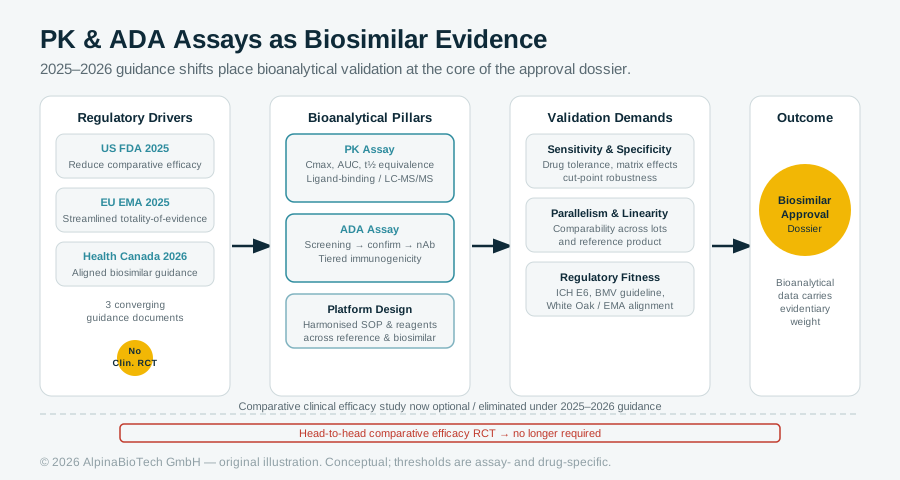
When PK and ADA Assays Become the Whole Argument: Biosimilar Regulatory Reform and What It Demands from Bioanalytical Scientists
26 October 2026
Regulatory agencies in the US, EU, and Canada moved in 2025 and 2026 to reduce or eliminate comparative efficacy studies for biosimilar approval, placing pharmacokinetic and anti-drug antibody assays at the center of the evidentiary dossier. This article examines the three converging guidance documents, the validation demands they create, and the platform-level design principles scientists need to build biosimilar bioanalytical programs that can carry that evidentiary weight.
Read the article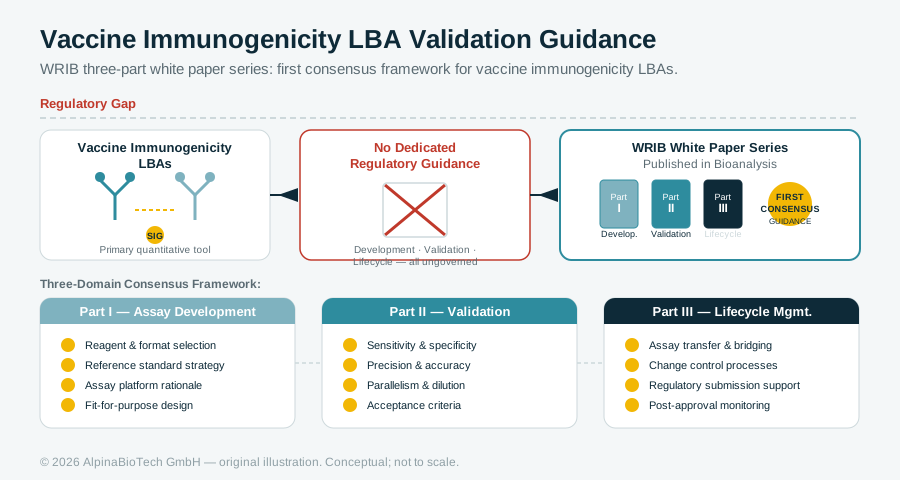
Immunogenicity / Assay Validation / ELISA
Vaccine Immunogenicity LBAs Have No Dedicated Validation Guidance: A Three-Part WRIB Series Sets Out to Change That
19 October 2026
Ligand binding assays are the primary quantitative tool for vaccine immunogenicity studies, yet no dedicated regulatory framework has governed their development, validation, or lifecycle management. A three-part WRIB white paper series, now fully published in Bioanalysis, provides the first consensus-based guidance covering all three domains specifically for vaccine immunogenicity LBAs.
Read the article
ELISA / Therapeutic Drug Monitoring / Assay Validation
Enzyme Activity Assays in Rare Disease Drug Programs: Design, Validation, and Interpretation Across Four Clinical Contexts
16 October 2026
A single enzyme activity assay format cannot equally serve diagnosis, pharmacokinetics, pharmacodynamics, and gene therapy efficacy readouts in lysosomal storage disorder programs. A 2026 review in Bioanalysis and supporting primary literature clarify how assay purpose, matrix, and immunogenicity monitoring must be aligned before validation begins. This article is for Research Use Only.
Read the article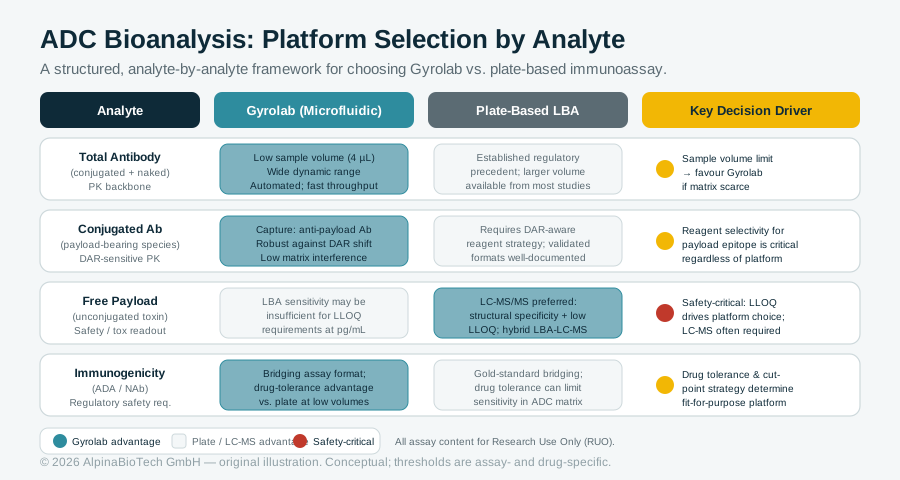
ELISA / Immunogenicity / Anti-Drug Antibodies
Platform Choice at the Core of ADC Bioanalysis: What the Gyrolab-vs-Plate Debate Actually Requires Scientists to Decide
14 October 2026
Selecting between Gyrolab microfluidic and conventional plate-based immunoassay platforms for antibody-drug conjugate bioanalysis is not a single decision but a structured one made analyte by analyte. A sponsored interview published October 13, 2026, on Bioanalysis Zone, combined with the July 2026 AAPS ADC Working Group white paper in AAPS Journal, provides the clearest current framework for making those choices across total antibody, conjugated antibody, free payload, and immunogenicity assays. All assay content discussed is for Research Use Only.
Read the article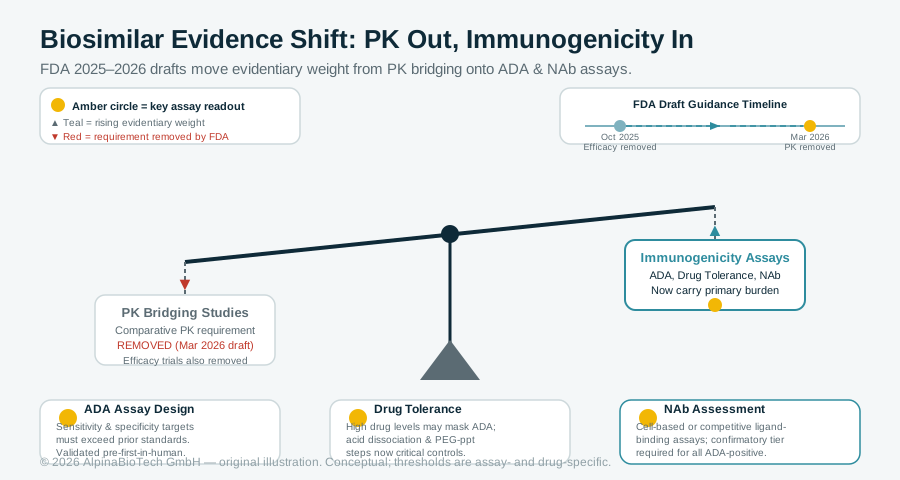
Therapeutic Drug Monitoring / Immunogenicity / Anti-Drug Antibodies
When PK Studies Slim Down, Immunogenicity Assays Carry More Weight: What FDA's 2026 Biosimilar Guidance Means for Bioanalytical Scientists
9 October 2026
FDA's March 2026 draft guidance removes the default requirement for comparative PK bridging studies in biosimilar development, building on a prior October 2025 draft that proposed eliminating routine efficacy trials. Both actions shift evidentiary weight onto immunogenicity assays, raising the bar for ADA assay design, drug tolerance, and neutralizing antibody assessment before any clinical samples are collected.
Read the article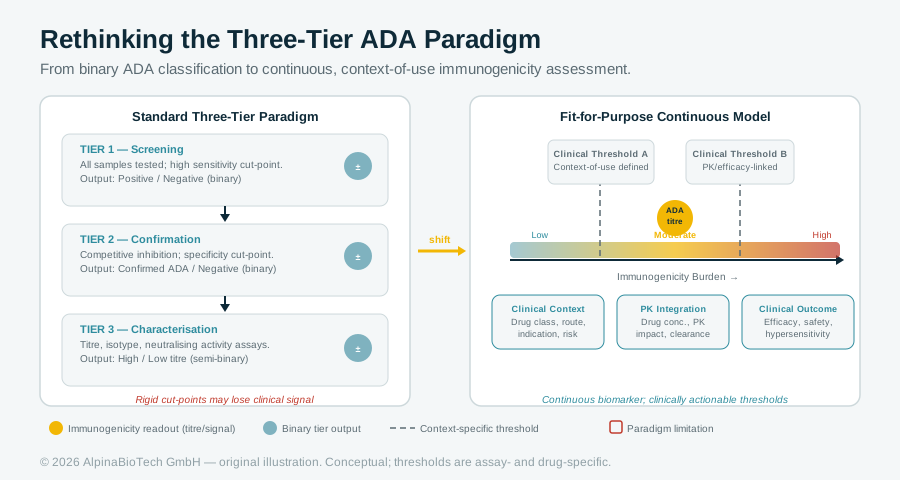
Immunogenicity / Anti-Drug Antibodies / Assay Validation
When ADA Positivity Is Not the Answer: Rethinking the Three-Tier Immunogenicity Paradigm
2 October 2026
The standard three-tier ADA testing paradigm has governed biologic immunogenicity assessment for more than two decades, but a growing body of evidence questions whether it consistently delivers clinically meaningful data. New publications from Immunologix Laboratories, the European Bioanalysis Forum, and IQVIA Laboratories converge on a fit-for-purpose, context-of-use-driven alternative that treats immunogenicity as a continuous biomarker endpoint rather than a binary classification.
Read the articleAll six articles are available in full on the AlpinaBioTech platform now.